The first time I drift dived a channel pass, I forgot to kick.
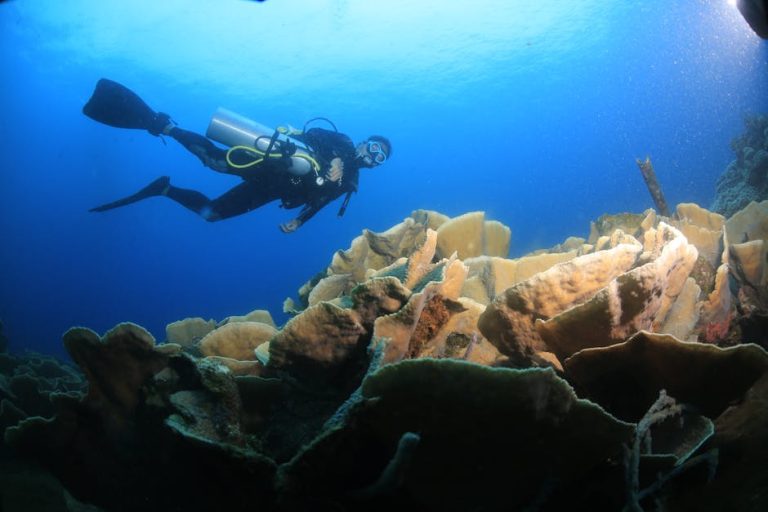
This sounds like a small thing. For a diver trained to be active in the water — to fin constantly, to fight current when it pushed me somewhere I didn’t want to go — the discovery that I could simply stop moving and let the ocean carry me was, genuinely, a revelation. I hung in the water column above a coral-encrusted wall, arms folded, fins still, and the reef moved past me like a landscape seen from a train window.
The current did the work. I just watched.
What Drift Diving Is
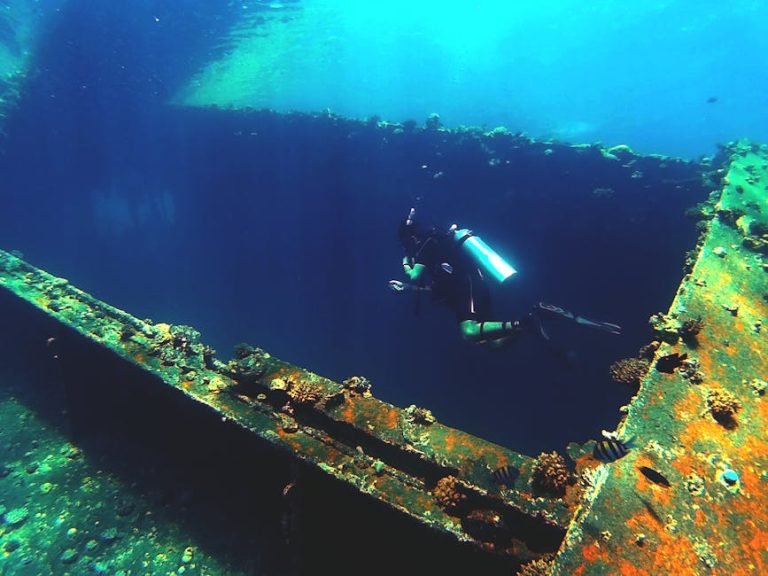
Drift diving is the practice of diving in moving water — currents generated by tidal flow, oceanic circulation, or the funnelling effect of channels and passes through reef systems — and allowing that current to carry you along a dive site rather than swimming against it or holding position.
Done well, drift diving is the most effortless form of diving there is. The current transports you along the reef at a pace that’s often perfect for observation — fast enough to cover ground, slow enough to see what’s on it. Air consumption drops because you’re not working to fin. The experience has a particular quality of passivity-in-motion that I find deeply satisfying.
Check real traveller reviews, prices, availability, departure points, and flexible booking options in one place.
Done badly — by divers who panic in current, fight it, or don’t understand the safety protocols — drift diving can be genuinely hazardous. The ocean doesn’t much care where it takes you. If you’re not managing your position relative to the dive boat and your dive guide, you can surface far from the vessel in conditions where recovery is difficult.
Understanding both sides of this is what makes drift diving worth learning properly.
Where Current Comes From
The current at reef dive sites comes from tidal water movement — the ocean trying to equalise water levels between lagoons and the open sea, or between the sheltered and exposed sides of a reef system, as tides change. At channel passes and cuts through reef systems, this water movement can produce remarkable current velocities: the Tiputa Pass in Fakarava, French Polynesia, runs at up to four knots during peak tidal exchange. The channels of the Tubbataha Reefs in the Philippines produce currents strong enough to require gripping the reef to maintain position.
These are extreme examples. Most recreational drift diving occurs in currents of one to two knots — comfortable and manageable for divers with basic skills and good buoyancy. The key is knowing the tidal cycle before you dive and planning your entry to align with the most suitable flow conditions.
In Australia, strong drift diving is available at several locations. The Ribbon Reefs of the far northern Great Barrier Reef produce excellent drift conditions along their outer walls during tidal exchanges. Cod Hole, one of the GBR’s most famous sites, is often dived as a drift. The outer reef walls of the Coral Sea atolls — Osprey, Bougainville, Holmes — produce upwelling and current conditions that concentrate large pelagic life.
The Technique
The single most important skill in drift diving is buoyancy control — specifically, the ability to maintain your depth passively in a current without using physical effort to hold position vertically. In a strong current, any upward or downward drift will carry you into a different current layer (currents vary in speed and direction at different depths), which can disorient you and separate you from your group.
The second most important skill is positioning relative to your dive guide. In a drift dive, the guide is typically at the front of the group — leading the drift — or at the rear to ensure nobody gets left behind. Know where your guide is before the current takes you, and maintain visual contact throughout.
Buoyancy markers (surface marker buoys, or SMBs) are mandatory for drift diving, and deploying one well is a skill worth practising before you need it in conditions. An SMB is a brightly coloured inflatable tube that you deploy from depth while still underwater, sending a signal to the surface (and to the dive boat) of your position before you ascend. In a drift dive, you may surface some distance from your entry point, and the SMB is what allows the boat to find you.
The deployment procedure: unclip the SMB from your BCD, unspool the reel attached to it, partially inflate it by blowing into the oral inflator or directing a brief burst of air from your regulator’s purge button into the base, and release it to ascend on the reel line. The SMB rises to the surface; the reel pays out as you ascend on the line at a controlled rate; the boat crew sees the surface marker and comes to you.
Thermoclines and Upwellings
Current-active sites often involve thermoclines — sharp boundaries between water masses of different temperatures — and upwellings, where cold, nutrient-rich water rises from depth to replace warmer surface water displaced by currents.
Thermoclines are visible: the boundary between water masses often shows as a shimmer in the water, like the heat-haze above hot tarmac, caused by the difference in refractive index between waters of different temperatures. Swimming through a thermocline — warm to cold, or cold to warm — is a physical jolt. Water temperature can drop five or six degrees Celsius within a metre.
Upwellings concentrate plankton and small baitfish, which attract larger predators. The best drift diving for pelagic encounters — sharks, tuna, rays, eagle rays, occasional whale sharks — is almost always at sites with active upwelling. This is why the channel passes of Fakarava, the outer walls of Osprey Reef, and the cleaning stations of the Maldives’ ocean-side atolls consistently produce large-animal sightings that calmer inshore sites don’t.
Why I Love Drift Diving
Honestly? It’s the closest thing to flying that I’ve found.
There’s a specific configuration I chase on drift dives: neutrally buoyant, horizontal, slightly feet-down, arms relaxed at my sides, finning not at all. The current is running at a knot and a half. The reef wall is ten metres to my right. Ahead of me, a school of barracuda hangs in the blue water beyond the wall edge, their silver flanks catching the current light.
I am moving at the speed the ocean wants to move me. It is, for the duration of the dive, enough.
Compare top-rated tours, prices, availability, and real traveller reviews before booking. See what’s actually available for your dates and departure location.
Compare tours and check availability