Wreck and reef diving are often presented as complementary activities – a natural pairing for a dive trip. In practice, they’re quite different experiences that demand different skills, mindsets, and physical preparation. Combining both in a single trip or even on the same day requires understanding not just the technical differences, but how your body and attention respond to switching between them.
Most operators in wreck-heavy regions – the Caribbean, Southeast Asia, the Mediterranean – will offer combination packages because it makes logistical sense. You’re already on a boat, already geared up, already in the water. Why not do both? The answer is more nuanced than it first appears. Wreck diving and reef diving engage different parts of your attention and fatigue in ways that become obvious only after you’ve done both back-to-back.
The Physical and Mental Demands Differ More Than You’d Expect
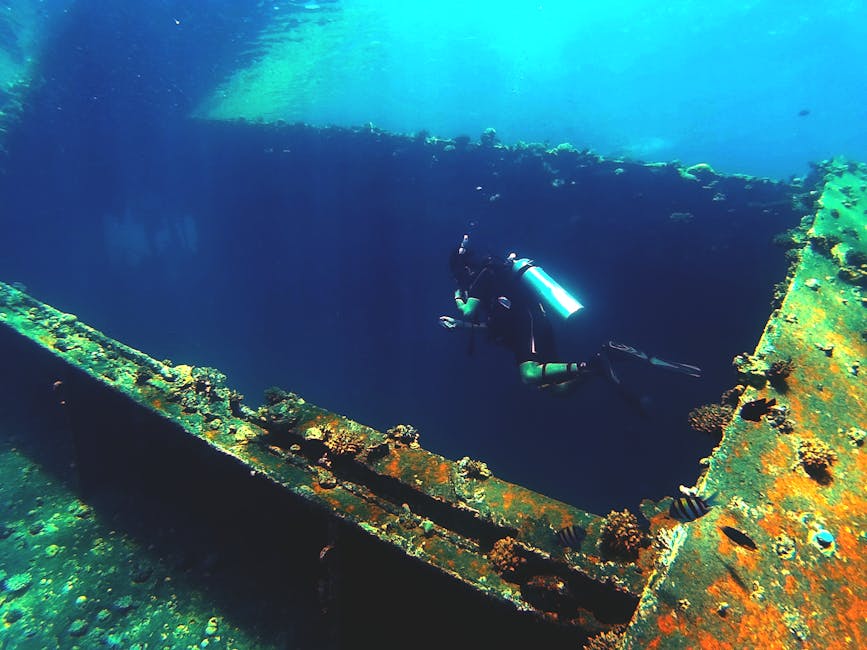
Wreck diving requires sustained focus on navigation. You’re moving through confined spaces, tracking your entry point, managing your depth relative to the structure, and processing visual information in a more linear way. Your eyes are constantly scanning for the exit, for hazards, for the next section of the wreck. It’s cognitively demanding in a way that feels different from reef diving, even though both require attention.
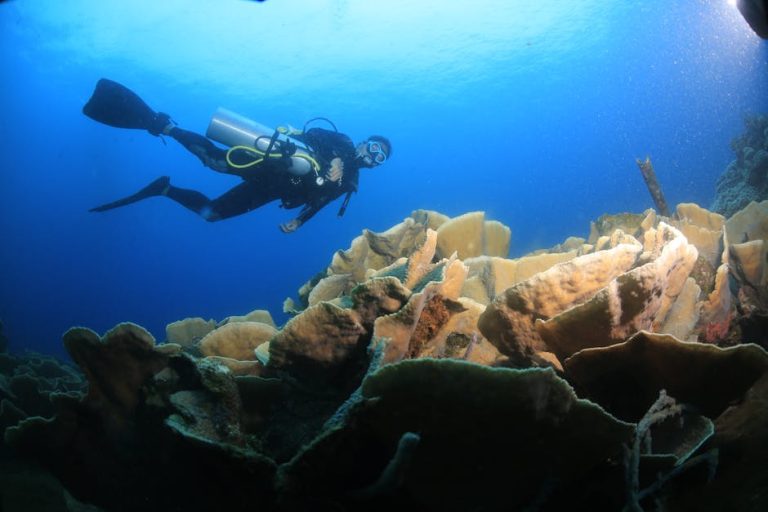
Reef diving, by contrast, encourages a more distributed attention pattern. You’re scanning a larger area, moving more freely, watching for marine life, adjusting your depth as the reef topography changes. The environment is more open. Your mind can settle into a rhythm more easily. After a wreck dive, many divers find a reef dive feels almost meditative by comparison – until you realize your air consumption has dropped noticeably because you’re more relaxed.
The fatigue pattern matters too. A wreck dive, even a relatively shallow one, can leave you mentally tired. You emerge from the water thinking about the structure, the navigation, whether you saw everything you wanted to see. A reef dive, especially in warm, clear water with good visibility, can leave you physically tired but mentally refreshed. Doing them in sequence – wreck first, reef second – generally works better than the reverse, because you can decompress mentally on the second dive.
Visibility and Depth: The Variables That Actually Change Everything
The appeal of wreck and reef combinations partly depends on where you’re diving. In places like the Red Sea or parts of the Caribbean, you might have 30-40 meters of visibility and wrecks sitting in 15-25 meters of water. The wreck is clear, the reef nearby is equally clear, and the logistics are straightforward. You can do both dives and feel like you’ve had two distinct experiences in excellent conditions.
In other regions – Southeast Asia, parts of the Pacific, some Atlantic wreck sites – visibility is often 10-15 meters on a good day. The wreck becomes more of a close-range exploration. The reef, if it’s nearby, might be at a different depth and offer different visibility. What looked like a logical pairing on paper feels less cohesive in the water. You’re managing expectations about what you’ll actually see, and that affects how satisfying the combination feels.
Depth adds another layer. Some wrecks sit shallow enough for recreational diving – 20-25 meters. Others require deeper descents. If you’re planning to do a wreck dive to 35 meters and then a reef dive to 18 meters on the same day, you’re managing nitrogen loading and air consumption across different depth profiles. It’s manageable with proper planning, but it’s not as simple as “do two dives.” Your second dive is constrained by what you did on the first one.
The Logistics of Back-to-Back Diving
Most dive operators structure wreck and reef combinations as two separate dives with a surface interval in between. The interval is usually 45 minutes to an hour, which is adequate but not generous. You’re gearing down, rinsing equipment if the water is warm, hydrating, eating something light, and then gearing back up. The rhythm is faster than you might experience on a dedicated reef trip where you might have longer intervals between dives.
The boat itself matters. Larger liveaboard boats and dedicated dive operators have the infrastructure to manage this smoothly. You come back from the wreck, your gear is rinsed and organized, you sit in shade, drink water, and the crew is already preparing the next set of tanks. Smaller boats or less organized operations can make the interval feel rushed. You’re sitting in the sun, your wetsuit is drying on you, and there’s a sense of hurrying to get back in the water.
The time of day affects the experience more than many divers anticipate. A wreck dive early in the morning, when the water is often calmest and visibility is typically at its best, followed by a reef dive in mid-morning, works well. The water has warmed slightly, the sun angle is better for reef photography if that interests you, and you’re not fighting afternoon currents or deteriorating visibility. Doing it in reverse – reef first, wreck second – can work, but the wreck often feels less impressive if you’re diving it in afternoon light with more suspended particles in the water.
What You Actually See and What That Means
Wrecks are specific. You’re seeing a particular structure – a ship, a plane, a platform – with its own history and layout. The appeal is partly archaeological, partly about the unique ecosystem that’s developed on the wreck itself. Soft corals, sponges, and fish colonies establish themselves on the metal surfaces. You’re experiencing both the artifact and the marine life that’s colonized it.
Reefs are more variable and less bounded. A coral reef system can extend for kilometers. You’re seeing a cross-section of it during your dive. The marine life is more abundant and diverse, but the experience is less about a specific “thing” and more about immersion in an ecosystem. If you’re interested in fish identification, coral species, or broader marine biology, reef diving offers more to study. If you’re interested in history, structure, and the specific character of a wreck, that’s its own kind of satisfaction.
The combination works best when you’re genuinely interested in both. If you’re primarily a wreck enthusiast doing a reef dive to fill time, the reef will feel like a secondary activity. If you’re a reef-focused diver doing a wreck dive because it’s on the itinerary, the wreck might feel claustrophobic or less rewarding. The pairing is most satisfying when both environments genuinely appeal to you.
Seasonal and Regional Realities
Where you are geographically affects whether wreck and reef combinations make practical sense. The Caribbean, particularly around islands like Cozumel or Bonaire, has excellent wreck sites alongside established reef systems. The combination is natural and well-developed. Southeast Asia – Thailand, Indonesia, Philippines – has wrecks and reefs, but they’re often in different locations, requiring boat travel between sites. What looks like a simple combination on a dive operator’s website might involve more boat time than you’d expect.
Seasonality matters too. Wreck diving is often possible year-round because the wreck itself is a consistent structure. Reef diving can be affected by seasonal changes in water temperature, visibility, and marine life patterns. In some regions, certain seasons offer better wreck diving conditions but worse reef conditions, or vice versa. Planning a combination trip requires checking both sets of conditions, not just one.
The experience of wreck and reef diving together is ultimately about managing expectations and understanding what each environment offers. They’re genuinely different activities that happen to be geographically convenient to combine in certain places. The best combination trips are the ones where you’re interested in both for their own reasons, not because you feel obligated to do both. The water and the structures don’t care about your itinerary. They’ll be there regardless. What matters is whether you’re present and engaged with what you’re actually experiencing.