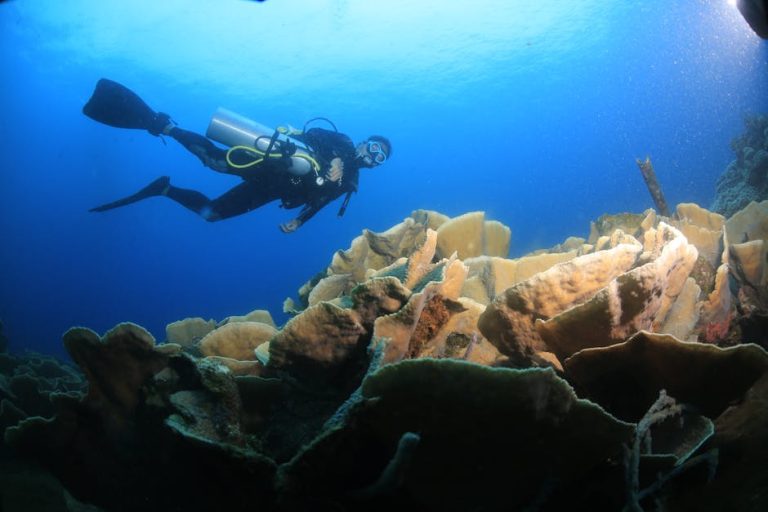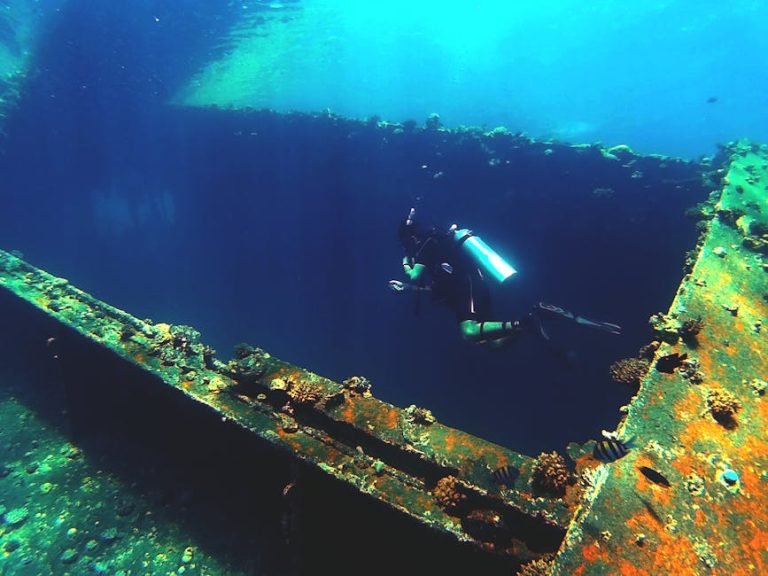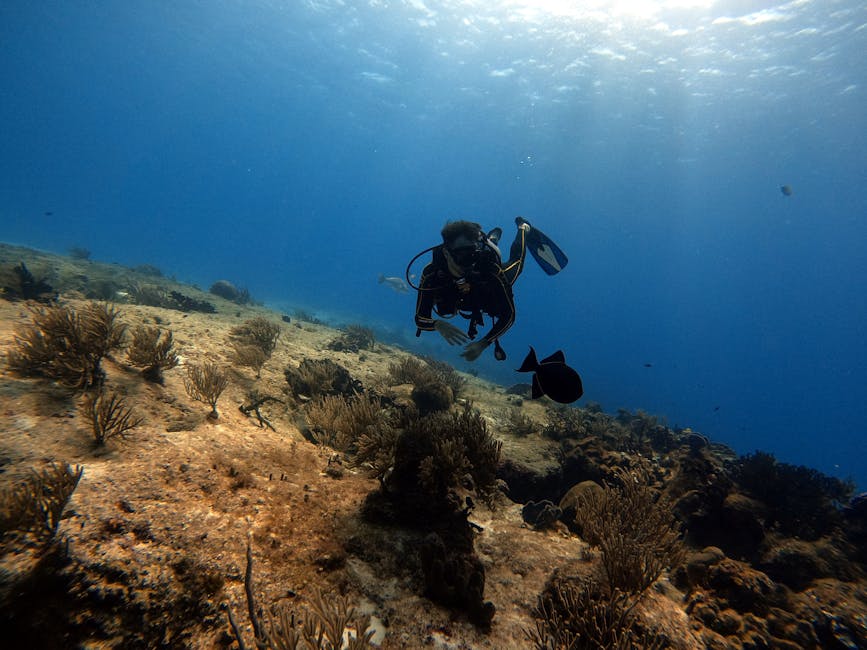
There’s a moment, usually somewhere around your twentieth dive, when something shifts. You stop thinking about your buoyancy and start feeling it. Your body finds the water rather than fighting it. You hover above a coral bommie at three metres without touching anything, without finning, without really trying — and you understand, finally, what all those instructors meant when they talked about neutral buoyancy as the foundation of everything.
Before that moment, buoyancy is a technical problem. After it, buoyancy is a form of fluency.
On the Great Barrier Reef, where the difference between a diver who hovers and a diver who sinks is the difference between an intact coral head and a broken one, buoyancy mastery isn’t just a personal achievement. It’s an environmental responsibility.
Why Buoyancy Is Hard at First
The challenge is that buoyancy is dynamic. Your buoyancy changes continuously throughout a dive — as you breathe in and out (your lungs act as a buoyancy device), as you ascend or descend (expanding or compressing your wetsuit), as your tank empties (a full aluminium 12-litre tank is about 2kg negative at the start; near-empty, it becomes positive). You’re not setting buoyancy once. You’re managing a continuously shifting system.
Add to this the fact that most new divers are over-weighted — dive operators tend to err on the side of too much lead rather than too little, because a diver who sinks can be retrieved, but a diver who ascends uncontrolled cannot — and you have someone spending most of their mental energy managing compensating factors rather than diving.
Check real traveller reviews, prices, availability, departure points, and flexible booking options in one place.
The Fix: Get Your Weighting Right
The single most effective thing most recreational divers can do to improve their buoyancy is reduce their weight. Conduct a proper weighting check at the surface: fully kitted, holding a normal breath, you should float with your eyes at water level. Exhale completely and you should sink slowly. If you need to fin to stay at the surface, you’re carrying too much lead.
On the GBR, where water temperatures mean 3mm wetsuits are standard, most recreational divers need 2–4kg of lead. If you’re carrying 8kg, something is wrong.
The BCD: Use It Less Than You Think
New divers use their BCD like a lift button — pushing inflate to go up, deflate to go down. The problem is that BCD inflation is slow and imprecise. By the time the air you added has moved you upward, you’ve already passed where you wanted to be.
The primary buoyancy tool at depth is your breath. A full breath adds approximately 0.5–1 litre of air to your lungs, producing meaningful positive buoyancy. A full exhale removes it. Practice making small depth adjustments through breathing alone, reserving BCD adjustments for larger corrections.
The horizontal body position is not just about looking like a good diver. A horizontal diver has a smaller cross-section through the water, experiences less drag, and can fin without generating turbulence toward the reef below. A diver angled head-down or feet-down is working against physics.
Trim and Weight Distribution
Where you put your weight matters as much as how much you carry. Weight placed too far forward tips you head-down. Weight in integrated BCD pockets only affects the centre of your torso. Some divers need ankle weights to counteract the buoyancy of their fins. The goal is a trim position — horizontal, slightly head-up — that you maintain with minimal effort.
On a liveaboard, take the time between dives to experiment with weight placement. Move your integrated weights back, add a small amount to your tank band, try different positions until hovering horizontal feels effortless.
Practice Drills Worth Doing
The fin pivot: kneel on sand (never on coral), place your hands in your lap, and practice making tiny depth adjustments through breathing alone. When you can rise and lower 30cm using only your breath, you’re getting there.
The hover: find a depth at which you’re neutrally buoyant and simply stop finning. Float. Don’t touch anything. Breathe normally. If you can maintain position for two minutes without touching the reef or finning to stay up, your buoyancy is functional.
The peak performance buoyancy specialty course, available through PADI and SSI operators throughout the GBR, runs through these exercises systematically. If buoyancy is your weak point — and it’s most divers’ weak point — it’s the best specialty course to do first.
What Buoyancy Looks Like on the Reef
A diver with excellent buoyancy moves differently. They cover ground slowly and deliberately. They hover above coral at whatever depth they choose. They make no unnecessary movements. When they want to look at something at the base of a coral head, they tilt their body rather than descending. When they ascend, it’s a controlled, slow movement — not a buoyant rush.
On a dive at Cod Hole on Ribbon Reef No. 10, watching potato cod circle you at close range while you hover at 15 metres without touching anything, the connection between buoyancy mastery and the quality of your encounter is direct and obvious. The fish approach divers who are still. They avoid divers who flail.
The reef rewards stillness. Buoyancy is how you achieve it.
Compare top-rated tours, prices, availability, and real traveller reviews before booking. See what’s actually available for your dates and departure location.
Compare tours and check availability