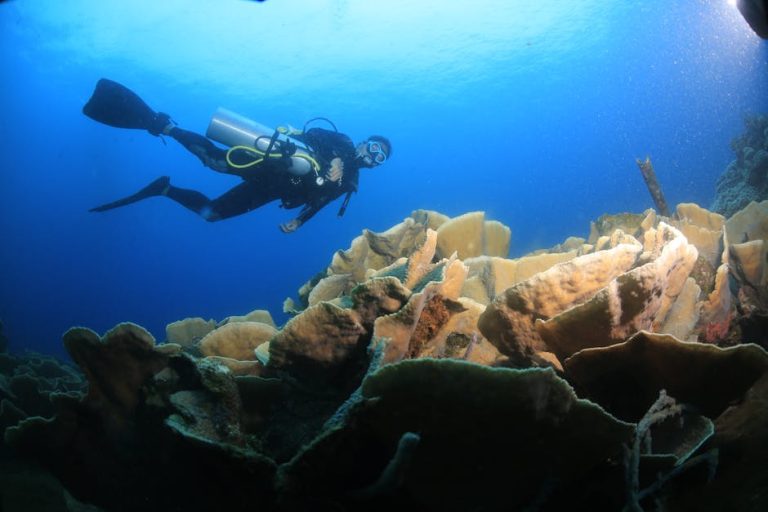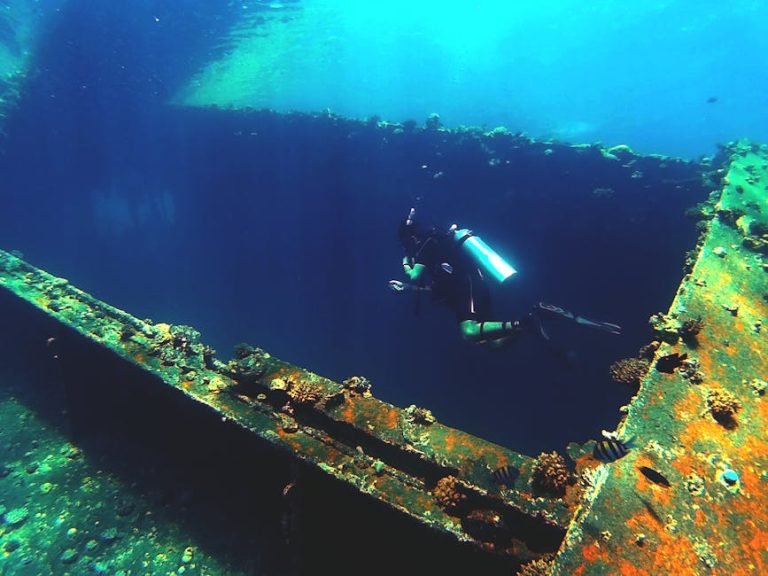
The Great Barrier Reef stretches over 2,300 kilometers along Queensland’s coast, but most visitors never venture beyond the shallow coral gardens and fish-filled channels. The deeper sections – the walls that drop into darker water, the sites requiring trimix and rebreathers – exist in a different world entirely. These are places where the reef’s structure becomes more geological than biological, where light fades quickly, and where the margin between a controlled dive and a serious problem narrows considerably.
Technical diving on the GBR isn’t something you stumble into. The reef’s most interesting deep walls sit beyond 40 meters, often reaching 60 to 80 meters before the bottom becomes irrelevant. At those depths, standard recreational air becomes a liability. Nitrogen narcosis sets in hard, oxygen toxicity becomes a real concern, and bottom time becomes a negotiation between gas reserves and decompression obligations. This is where trimix – a breathing gas blended from nitrogen, oxygen, and helium – becomes necessary, and where rebreathers shift from being an interesting technology to a practical requirement.
The Reality of Trimix Diving on the Reef
Trimix allows divers to push deeper while managing the physiological problems that come with depth. Helium replaces some of the nitrogen, reducing narcosis. Oxygen is carefully controlled to stay within safe limits at depth. The gas mixture is calculated specifically for the dive profile – different trimix blends for different depths. A dive to 70 meters requires a different mix than a dive to 50 meters, and getting this wrong isn’t a minor inconvenience.
The practical side of trimix diving involves more than just breathing a different gas. You’re managing multiple cylinders, each containing a different mix. Your primary cylinders hold the trimix blend for depth. Your decompression cylinders – often two or three of them – hold different gases for the ascent: typically a higher-oxygen mix for shallow decompression stops, and sometimes a pure oxygen cylinder for the final meter or two. On the GBR, where decompression obligations can stretch 20 to 30 minutes or more on a deep wall dive, these deco gases aren’t optional.
The logistics of getting trimix filled in Australia’s reef towns is straightforward if you plan ahead. Cairns and Port Douglas have dive shops equipped with trimix blending facilities, but they’re not everywhere. You can’t simply show up expecting to have custom gas mixed on the spot. Most operators require advance notice, and you’ll pay premium prices – trimix costs roughly three to four times what standard air costs. On a week-long diving trip, the gas bill alone can exceed accommodation costs.
Rebreathers and the Deeper Walls
Rebreathers change the equation entirely. A closed-circuit rebreather recycles your exhaled breath, scrubbing out carbon dioxide and adding back oxygen as needed. This means dramatically extended bottom time and reduced decompression obligations compared to open-circuit trimix. A dive that might require 25 minutes of decompression on trimix could demand only 10 to 15 minutes on a rebreather at the same depth.
But rebreathers demand respect. They’re more complex than open-circuit gear, with more potential failure points. You’re managing oxygen partial pressure, carbon dioxide levels, and electronics. Hypoxia – too little oxygen – can happen silently and unconsciously. Hypercapnia – too much carbon dioxide – can cause panic and poor decision-making underwater. These aren’t theoretical risks. They’re reasons why rebreather diving requires specialized training, regular practice, and honest assessment of your skills and experience.
On the GBR, rebreather diving opens access to walls and features that are marginal on trimix. The Ribbon Reefs, north of Cairns, have some of the most dramatic wall structures on the reef system. Walls drop from 30 meters to 100-plus meters, with interesting geology and occasionally unusual marine life at depth. On a rebreather, you can spend meaningful time at 60 to 70 meters examining the wall structure, watching for deep-water fish, and actually experiencing the dive rather than rushing through it on a tight gas budget.
The Physical and Mental Demands
Deep technical diving on the reef is physically demanding in ways that aren’t obvious until you’re doing it. You’re carrying significantly more weight than recreational divers – the extra cylinders, the rebreather unit itself if you’re using one, the redundant equipment. Getting into the water and managing buoyancy at depth requires precision and practice. Early in the morning, when the water is often calmest and clearest, you notice how much harder it is to maintain neutral buoyancy with a heavy rig compared to lighter recreational gear.
The mental side is equally important. Deep diving requires a calm, methodical approach. You’re managing multiple gas switches during the dive, monitoring your depth and time, keeping track of decompression obligations, and staying aware of your buddy and the environment. Nitrogen narcosis at depth creates a subtle euphoria and slowed thinking – the “rapture of the deep” isn’t a myth. You feel it around 40 meters, and it intensifies as you go deeper. Experienced deep divers learn to recognize it and compensate, but it’s a real factor in decision-making underwater.
The reef’s deep walls can feel isolated. You’re often diving in clear blue water with the wall visible but the bottom not. There’s less of the busy coral garden atmosphere and more of an open-ocean feeling. Some divers find this exhilarating. Others find it unsettling. Your psychological response to depth and isolation matters, and it’s something you discover only by doing it.
Seasonal Conditions and Visibility
The GBR’s deep walls are accessible year-round, but conditions vary significantly. Winter – June through August – brings cooler water and often clearer visibility. The water temperature drops to around 21 to 22 degrees Celsius, which means you need a thicker wetsuit or a drysuit. Summer brings warmer water, higher humidity, and sometimes rougher conditions. The wet season, December through March, can produce strong currents and reduced visibility, though deep walls often have better visibility than shallow reef areas because they’re less affected by runoff and sediment.
Early morning dives on the reef walls often offer the clearest water. By mid-morning, boat traffic and divers have stirred up sediment in shallower areas, and visibility can drop noticeably. On deep walls, this matters less because you’re starting your descent immediately, but it’s worth knowing. The rhythm of the reef changes throughout the day – fewer fish in the open water at midday, more activity in early morning and late afternoon.
Training and Certification Reality
Technical diving on the GBR requires proper training, and there’s no shortcut. You need advanced open water certification at minimum, then technical diving training that covers deep diving, trimix, decompression procedures, and equipment configuration. If you’re planning to use a rebreather, add rebreather-specific training on top of that. Reputable operators on the reef won’t take you on technical dives without documentation of appropriate certifications.
The training is worth doing properly. Rushing through certifications or training with operators who cut corners is how accidents happen. The reef’s deep walls are forgiving in some ways – they’re not in a confined space, and you have room to make corrections – but they’re unforgiving in others. A gas management error at 70 meters has consequences that a gas management error at 12 meters doesn’t.
Most technical diving on the GBR happens through specialized operators based in Cairns and Port Douglas. These aren’t the big recreational dive shops. They’re smaller operations run by experienced technical divers who know the reef’s deep sites intimately. They understand the logistics, the gas requirements, the decompression obligations, and the weather patterns. Using a reputable operator isn’t just safer – it’s the only practical way to access these dives if you’re traveling from elsewhere.
The experience of deep technical diving on the Great Barrier Reef stays with you differently than recreational diving. You’re not there to see the most fish or the brightest corals. You’re there to experience the reef’s structure at depth, to understand how it’s built, and to push your skills and training to their limits in a controlled way. It’s demanding, expensive, and requires serious preparation. For divers who’ve done the work and developed the skills, it’s one of the world’s most compelling diving destinations.