The Great Barrier Reef sits off the coast of Queensland, Australia, stretching over 1,400 kilometers along the northeastern edge of the continent. If you’re planning to actually get there and spend time on the water, you’ll need to think through how you’re arriving in Australia first, then how you’re getting from the mainland to the reef itself. Most people don’t realize that “getting to the reef” involves multiple transport decisions, each with different costs, timing, and practical trade-offs.
The reef doesn’t have an airport or a port where you can simply arrive. You’re traveling to coastal towns – primarily Cairns, Port Douglas, or the Whitsunday Islands – and then taking a boat out. The choice of how you get there shapes your entire experience, from how tired you are when you first hit the water to how much time you actually spend on the reef itself.
Flying into Australia and Regional Airports
International flights land in Australia’s major cities: Sydney, Melbourne, or Brisbane. From there, you need to reach the reef region. Most travelers fly into Cairns, which is the primary gateway to the northern reef. A direct international flight from North America or Europe to Cairns doesn’t exist on most routes, so you’re looking at a connection through a major Australian hub.
Cairns Airport is small and manageable compared to Sydney or Melbourne. The flight from Brisbane to Cairns takes about two hours. If you’re budget-conscious, you can find regional flights for AUD $80 – 150 one way, though this varies wildly by season and how far in advance you book. During peak season (June to August), prices climb. The airport is about 4 kilometers north of Cairns city center, and a taxi or shuttle will run you AUD $20 – 35.
Port Douglas is another option, about 75 kilometers north of Cairns. It’s quieter than Cairns and closer to some northern reef sections, but you’ll need to drive or take a shuttle from Cairns Airport. The drive takes roughly 90 minutes, and shuttle services cost around AUD $25 – 40 per person. If you’re renting a car, factor in the rental cost plus fuel.
The Whitsunday Islands region, accessed through Proserpine or Hamilton Island airports, works if you’re targeting the central reef. Hamilton Island has more flight options and is more developed as a resort destination, but it’s also significantly more expensive. Flights there from Brisbane run AUD $150 – 250 one way during shoulder seasons.
Budget Boat Tours and Day Trips
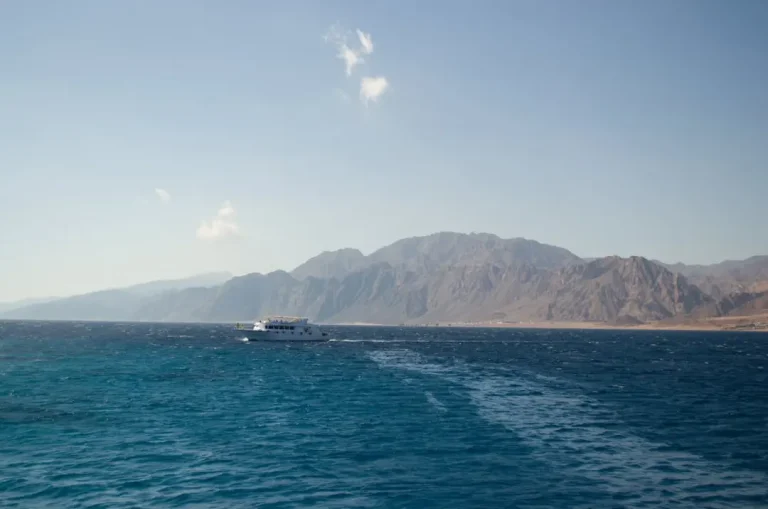
Once you’re in Cairns, the cheapest way onto the reef is a group boat tour. These are the large, fast catamarans that leave the marina every morning carrying 200 to 400 people. You’ll pay AUD $150 – 220 for a full day, which includes transport, snorkeling gear, and usually lunch. The boats are efficient and operate on tight schedules. You’re on the water by 8:30 AM and back by 4:30 PM.
The reality of these tours: they’re crowded, the reef sections they visit are heavily trafficked, and you’re sharing the experience with a lot of other tourists. The water clarity can vary dramatically depending on season and recent weather. During the dry season (May to October), visibility is generally better. In the wet season (November to April), tropical rain and runoff reduce visibility, though the reef is still worth seeing. The boats themselves are stable and well-maintained, but if you’re prone to seasickness, the 45-minute journey out can be rough on choppy days.
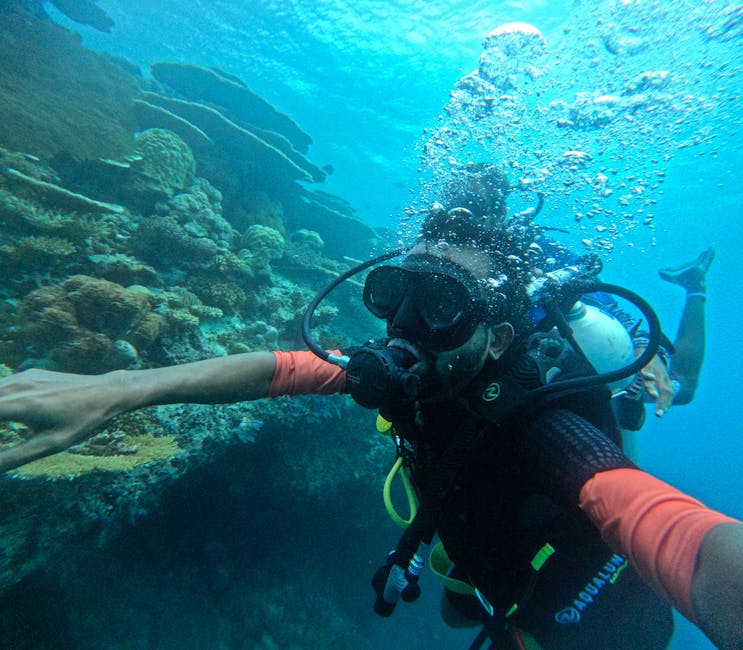
Budget tours typically visit reef platforms or pontoons where you can snorkel directly from the boat. You’re not diving – snorkeling only – so you see coral and fish in shallow water. The experience is real, but it’s a managed, time-limited version of the reef. You get maybe three to four hours in the water, split between two or three locations.
Mid-Range Options: Smaller Group Tours and Liveaboards
If you want more time on the reef without spending resort prices, smaller group tours offer a middle ground. These boats carry 20 to 50 people and often spend more time at fewer locations. Prices run AUD $250 – 400 for a full day. The boats are still fast catamarans, but the experience feels less industrial. You might spend five to six hours actually in the water across multiple sites.
Liveaboard boats are a different category entirely. You sleep on the boat for two to four nights and spend entire days diving or snorkeling at multiple reef sites. Costs range from AUD $600 – 1,200 for a three-day trip, depending on the boat’s standard and whether you’re diving or snorkeling. The advantage is time and depth of experience. You see the reef at different times of day, visit less-trafficked sections, and develop a real sense of the ecosystem rather than a snapshot.
Liveaboards require more planning. You need to arrange transport to the departure port (usually Cairns), book in advance, and be comfortable spending several nights at sea. The boats can rock, especially if weather moves in. Some people find this peaceful; others find it exhausting. The water conditions matter more on liveaboards because you’re committed to being there for multiple days. A liveaboard during the wet season when visibility drops to 5 to 10 meters feels very different from one during the dry season when you can see 25 to 30 meters.
Premium Access: Private Charters and Resort Islands
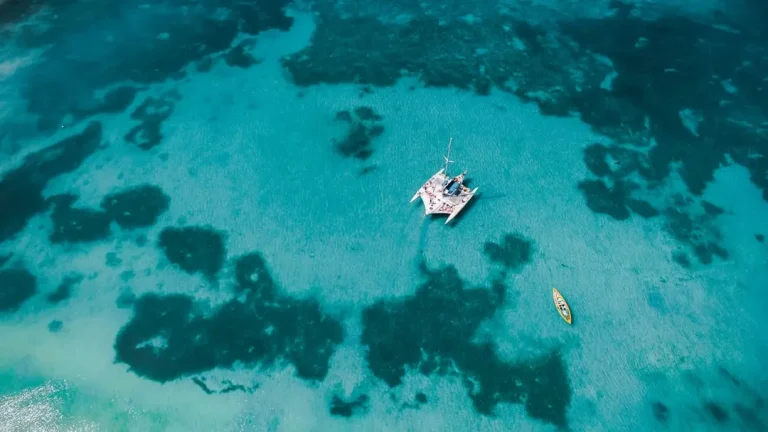
If you want control over your schedule and smaller groups, private boat charters are available. You’re paying for the boat, crew, and fuel, which starts around AUD $1,500 – 2,500 per day for a modest vessel. This works if you’re traveling with a group and can split costs, or if you have a specific reef area you want to explore. The advantage is flexibility: you leave when you want, stay as long as you want, and choose your sites based on conditions.
Resort islands in the Whitsundays – like Hayman Island, Lizard Island, or Orpheus Island – offer another premium approach. You stay on the island and take day boats or helicopter tours to the reef. Accommodation alone runs AUD $500 – 1,500 per night at established resorts. The reef experience is similar to group tours, but the overall setting is more exclusive and the island itself becomes part of the experience. These resorts cater to people who want the reef as part of a broader island experience, not necessarily the main focus.
Helicopter tours over the reef are available from Cairns and cost AUD $300 – 600 for 30 to 45 minutes. You’re not in the water, but you see the reef’s structure and scale from above. Some people find this worthwhile as a complement to snorkeling; others feel it’s an expensive way to see something you can experience better from the water.
Timing, Seasons, and What Actually Affects Your Visit
The best time to visit depends on what you’re prioritizing. The dry season (May to October) offers the clearest water, calmest seas, and most comfortable weather. It’s also peak tourist season, so boats are full and prices are higher. June through August are the busiest months. If you book a tour during this period, expect crowding at popular snorkel sites and less personal attention from crew.
The wet season (November to April) brings higher water temperatures, occasional cyclones, and reduced visibility due to river runoff. However, it’s also quieter, cheaper, and the reef is less crowded. If you’re a strong swimmer and don’t mind reduced visibility, you can have a more intimate experience. The water is warmer, so you need less wetsuit protection. Tour operators run fewer boats during this period, so group sizes are smaller.
Shoulder seasons (April to May and September to October) offer a balance. Weather is stable, visibility is decent, and crowds are moderate. Prices are lower than peak season but higher than wet season. If you’re flexible with dates, these months are often the sweet spot for value and experience.
Tides and weather affect reef access more than most travelers realize. Some reef sections are only accessible at certain tides. Strong winds can make certain areas rough or off-limits. Boat operators check conditions the night before and sometimes change planned sites on the morning of departure. If you’re on a tight schedule with only one day available, you’re gambling slightly with weather conditions.
Getting Around Once You’re in the Reef Region
If you’re staying in Cairns for multiple days, you can mix different boat operators and experiences. Some people do a budget group tour on day one to see the reef basics, then a liveaboard or smaller tour on day two. This approach costs more overall but gives you variety and a deeper sense of the reef’s different sections and conditions.
Port Douglas offers slightly different reef access points and is worth considering if you want to avoid Cairns crowds. The drive from Cairns takes 90 minutes, but boat tours from Port Douglas often feel less industrial. You’re paying similar prices but with fewer people on the boats.
If you’re combining reef time with other Queensland destinations – like the Daintree Rainforest, Atherton Tablelands, or island time – you’ll need to factor in travel time between locations. A typical itinerary might be two to three days on or near the reef, then movement to other areas. This requires planning transport in advance, especially if you’re renting a car or using shuttles.
The practical reality is that getting to the Great Barrier Reef involves choices at multiple levels. Your budget, available time, comfort with crowds, and interest in depth versus breadth all shape what option makes sense. The reef itself is real and worth experiencing at any price point, but the quality and character of that experience varies significantly depending on how you approach it.