The question comes up often enough among people planning a trip to Australia’s coast: should I go to Ningaloo Reef in Western Australia to see whale sharks, or head to the Great Barrier Reef in Queensland? Both promise encounters with some of the ocean’s most impressive creatures, but the experience of getting there, the actual conditions you’ll face, and what you’ll see underwater are surprisingly different. Having spent time at both, the choice depends less on which is “better” and more on what kind of trip you’re actually willing to take on.
Ningaloo Reef sits along the coast of Western Australia, about 1,200 kilometres north of Perth. It’s remote in a way that requires deliberate planning. The Great Barrier Reef, by contrast, is more accessible – the main departure points are Cairns and Port Douglas in far north Queensland, cities with regular flights and established tourism infrastructure. This difference in accessibility shapes everything about how you experience each place.
Getting to the Water
Reaching Ningaloo means either driving yourself or relying on limited transport options. The town of Exmouth is the main hub, and it’s a long drive from anywhere significant. You’ll spend hours on red dust roads or fly into a small regional airport. Once there, the reef is genuinely close – sometimes visible from the shore – but the remoteness works both ways. There are fewer operators, fewer boats, and fewer people overall. This isolation is part of Ningaloo’s appeal, but it also means less choice in tour operators and potentially higher costs for what you get.
The Great Barrier Reef feels like a different world entirely. Cairns is a proper tourist town with dozens of reef operators, competitive pricing, and boats leaving multiple times daily. You can book a tour the day before you go, or even the morning of. The infrastructure is there because millions of people visit each year. This accessibility comes with a trade-off: you’re sharing the reef with far more people.
The Whale Shark Season and Timing
Whale sharks appear at Ningaloo between March and June, with April and May being the most reliable months. This is a genuine seasonal window. The sharks migrate to feed on plankton blooms, and if you miss the season, you miss the experience entirely. Planning a trip to Ningaloo means committing to specific months.
Check real traveller reviews, prices, availability, departure points, and flexible booking options in one place.
The Great Barrier Reef doesn’t have whale sharks as a primary draw in the same way. You might see them, but they’re not the reason people visit. The reef itself is there year-round, though water conditions, visibility, and weather vary significantly by season. The best visibility is typically between June and September, when the water is clearer and cooler. Cyclone season runs November through March, which affects both safety and water clarity.
What the Water Actually Looks Like
Ningaloo’s water is often clearer than people expect, but it’s not always crystal-clear. The visibility depends on the time of day, the tide, and recent weather. Early morning swims tend to offer better clarity because the water hasn’t been churned up by wind and boat traffic. The water temperature is warm year-round, sitting around 24-26 degrees Celsius during the whale shark season. You can snorkel in minimal gear, though a light rashguard helps with sun protection.
The Great Barrier Reef’s visibility varies more dramatically depending on where you go and when. The outer reef typically has better visibility than the inner reef, but it also requires a longer boat journey. Water temperature ranges from about 24 degrees in winter to 29 degrees in summer. The reef itself is more densely populated with fish and coral than Ningaloo, which means richer marine diversity but also more visual complexity underwater.
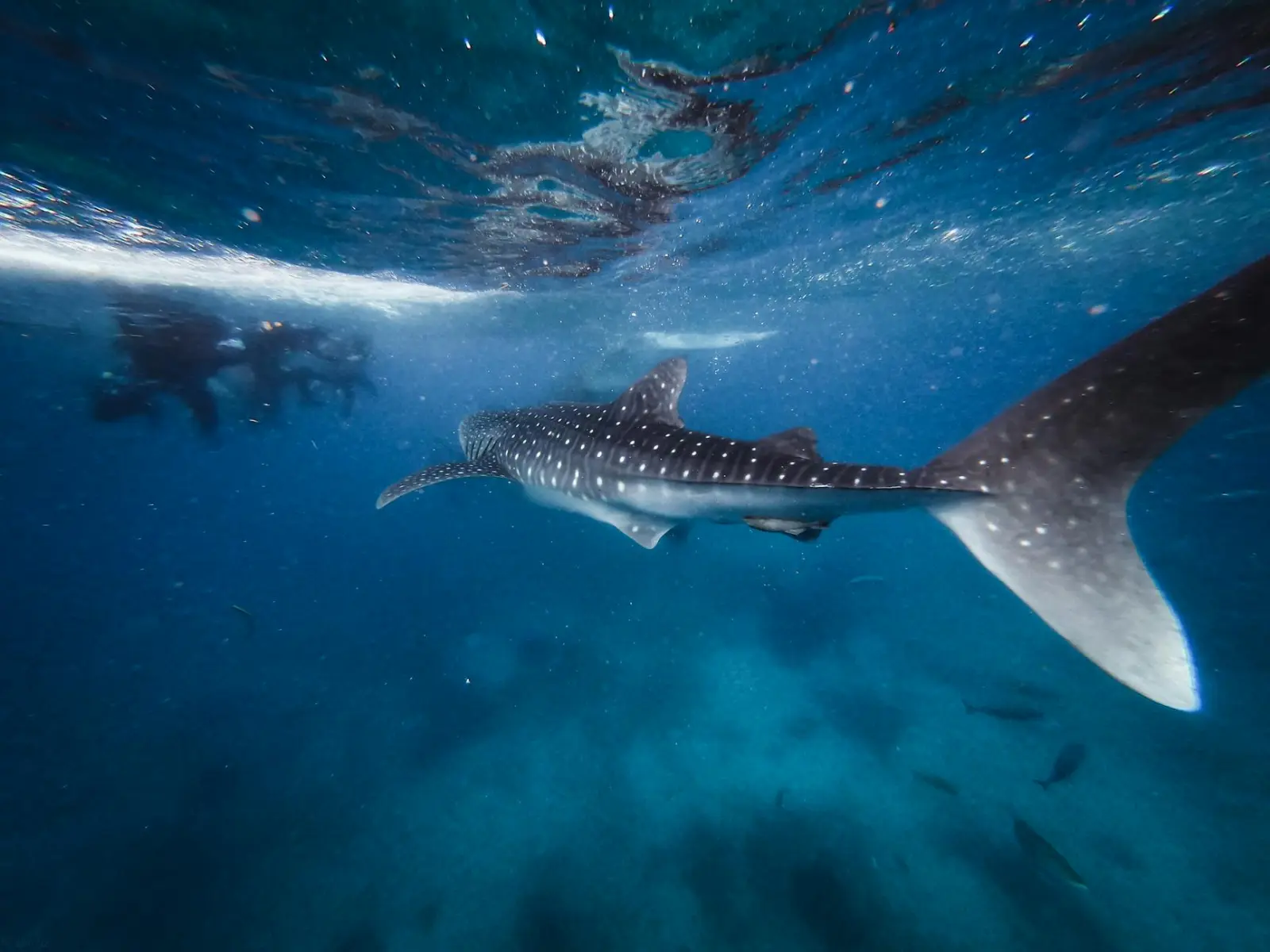
One thing people don’t always anticipate: the whale sharks at Ningaloo are genuinely massive, and snorkelling alongside them is disorienting. The scale is hard to process from a boat. You’re in the water, swimming, and suddenly this enormous creature glides past. It’s not aggressive, but it’s also not a small fish. The Great Barrier Reef offers more variety in what you’ll see – turtles, rays, thousands of smaller fish species, coral formations – but the experience is less about a single dramatic encounter and more about immersion in a complex ecosystem.
Crowds and the Actual Experience
Ningaloo can feel crowded during peak season, but it’s a different kind of crowded than the Great Barrier Reef. There might be 20 or 30 people in the water with a whale shark, which sounds like a lot until you’re actually there and realise how vast the ocean is. The remoteness of the location naturally limits how many operators can run tours on any given day.
The Great Barrier Reef experiences genuine mass tourism. Popular reef sites can have hundreds of people in the water simultaneously, spread across multiple boats and operators. This doesn’t ruin the experience – the reef is large enough to absorb the traffic – but it changes the atmosphere. You’re part of an organised, commercial operation in a way that’s more obvious at the Great Barrier Reef than at Ningaloo.
The morning departure from Exmouth to Ningaloo is quieter and more intimate. You’re often on a smaller boat with fewer people. The Great Barrier Reef tours are more regimented: you board a large catamaran with 200 other people, get a briefing, and follow the crew’s instructions. Neither approach is wrong, but they feel fundamentally different.
Physical Demands and Comfort
Snorkelling at Ningaloo requires reasonable fitness and comfort in open water. You’re swimming in the ocean, often in deeper water than you’d find in a pool. The boats are smaller, which means more noticeable movement in any swell. If you get seasick easily, this matters. The experience is more raw and less cushioned by modern comfort.
The Great Barrier Reef tours cater to a broader range of fitness levels. The boats are larger and more stable. There are platforms and ladders designed for easy entry and exit. The water at popular reef sites is often shallower and calmer. If you’re nervous about water or have mobility concerns, the Great Barrier Reef is more accommodating.
Cost and Value
A whale shark tour at Ningaloo typically costs between 250 and 400 Australian dollars per person, depending on the operator and season. You’re paying for the experience of seeing the sharks, which is genuinely unique. The tours are shorter – usually a few hours – and focused entirely on the whale shark encounter.
Great Barrier Reef tours range widely, from budget options around 150 dollars to premium all-day experiences costing 300 or more. You’re paying for reef access and marine diversity rather than a specific creature encounter. The value proposition is different: you’re guaranteed a reef experience, but not a specific animal sighting.
If whale sharks are your primary goal, Ningaloo is the only place to reliably see them. If you want a broader reef experience with diverse marine life and don’t have a specific creature in mind, the Great Barrier Reef offers more variety. Neither destination is objectively better – it depends on what you’re actually seeking and how much effort you’re willing to invest in getting there.
Compare top-rated tours, prices, availability, and real traveller reviews before booking. See what’s actually available for your dates and departure location.
Compare tours and check availability