Every diver who has been told, for the hundredth time, to never dive alone has at some point thought: but why, exactly?
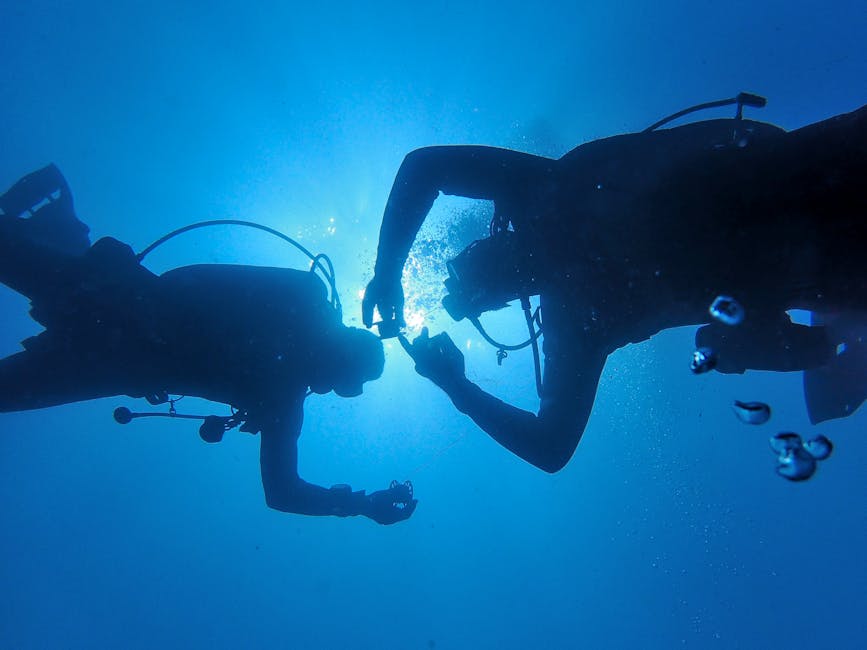
The answer is not simple, and the standard training answer — “always dive with a buddy” — is not wrong, but it is incomplete. The dive industry’s blanket prohibition on solo diving reflects the conditions under which most recreational divers operate: limited experience, unfamiliar sites, equipment that may not have been checked recently, and no training in the specific skills that make solo diving manageable.
Under different conditions — experienced diver, familiar site, thoroughly checked equipment, specific training in solo protocols — solo diving is practiced safely by significant numbers of recreational divers worldwide. It is recognised by PADI (which offers a Self-Reliant Diver specialty) and by SSI, and it is standard practice for underwater photographers, scientific divers, and many technical divers.
The Real Risk: Equipment Failure and Out-of-Air Emergencies
The buddy system exists primarily to address two emergencies: equipment failure (particularly regulator failure) and out-of-air situations. If your regulator fails underwater, a buddy with an alternate air source solves the problem. Without a buddy, you are dependent on your equipment not failing.
The solo diver’s response to this is redundancy. A standard solo diving configuration includes a pony bottle — a small independent tank with its own regulator, typically 3–6 litres, carrying enough air for a controlled ascent from recreational depths — clipped to the BCD. If your primary regulator fails, you switch to the pony and ascend. The pony bottle doesn’t replace a buddy; it replaces the air-sharing function of a buddy.
A backup computer, a redundant dive light, and an SMB are standard additions. Solo divers are not diving with less equipment than buddy divers. They are diving with more.
The Skill Requirements
Self-reliant diving training requires Advanced Open Water as a prerequisite, a minimum number of logged dives (typically 100), and training in emergency procedures conducted without a buddy — deploying an SMB one-handed, managing regulator freeflows, conducting independent emergency ascents.
The training doesn’t teach new skills so much as it removes the mental dependency on a buddy that recreational training installs. The result is a diver who has thought systematically about every component of their equipment and every scenario where something might go wrong, and who has responses to each that don’t require another person.
On the GBR: Where Solo Diving Makes Sense
Underwater photography is the most common reason GBR divers seek solo certification. The difference between diving with a buddy who wants to move at dive-pace and diving alone with a camera is the difference between snatching hurried shots and spending twenty minutes with a single subject. Nudibranch photographers, macro photographers, anyone who dives for the quality of their images rather than the quantity of their sites will understand this immediately.
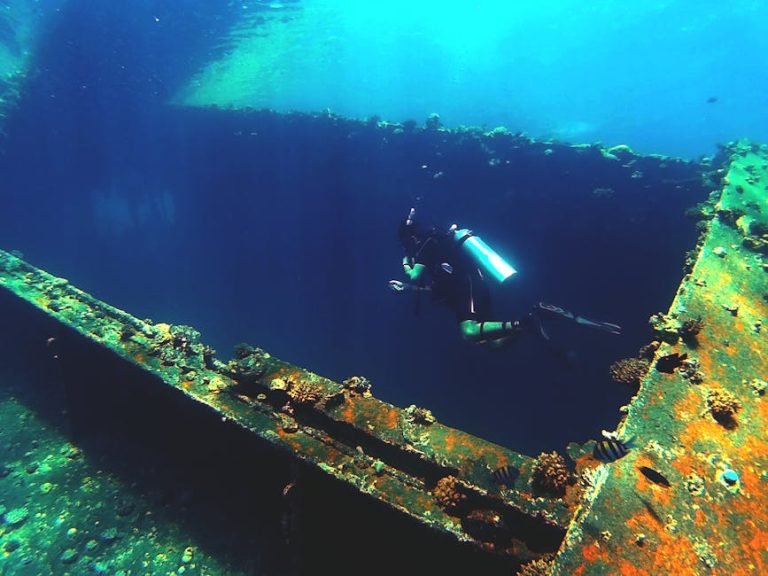
Shore dives at sites like the Jetty at Mackay, the SS Yongala (where operators permit solo diving for qualified self-reliant divers), and various port structures require solo certification, since there’s no operator to pair you with a buddy.
The Honest Caveat
Solo diving on unfamiliar sites, in poor visibility, in strong current, or at depth is more dangerous than the same diving with a competent buddy. The solo diving framework doesn’t eliminate risk — it manages it through equipment redundancy and skill, which are good risk management tools but not perfect ones.
The buddy system is not a bureaucratic formality. It is a genuine safety tool. Solo diving doesn’t replace it. It extends the range of situations in which an experienced, well-equipped diver can choose to operate.