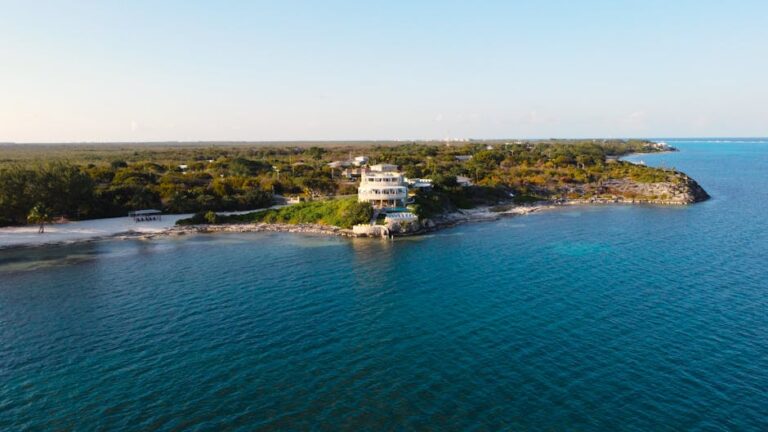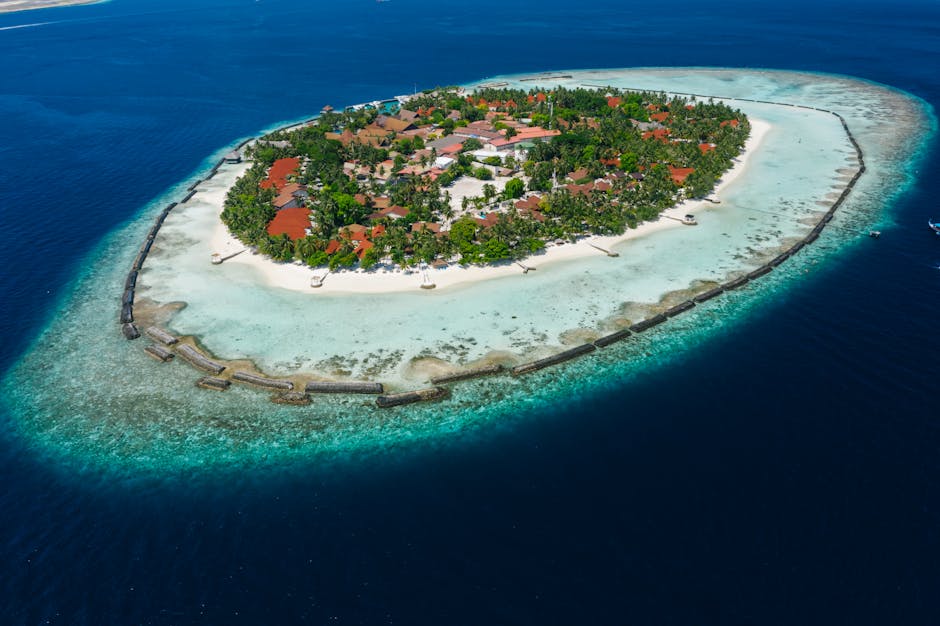
Lizard Island is the northernmost island resort on the Great Barrier Reef, 240 kilometres north of Cairns, and it occupies a position in Australian reef travel that is difficult to categorise accurately. It’s a luxury resort — unambiguously, unapologetically upmarket, with the prices to match. It’s also a world-class research station, with a scientific facility that has been continuously operational since 1974. And it’s surrounded by some of the finest reef diving accessible from any land base on the GBR.
These three things coexist on an island of about ten square kilometres, and somehow they don’t conflict.
The Island and the Research Station
Lizard Island sits in the Coral Sea, 27 kilometres offshore from the Queensland coast at its closest point. It’s a granitic island rather than a coral cay — it was formed by geological processes rather than biological accumulation — which gives it a different physical character from the low, flat cays of the southern GBR. The island has hills, rocky headlands, and a series of sheltered bays with white sand beaches, and Cook’s Look — the highest point, from which Captain Cook famously searched for a passage through the reef in 1770 — gives a 360-degree view over the surrounding reef and ocean that is genuinely one of the great vantage points in Queensland.
The Lizard Island Research Station, operated by the Australian Museum, is one of the longest-running tropical marine research programs in the world. Scientists working at the station have contributed to foundational knowledge of GBR ecology, coral biology, fish behaviour, and reef response to climate change. The station coexists with the resort — visiting researchers and resort guests share some of the same diving infrastructure, and the station offers reef tours and talks that are available to guests.
This proximity to active research is something I value in reef destinations. When you can sit at dinner and ask a researcher what they’re currently studying, the reef you dived that afternoon becomes three-dimensional in a way that tourism alone doesn’t produce.
Check real traveller reviews, prices, availability, departure points, and flexible booking options in one place.
The Cod Hole Access
Lizard Island is the only resort on the GBR from which the Cod Hole — the famous site on Ribbon Reef No. 10 — is accessible as a day trip. The boat journey takes approximately 1.5 hours each way, which makes for a long day, but it means that Lizard Island guests can dive the Cod Hole and return to resort accommodation without a liveaboard.
This is a significant practical advantage for divers who want the Cod Hole experience but don’t want to spend a week on a boat. The trade-off is that you get one dive rather than the multiple opportunities a liveaboard provides; the advantage is that you sleep in an actual bed and eat at an actual restaurant.
Diving Around Lizard Island Itself
The reef systems immediately surrounding Lizard Island provide excellent diving independent of the Cod Hole excursions. The outer reef walls to the northeast of the island — part of the ribbon reef system — offer drift diving in clear oceanic water with visibility commonly exceeding 25 metres. The wall diving along these outer faces produces the dense soft coral coverage and shark encounters characteristic of the far northern GBR.
The lagoon and inner reef areas around the island have more varied conditions — more affected by terrestrial runoff and the tidal dynamics of the inner shelf — but produce good macro diving and consistent turtle encounters. Several of the sheltered bays have resident populations of Maori wrasse, easily the largest and most personable of the GBR’s resident reef fish.
Clam Garden, a dive site in the lagoon accessed directly from the resort’s beach, is notable for its population of giant clams (Tridacna gigas) — the largest bivalves in the world, reaching up to 1.2 metres across and weighing several hundred kilograms. These animals are filter feeders, siphoning plankton from the water column, and their mantle colouration — vivid iridescent patterns of blue, green, purple, and brown produced by their zooxanthellae-containing tissues — makes them among the most photogenic reef invertebrates.
The Wrasse and the Research
The Maori wrasse (Cheilinus undulatus) population at Lizard Island has been the subject of long-term research by the station’s scientists. Individual fish, identifiable by their facial markings and size, have been tracked across years, and their behaviour — social hierarchies, feeding patterns, territory use — documented in detail.
The fish themselves seem aware of this attention. The larger individuals at Lizard Island approach boats and divers with the confidence of animals that have been observing humans for years and concluded that we are not, on balance, worth being concerned about. The largest resident wrasse at the site, known to researchers and resort guides by individual name, is over 1.8 metres long and has been present at the site for well over a decade.
Diving with large Maori wrasse that choose to accompany you along a reef section — swimming at your speed, apparently investigating you with genuine curiosity — is an experience I find difficult to adequately describe. They are very large, very intelligent animals, and their interest in you is unmistakable.
Getting to Lizard Island
Lizard Island is accessible by direct scenic flight from Cairns — approximately 1 hour 15 minutes — or by private charter. There is no ferry service and no day visitor access; Lizard Island is exclusive to resort guests and researchers.
The exclusivity is a feature rather than a bug. The island’s beaches and dive sites are uncrowded to a degree that becomes apparent immediately on arrival. On a dive at the outer reef wall, I have been the only diver in the water. On the beach at Watson’s Bay — the island’s finest beach, a long crescent of white sand on the sheltered western side — I have spent an entire afternoon without seeing another person.
This is possible on the GBR, but you need to be willing to pay for it or to find it on a liveaboard. Lizard Island is the land-based option.
The price is significant — Lizard Island ranks among the more expensive resort destinations in Australia. The quality of the experience, particularly for divers who want northern GBR reef access with research station depth and Cod Hole day trips, justifies the cost in a way that I think is straightforward to evaluate. You are paying for location, quality of diving, and the particular pleasure of being in a place where the research and the tourism are pointing in the same direction.
Go once, at least. Climb Cook’s Look in the late afternoon, look out over the reef you just dived, and understand why someone sailed a wooden ship into this and thought it was worth the risk.
Compare top-rated tours, prices, availability, and real traveller reviews before booking. See what’s actually available for your dates and departure location.
Compare tours and check availability