The first time I put my face underwater with a regulator in my mouth, I panicked.
Not dramatically — no thrashing, no bolting for the surface. Just a quiet, internal seizing-up. The kind of panic that sits behind your eyes and whispers: this is not where you belong. I was in a swimming pool in Cairns, four feet of water beneath me, an instructor standing two metres away, and I was absolutely convinced I was about to drown.
I didn’t drown. I breathed. And within thirty seconds, something shifted — a kind of neurological renegotiation with reality — and I understood, in a way that no amount of pre-dive theory had conveyed, that the regulator worked. That I could breathe. That the ocean was going to let me in.
That was seventeen years ago. I have not stopped diving since.
What Learning to Dive Actually Involves
There’s a version of the “learn to dive” story that gets told in brochures: turquoise water, instant wonder, transformation complete. That version isn’t wrong, exactly, but it skips the part where you spend your first pool session feeling deeply uncoordinated and mildly terrified, and that’s the part worth talking about, because it’s also the part that makes what comes after feel earned.
The standard entry-level certification — PADI Open Water, SSI Open Water, or the equivalent from NAUI, SDI, or other agencies — consists of three components: knowledge development (theory), confined water dives (pool or pool-like conditions), and open water dives (four dives in the actual ocean, or lake, or sea).
The theory covers the physics and physiology of diving: how pressure affects your body, how air behaves at depth, what happens to your ears and sinuses when you descend, why you never hold your breath, what decompression sickness is and how to avoid it. Most people find this section more interesting than they expected. The physics of diving is genuinely fascinating once you understand that every ten metres of water adds one full atmosphere of pressure to your body, and that this simple fact cascades into dozens of practical implications for how you dive.
The pool sessions are where you learn the skills: clearing a flooded mask, recovering a regulator, sharing air with a buddy, achieving neutral buoyancy, making controlled ascents. Most of these skills feel awkward at first and completely natural by the end. The one that takes the most practice — the one that separates divers who are comfortable underwater from divers who are merely certified — is buoyancy control.
The Buoyancy Problem
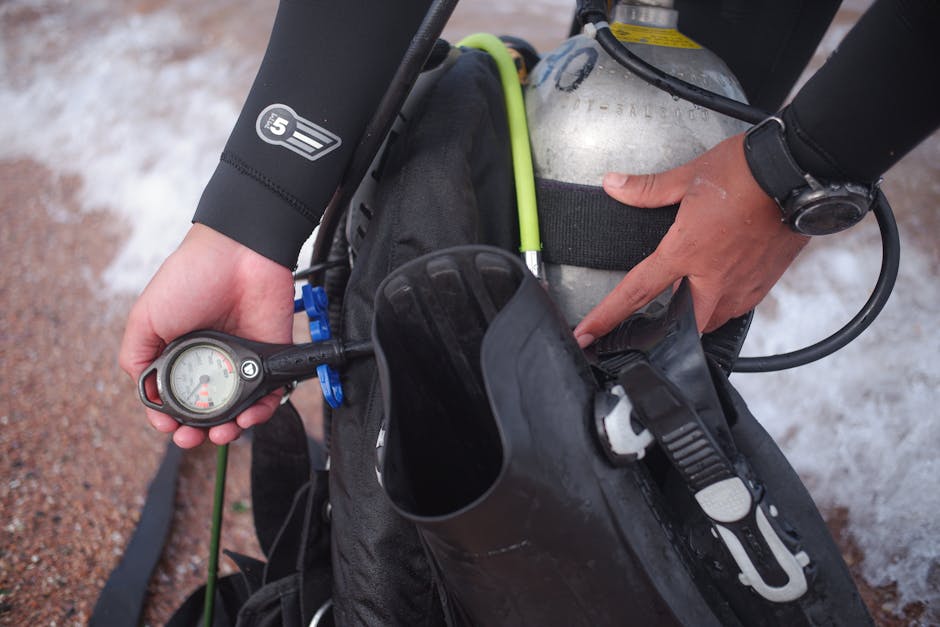
Neutral buoyancy is the art of hanging in the water column without sinking or rising, using the buoyancy compensator device (BCD) and your own breathing to make micro-adjustments. When you inhale, you rise slightly. When you exhale, you sink slightly. The goal is to find the equilibrium point where a single breath cycle produces a gentle, controlled oscillation — maybe ten centimetres of rise and fall — rather than a continuous drift in one direction.
This sounds straightforward. It is not straightforward. New divers almost universally over-inflate their BCDs, which makes them float upward, which makes them kick harder to stay down, which exhausts their air faster, which makes the whole experience more stressful than it needs to be. The instinct, when you feel yourself rising, is to add more weight or kick more. The correct response is to exhale slowly, deflate the BCD slightly, and wait.
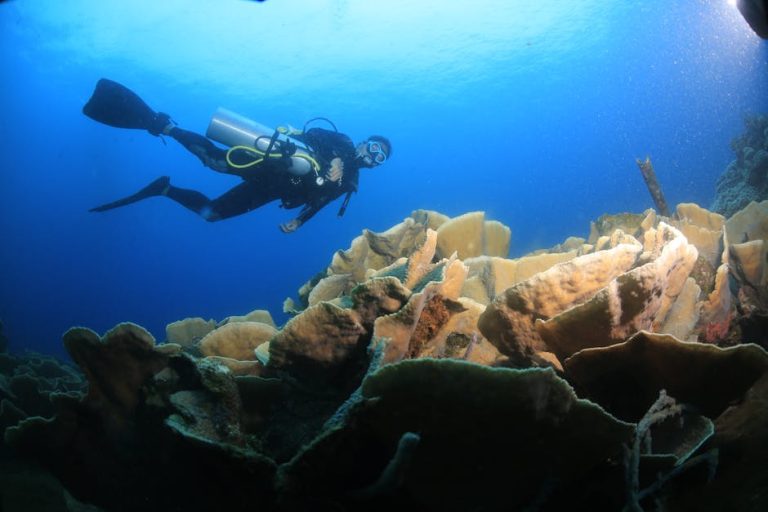
The difference between a diver with twenty dives and a diver with two hundred dives is mostly buoyancy. The experienced diver moves through the water with a kind of unhurried efficiency — slight forward pitch, arms relaxed, fins making small slow movements — that looks effortless because it essentially is. The new diver churns, overcorrects, and uses three times as much air.
The good news: buoyancy improves faster than almost any other dive skill. By your tenth dive, you will be noticeably better than on your first. By your thirtieth, you will have stopped thinking about it consciously.
Choosing Where to Learn
The quality of your learn-to-dive experience depends significantly on where you do it and who teaches you. A pool certification completed in a landlocked city is perfectly valid, but it means your first open water dives — the ones that determine whether you fall in love with diving or not — will happen on holiday, probably in conditions you haven’t prepared for.
My strong recommendation: if you have the opportunity, do your full certification in the location where you want to dive. Cairns and the Whitsundays are obvious choices for Great Barrier Reef access. Port Douglas, Airlie Beach, and the Coral Sea all produce certified divers who have done their checkout dives on genuinely spectacular reefs, which makes the transition from “learning to dive” to “diving” feel immediate and rewarding rather than deferred.
If you’re doing a referral course — completing the theory and pool sessions at home, then finishing the open water dives at your destination — make sure the receiving dive school is reputable and that you’ve practised your skills thoroughly before arrival. Showing up for referral open water dives having half-forgotten everything from the pool session is both common and avoidable.
What Happens After You’re Certified
The Open Water certification qualifies you to dive to 18 metres with a buddy. That’s enough depth to access most of the world’s reef diving, and most of the marine life you’ll want to see lives shallower than that anyway.
The natural progression is Advanced Open Water, which introduces you to five new types of diving (deep diving to 30 metres, navigation, and three electives of your choice) across five supervised dives. Many divers complete Advanced OW on the same trip as their initial certification — the combined course is standard practice at most Cairns and Whitsundays operators.
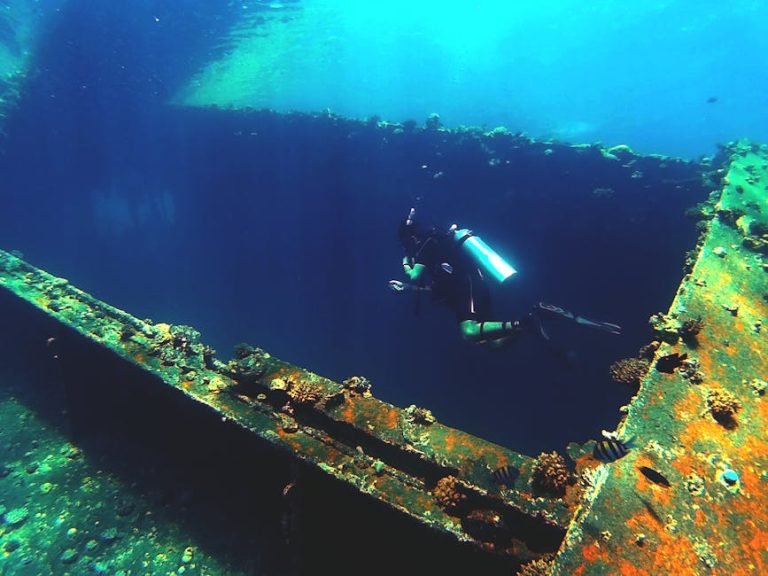
Beyond that: Rescue Diver, which teaches you to manage diving emergencies, is widely regarded as the most personally transformative course in recreational diving. Divemaster is the first professional-level certification. Specialties — wreck diving, underwater photography, night diving, drift diving — each open new dimensions of the underwater world.
But all of that is downstream of the pool in Cairns, the regulator in your mouth, the quiet panic, and the moment it resolved into breathing.
Start there. Everything else follows.