The first time I dived in Raja Ampat, I surfaced after the second dive of the first day, looked at my buddy, and said nothing for about a minute. There was nothing useful to say. We had just come up from a wall in 30-metre visibility that had more fish on it than I could process — a density of life that made every other reef I’d dived in the previous decade feel like a draft version of what a reef could be.
Raja Ampat is not the only extraordinary diving in the Indonesian Coral Triangle. It is, however, the place that recalibrates your expectations most permanently.
The Coral Triangle: What Makes It Different
The Coral Triangle is the geographic region bounded by the Philippines, Malaysia, Indonesia, Papua New Guinea, the Solomon Islands, and Timor-Leste. It covers approximately 6 million square kilometres of ocean and contains the highest marine biodiversity on Earth — roughly 76% of all known coral species, more than 3,000 fish species, and six of the world’s seven sea turtle species.
The reason for this concentration is historical and geographic: the Coral Triangle sits at the junction of the Indian and Pacific Oceans, has remained largely free of the glacial sea level drops that sterilised parts of the Indo-Pacific during ice ages, and has had millions of years as a stable, warm, shallow-sea environment for reef evolution to operate in. The species number is the result of this long, stable history.
Raja Ampat: The Entry Point
Raja Ampat — “Four Kings” in Indonesian — is an archipelago of roughly 1,500 small islands and atolls off the tip of the Bird’s Head Peninsula in West Papua. It has, since its emergence as a diving destination in the early 2000s, consistently ranked in global assessments as one of the finest marine environments accessible to recreational divers.
The species count is the most cited statistic: 553 coral species and 1,604 fish species have been recorded in Raja Ampat — figures that exceed the total marine biodiversity of the entire Caribbean combined. The number is real but doesn’t capture what actually matters, which is the quality of the experience rather than the inventory.
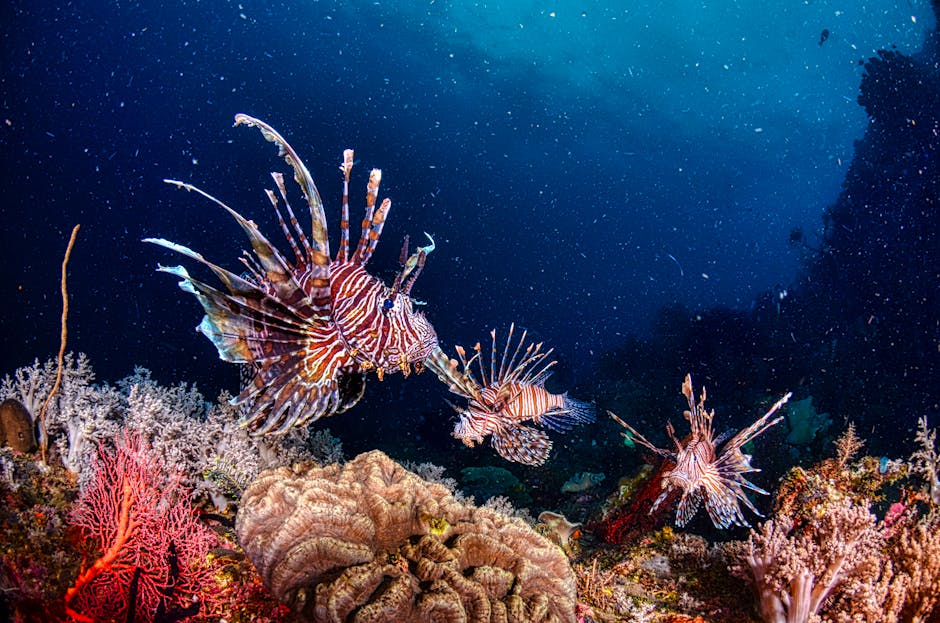
What you actually experience: visibility of 20 to 30 metres as the standard rather than the exception. Fish populations at densities that produce the sensation of swimming through clouds of living colour rather than individual fish encounters. Coral coverage that approaches 100% on the best walls and pinnacles, with species in such variety that identifying them becomes impossible after the first hour. Sharks and rays present as a matter of course rather than a highlight.
The diving in Raja Ampat is divided geographically into several areas, each with a different character. The Dampier Strait — the channel between the main islands of Waigeo and Batanta — produces some of the finest fish diversity, including high concentrations of the tiny, spectacular pygmy seahorse in at least six species. The outer islands — Misool in the south, Wayag in the north — offer more dramatic scenery and slightly different marine communities. The famous sites — Manta Sandy for manta ray cleaning stations, Cape Kri for maximum fish species count, Blue Magic for manta rays and schools of fish — each have the quality of places that know they’re exceptional and deliver accordingly.
Liveaboard vs. Resort in Raja Ampat
Raja Ampat has both options, and the choice depends on what you want from the trip.
The resorts — concentrated primarily around Sorong, Misool, and Dampier Strait — provide land-based comfort with day-trip access to local sites. The best of them are well-positioned for specific areas of the archipelago. Their limitation is geographic: each resort dives its local area well, but the archipelago is large and the best sites in the north are a significant voyage from the best sites in the south.
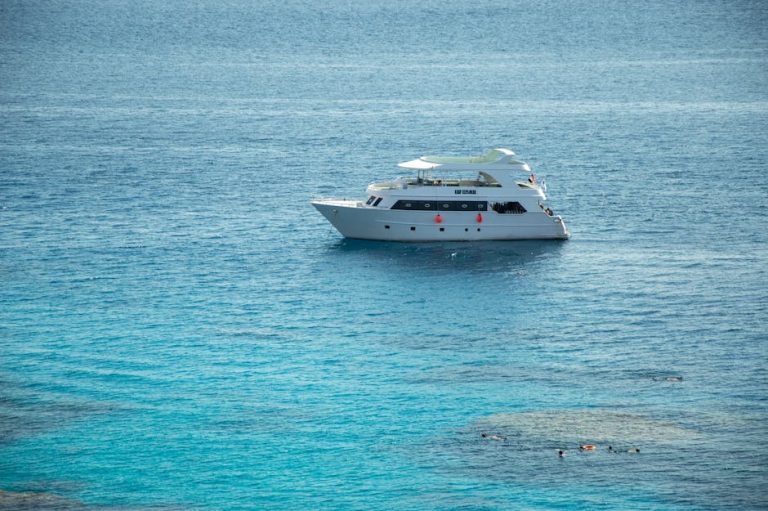
A liveaboard covers the whole archipelago in a single itinerary. A well-planned seven-to-ten-day trip can include the Dampier Strait, the northern atolls of Wayag, the deep-water sites around Batanta, and the Misool area — a combination of environments that no single resort can offer. For divers who want to see Raja Ampat comprehensively rather than deeply in one area, liveaboard is the logical choice.
Komodo: Dragons and Drift Diving
Komodo National Park, in Indonesia’s East Nusa Tenggara province, offers a completely different diving character from Raja Ampat. Where Raja Ampat is abundant and warm, Komodo is dramatic and thermally variable.
The diving at Komodo is driven by upwelling cold water from the Savu Sea, which creates strong currents through the passages between the islands and produces the nutrient-rich conditions that support manta rays, thresher sharks, and extraordinary fish biomass on exposed sites. The drift diving at sites like Batu Bolong — a pinnacle in a strong current — is among the most exhilarating I’ve done: you hold the wall briefly then release, and the current takes you past the pinnacle face at speed while the fish community flows around you.
The komodo dragons are not underwater, obviously, but a half-day trip from the dive vessel to Rinca Island or Komodo Island to see the world’s largest living lizard at reasonably close range adds a terrestrial wildlife dimension that most liveaboards do not offer.
Getting There From Australia
Both destinations are accessible from Australia via Bali (Denpasar), which has direct flights from Perth, Darwin, Melbourne, Sydney, Brisbane, and Cairns. From Bali, flights to Sorong (the gateway to Raja Ampat) take approximately four hours with a connection through Makassar or Manado. Flights to Labuan Bajo (the gateway to Komodo) take approximately 90 minutes directly.
Most liveaboard operators in both destinations manage the logistics from the relevant gateway city. You arrive in Sorong or Labuan Bajo, the operator transfers you to the vessel, and Indonesia takes over from there.
Best season for Raja Ampat: October through April (northwest monsoon season) tends to produce calmer seas in the main diving areas. May through September is possible but sea conditions are rougher. Check with your specific operator for their recommended timing for the itinerary you’re considering.
Best season for Komodo: April through November, when the upwelling conditions that produce the best diving are most active. December through March can have rougher conditions in the passages.
Go to Indonesia. Go by liveaboard. Go to a reef that will make everything you’ve dived seem like preparation for it.