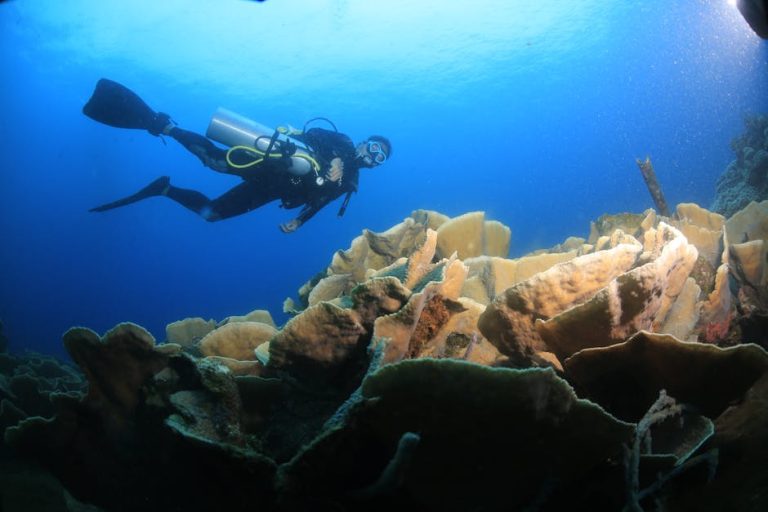
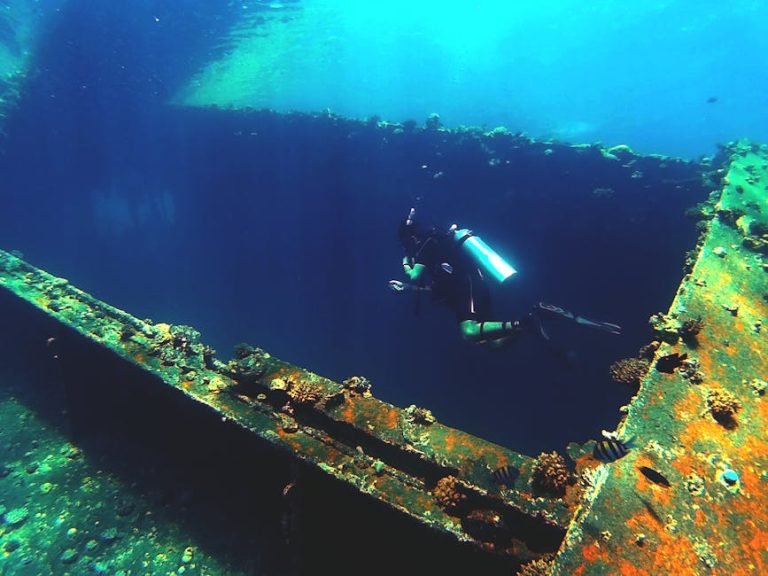
There’s a particular moment when the sun drops below the horizon and you’re already in the water, watching the reef transition into something entirely different. The fish you saw during the day – the bright parrotfish, the schools of jacks – have retreated into crevices and under ledges. In their place, creatures emerge that most reef visitors never witness. Night diving isn’t about chasing an adrenaline rush or checking off an experience. It’s about seeing a place you thought you understood reveal a completely different version of itself.
The reef at night operates under different rules. Nocturnal species have been waiting for darkness to hunt, feed, and move across the bottom without the constant threat of larger predators. Octopuses emerge from their daytime hiding spots, their skin rippling with color changes as they search for crabs and small fish. Lobsters crawl across the sand with their antennae extended, feeling for food. Moray eels that barely twitch during daylight hours become active hunters, their heads poking out of holes with a deliberate, searching intensity. What felt like a static landscape at noon becomes a working ecosystem with purpose and rhythm.
The sensory experience is disorienting at first. Your dive light creates a narrow cone of visibility, and everything beyond it disappears into absolute darkness. This changes how you move through the water and how you perceive depth and distance. You become hyper-aware of your buoyancy because you can’t reference the surface or distant landmarks. The reef sounds different too – clicks, pops, and grinding noises from parrotfish and other creatures feeding on coral become louder and more distinct when there’s nothing else to distract your attention. Some divers find this claustrophobic. Others find it clarifying.
Timing and Logistics
Night dives typically start around sunset or within an hour after dark, depending on local dive shop schedules and reef conditions. The window is shorter than you might expect. Most operators run dives for 45 minutes to an hour, which is less bottom time than a daytime dive. This isn’t arbitrary – fatigue accumulates faster in darkness, and managing a group becomes more challenging when visibility depends entirely on individual lights.
The logistics matter more than they seem. You need to be comfortable with your gear before entering the water because troubleshooting equipment problems in darkness is genuinely difficult. Many dive shops require a daytime checkout dive or proof of open water certification before allowing night dives. This isn’t gatekeeping. It’s practical risk management. A diver who panics in darkness or loses control of their buoyancy becomes a liability not just to themselves but to their dive partner and the guide.
Check real traveller reviews, prices, availability, departure points, and flexible booking options in one place.
Weather and tide affect night diving more noticeably than daytime diving. A current that feels manageable in daylight becomes harder to judge at night because you lose visual reference points. Surge – the back-and-forth water movement near the reef – is more disorienting in darkness. Local dive operators know these conditions intimately, and their decision to cancel or proceed should be taken seriously. The reef doesn’t change its behavior based on your schedule.
What You Actually See
The creatures you encounter depend heavily on the reef system and the season. In the Caribbean, you’ll see spotted eagle rays gliding past, their wing movements hypnotic in your light beam. In Southeast Asia, the nocturnal life is denser and more chaotic – more species competing for the same feeding ground. The Red Sea has its own nocturnal rhythm, with different species active depending on whether you’re diving in winter or summer months.
Bioluminescent organisms appear on some reefs, though not as dramatically as popular media suggests. You might see dinoflagellates – tiny organisms that glow when disturbed – creating faint sparkles in the water. This happens more reliably in certain locations and under specific conditions. Don’t expect it to happen every night or to look like a scene from a nature documentary. When it does occur, it’s subtle and brief.
The behavior of familiar fish changes noticeably. Groupers that hide during the day become active hunters at night. Snappers that school together during daylight hours disperse to feed individually. Parrotfish settle into crevices and secrete a mucus cocoon around themselves – a behavior you’ll never witness on a daytime dive. These shifts reveal how much of reef ecology is about timing and predator-prey relationships rather than static habitat.
Physical and Mental Demands
Night diving is more mentally taxing than it sounds. You’re processing more information with less visual input. Your light creates tunnel vision, which means you have to turn your head more frequently to scan your surroundings. Your hands are occupied holding a light, which reduces your ability to make natural hand signals to your dive partner. Communication becomes more deliberate and less intuitive. Some divers adapt quickly. Others find the constraints genuinely stressful.
Fatigue accumulates differently at night. You’re not physically exerting yourself more than on a daytime dive, but the mental effort of maintaining awareness in darkness depletes your energy faster. After a night dive, many divers report feeling more tired than after a longer daytime dive at the same location. This isn’t weakness – it’s how the brain responds to sustained focus in unfamiliar conditions.
Cold affects you more noticeably at night, even if the water temperature is identical to daytime conditions. Without sunlight penetrating the water, there’s no ambient warmth. You notice the chill more acutely. Wearing an adequate wetsuit isn’t optional, even in tropical locations. Hypothermia is a real risk on extended night dives in cooler water.
Practical Preparation
Your equipment needs are straightforward but non-negotiable. A primary dive light and a backup light are standard. Some divers carry a third light. Your lights should have adequate battery life for the planned dive duration plus a safety margin. Testing lights before entering the water is essential – discovering a dead battery at depth is a genuine problem.
Your dive computer becomes more important at night because you can’t rely on visual depth cues. Staying aware of your depth, bottom time, and ascent rate requires constant attention to your instruments. This is another reason why night diving demands more mental engagement than daytime diving.
Choosing a reputable dive operator matters significantly. A guide who knows the reef intimately and maintains tight control of the group makes the experience safer and more rewarding. A guide who treats night diving casually or allows the group to spread out creates unnecessary risk. Ask questions about their night dive frequency, their safety protocols, and their knowledge of the specific reef.
Seasonal and Geographic Variation
Night diving conditions vary dramatically by location and season. In the Indo-Pacific, the nocturnal activity is intense year-round, but visibility and water conditions change seasonally. The Caribbean has distinct seasons where night diving is more enjoyable during certain months. The Red Sea offers reliable conditions but with significant seasonal temperature variations.
Some reefs are better suited to night diving than others. Reefs with complex structure and abundant crevices support more nocturnal species and create more interesting dives. Flat, sandy reefs with sparse coral offer less to observe and can feel monotonous in darkness. Local dive operators can tell you which reefs in their area are worth night diving and which are better left for daytime exploration.
The experience of night diving changes your understanding of a reef you’ve already explored during the day. You realize how much life exists in spaces you passed over without noticing. You understand why certain fish species are rare during daytime dives – they’re simply not active. The reef becomes less like a static attraction and more like a dynamic system with different shifts, different workers, and different rhythms depending on when you arrive.
Compare top-rated tours, prices, availability, and real traveller reviews before booking. See what’s actually available for your dates and departure location.
Compare tours and check availability