The moment you slip into the water near Ribbon Reef, about 60 kilometers northeast of Cairns, you enter a space that feels both intimate and utterly foreign. Dwarf minke whales – the smallest baleen whales in the world, rarely exceeding 8 meters in length – move through these waters with a deliberate curiosity that catches most divers off guard. They are not aggressive, not particularly fearful, but intensely present. The water is cool enough to require a 5mm wetsuit even in the Australian winter, and visibility sits somewhere between 15 and 25 meters depending on the day and the season. You’re floating at the surface, weighted down just enough to stay neutral, when a shape emerges from the blue-green haze below.
What strikes you first is the scale. Despite being the smallest baleen whales, a dwarf minke is still an enormous animal. The whale moves with a kind of deliberate grace, its body tapering from a broad head to a slender tail. Its eye – dark, intelligent, focused – passes near you. There’s no aggression in the moment, no sense of threat. Instead, there’s an assessment happening. The whale is looking at you as much as you’re looking at it. This exchange lasts seconds, sometimes longer, and it fundamentally changes how you understand the ocean’s hierarchy. You are not the observer here. You are observed.
The Seasonal Window
Dwarf minke whale encounters on the Great Barrier Reef are not a year-round activity. They arrive in the waters between Cairns and Port Douglas during the Australian winter and early spring, typically from June through August, with June and July offering the most reliable encounters. This timing aligns with their migration patterns, and the whales seem to be drawn to the reef’s nutrient-rich waters during this period. The water temperature hovers around 23 to 24 degrees Celsius, which feels cold when you first enter but becomes manageable within minutes of activity.
The reality of this seasonal window means that planning matters. Tours operate on specific schedules, and availability fills quickly during peak months. Most operators run multi-day liveaboard trips, departing from Cairns in the early morning and heading out to the outer reef. The journey takes roughly 4 to 5 hours, and the boat motion during this transit can be rough depending on conditions. By the time you reach the diving grounds, you’ve already spent half a day traveling, and fatigue is a real factor. Experienced divers understand this. Newer divers sometimes underestimate how much energy the travel consumes before the diving even begins.
What the Encounter Actually Involves
The protocol for dwarf minke whale encounters is strict, and for good reason. Operators follow a passive observation model. You enter the water when a whale is spotted, and you remain still or move slowly. The whale approaches you, not the other way around. This distinction matters because it respects the animal’s autonomy and, practically speaking, it works. Whales that are chased or pursued tend to avoid the area. Whales that are allowed to approach on their own terms often return multiple times during a single dive.
A typical encounter lasts anywhere from a few minutes to occasionally longer. The whale circles, investigates, sometimes approaches close enough that you can see the texture of its skin and the small barnacles attached to its body. Some divers report that whales seem to be playing, moving in patterns that suggest curiosity rather than feeding behavior. Whether this is play or something else entirely remains unclear, but the behavior is consistent enough that guides recognize it and can predict when a whale is likely to make another pass.
The physical act of diving during these encounters is straightforward but requires composure. You’re typically at depths between 5 and 15 meters, hovering near the surface in a relaxed position. The cold water and the psychological intensity of being near such a large animal can trigger unexpected stress responses in some divers. Breathing becomes conscious rather than automatic. Your air consumption may increase. This is normal, and experienced operators expect it. They brief divers beforehand on managing anxiety and staying calm, because a panicked diver is a distracted diver, and distraction means missing the encounter entirely.
The Reef Beyond the Whales
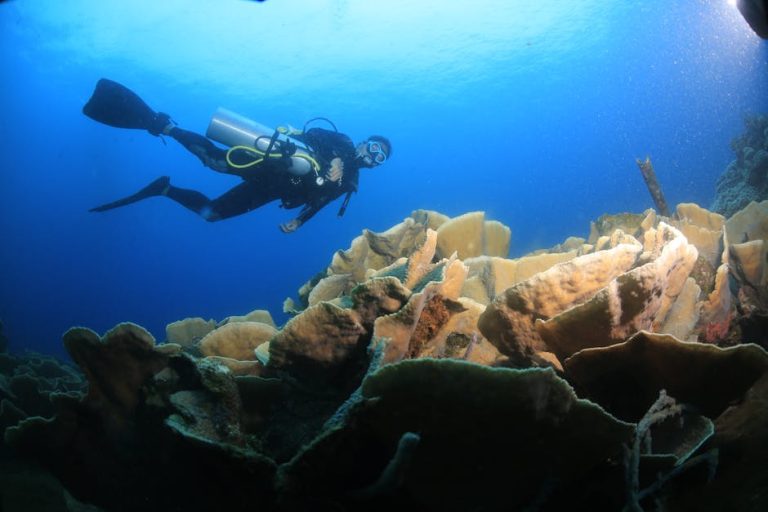
Most liveaboard trips include additional diving at other reef sites, and this is where the experience becomes more conventionally rewarding for those focused on coral and fish life. The outer reef around Ribbon Reef supports dense coral gardens, schools of barracuda, groupers, and smaller reef fish. The coral health varies depending on recent bleaching events and seasonal conditions, but the biodiversity is substantial. These dives feel more familiar to experienced reef divers – you’re looking at the ecosystem rather than being looked at by it.
The contrast between whale diving and conventional reef diving is worth noting. Whale encounters are passive, brief, and emotionally intense. Reef diving is active, extended, and visually absorbing. Both are valuable, but they scratch different itches. Some divers find the whale encounter to be the highlight of their trip. Others find it stressful and prefer spending their time on the reef itself. There’s no wrong preference. The trip accommodates both.
Practical Realities
Liveaboard trips to see dwarf minke whales are expensive. A typical three-day trip costs between $1,200 and $2,000 per person, depending on the operator and the season. This price includes accommodation, meals, diving, and the boat operation. It’s a significant investment, and it’s worth understanding what you’re paying for. You’re paying for access to a specific window of time, a specific location, and the expertise of guides who know how to position boats and divers for the best possible encounters. You’re not paying for a guarantee. Whales are wild animals, and encounters are never certain.
The boats themselves vary in quality and comfort. Newer vessels offer better stabilization, more spacious cabins, and improved facilities. Older boats are cheaper but noisier and less comfortable during rough seas. The difference in comfort is real and affects how much rest you get between dives. Rest matters because fatigue compounds the physical and mental demands of diving.
Weather is another variable. The Australian winter is generally stable, but the Coral Sea can still produce rough conditions. Swells of 2 to 3 meters are not uncommon, and they make both the boat transit and the diving more physically demanding. Some divers experience seasickness during the journey out, which further depletes energy reserves before diving even begins. Anti-nausea medication helps, but it’s not foolproof.
The diving itself requires a minimum certification level, typically Advanced Open Water or equivalent. This is not a beginner activity, despite the relatively shallow depths. The combination of cold water, psychological intensity, and the need to remain calm and controlled in the presence of large marine animals demands experience and composure.
If you do encounter dwarf minke whales, the memory stays with you in a way that conventional diving doesn’t. There’s something about being observed by an intelligent, curious animal that shifts your perspective on your place in the ocean. You return to Cairns tired, sore from the boat motion, and slightly disoriented from the early mornings and extended time underwater. You also return changed, in a quiet way that’s hard to articulate to people who weren’t there. That’s the real value of the experience – not the photographs or the story, but the moment itself and what it means to be in the presence of something genuinely wild.