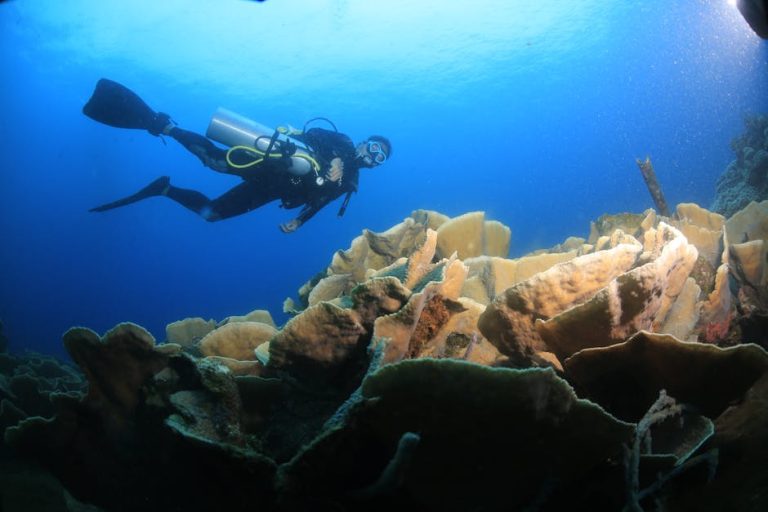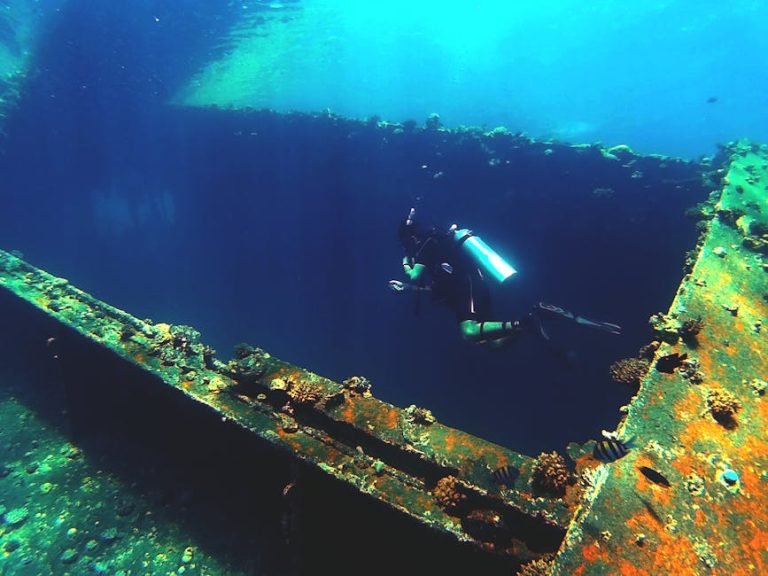
There’s a moment underwater when everything shifts. You stop fighting the water, stop clawing at your equipment, and simply exist in the space between sinking and floating. That’s when the reef reveals itself differently. Most travelers who snorkel or dive in tropical waters never reach this point. They’re too busy managing their own bodies to notice what’s actually happening around them.
Buoyancy control isn’t a technical skill you master in a pool and then forget about. It’s the foundation that determines whether you experience a reef as an anxious visitor or as someone who can actually move through it with intention. The difference is profound, and it affects everything from what you see to how long you can stay, to whether you leave the coral intact or damaged.
When you arrive at a reef destination – whether it’s the Great Barrier Reef in Australia, the Maldives, the Red Sea, or smaller island reefs across Southeast Asia – your first instinct is usually to get in the water and look around. The reality is messier. Most people either float too high, bobbing at the surface and seeing only the shallow tops of coral formations, or they sink too fast, kicking frantically to stay afloat and stirring up sediment with every movement.
What Neutral Buoyancy Actually Means
Neutral buoyancy is the state where you neither sink nor rise. You hang in the water column at whatever depth you choose, suspended without effort. It sounds simple. In practice, it requires constant micro-adjustments to your breathing, your weight distribution, and your awareness of how your body responds to water pressure at different depths.
The physics is straightforward. Your lungs are air-filled spaces. As you descend, water pressure compresses that air, making you heavier. As you ascend, the air expands, making you more buoyant. Divers manage this with a buoyancy control device – a vest-like piece of equipment that holds air. Snorkelers don’t have that luxury. They work with their body position, their breathing, and sometimes a snorkel vest if they’re being smart about it.
Check real traveller reviews, prices, availability, departure points, and flexible booking options in one place.
But here’s what changes everything: once you understand how your body moves through water, you stop thinking about buoyancy as a problem to solve. It becomes automatic. You breathe in slightly and feel yourself rise. You exhale and feel yourself settle. You adjust your position and the water responds. It’s almost meditative once it clicks.
Why Most Travelers Struggle
The struggle is real because nobody arrives at a reef with this skill already developed. You learn it through repetition, failure, and paying attention to what your body is doing. Most casual snorkelers never invest that time. They show up, jump in, and rely on whatever natural buoyancy their body has. If they’re lean and muscular, they sink. If they carry more body fat, they float. Neither extreme is comfortable.
Divers at least have training. A basic certification course includes confined water sessions where you practice buoyancy control before ever seeing a reef. But even certified divers often arrive at a destination rusty, having not dived in months or years. The first dive is always a recalibration. You’re relearning how much weight you need, how to trim your body position, how to breathe deliberately instead of automatically.
The fatigue compounds the problem. You’re fighting water resistance, managing unfamiliar equipment, processing the visual overload of a new reef, and trying to stay calm in an environment where panic is genuinely dangerous. Your breathing becomes shallow and rapid. You overweight yourself to feel secure. You kick harder to compensate. Within thirty minutes, you’re exhausted, and you’ve probably damaged some coral without even realizing it.
The Reef Reveals Itself Differently
Once you nail buoyancy, the reef stops being a place you visit and starts being a place you move through. You can position yourself at the exact depth where a particular coral formation is most visible. You can hover near a cleaning station and watch fish behavior unfold without disturbing anything. You can navigate narrow channels and overhangs without scraping your tank or your hands on the coral.
The practical benefits are immediate. You see more because you’re not constantly adjusting your depth. You stay longer because you’re not burning energy fighting the water. You’re calmer because you’re not anxious about sinking or floating away. And crucially, you cause less damage because you’re not thrashing around or using your hands to push off coral.
There’s also a temporal shift. Early morning dives or snorkeling sessions feel different when you have buoyancy control. The water is usually calmer, visibility is often better, and you can move slowly enough to notice details most people miss – the way certain fish species congregate before the reef gets busy, the patterns of light through the water column, the texture of different coral types. By mid-morning, when tour groups arrive, the reef’s character changes. It becomes busier, louder, more chaotic. If you’re neutrally buoyant and calm, you can still navigate it. If you’re struggling with buoyancy, the crowds push you into a stress state.
How to Actually Develop This Skill
If you’re planning a reef trip and you want to experience it properly, start before you arrive. If you’re a snorkeler, practice in a pool or calm bay with a snorkel vest. Get comfortable with how your body floats at different breathing depths. Learn to hover without moving your fins. Spend time understanding your natural buoyancy so you know exactly what equipment you need.
If you’re diving, take a buoyancy specialty course if it’s been a while since you’ve dived. These courses exist specifically because buoyancy is that important. You’ll spend time in confined water perfecting your trim and your breathing. It costs money and takes time, but it transforms your reef experience. A diver with excellent buoyancy control will see more, stay safer, and cause less environmental damage than a dozen divers without it.
Once you’re at the reef, your first dive or snorkel session should be exploratory and low-pressure. Don’t try to see everything. Focus on buoyancy. Feel how the water responds to your breathing. Notice where your weight sits. Make small adjustments and observe the results. This investment in your first hour pays dividends for every subsequent session.
Seasonal conditions matter too. In some regions, water temperature and salinity change throughout the year, which affects your buoyancy. Warmer, less dense water makes you more buoyant. Cold, salty water makes you less buoyant. If you’re traveling to a reef destination you’ve never visited before, ask local dive operators about seasonal buoyancy adjustments. They’ll tell you exactly how much weight you need and how the water will feel.
The Environmental Reality
Coral reefs are fragile ecosystems. Every careless kick, every hand placed on a coral head, every piece of silt stirred up and deposited on a coral colony causes damage. Reefs recover slowly, and in many parts of the world, they’re already stressed from warming oceans and pollution. A diver or snorkeler with poor buoyancy control is, however unintentionally, contributing to that degradation.
This isn’t meant as judgment. It’s just the reality of how bodies move through water. When you’re neutrally buoyant, you’re not touching anything. You’re not kicking up sediment. You’re not creating surge that stresses the coral. You become a silent observer instead of a disruptive force. The reef doesn’t care about your intentions. It only responds to your actions.
The best reef experiences happen when you’ve mastered this skill enough that it’s no longer something you think about. You’re simply underwater, moving with intention, seeing clearly, and leaving no trace. That’s when the reef stops being a tourist attraction and becomes something you actually understand.
Compare top-rated tours, prices, availability, and real traveller reviews before booking. See what’s actually available for your dates and departure location.
Compare tours and check availability