The worst thing that ever happened to my diving was getting a camera.
I don’t mean that entirely seriously, but I mean it more than half seriously. Before the camera, I was a diver. I moved through the reef, I watched things, I let the experience accumulate. After the camera, I became a photographer who happened to be underwater, and the entire character of my dives changed. I started missing things I used to see. I ran low on air because I’d spent eight minutes on a single nudibranch. I came up from dives with three hundred photographs and a persistent sense that I hadn’t really been present for any of them.
It took about two years to find the balance. When I did, underwater photography became the most satisfying way I know to engage with a reef.
The Two Schools
There are, broadly, two approaches to underwater photography, and they suit different temperaments.
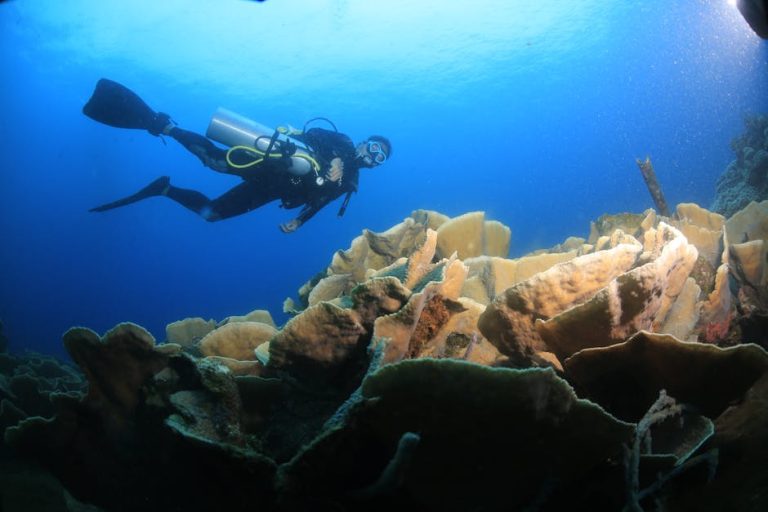
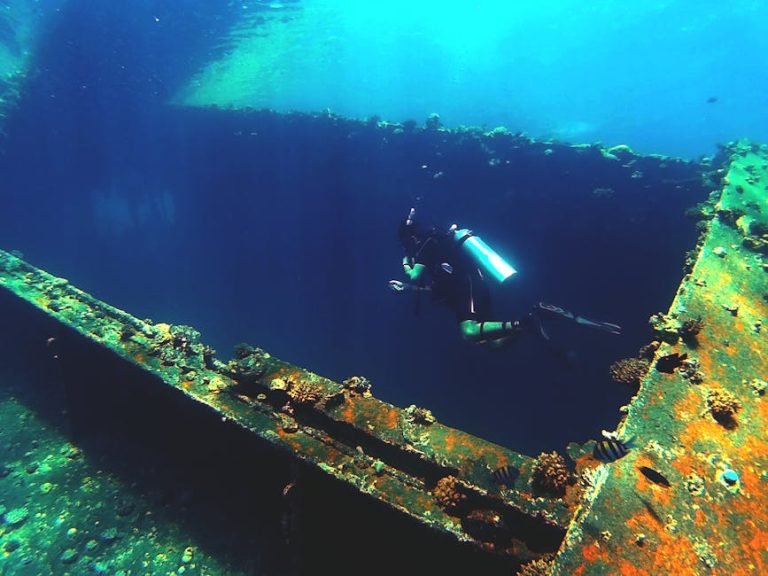
The first is wide-angle photography: capturing the reef in its context, including large animals, seascapes, divers for scale, and the quality of light coming through the water column. Wide-angle work requires good visibility, interesting subjects at a decent size, and the ability to get close enough to fill the frame without disturbing the subject. A reef manta at a cleaning station, a school of bumphead parrotfish against a coral wall, a diver silhouetted against a shimmering surface — these are wide-angle images.
The second is macro photography: the close-up, high-magnification world of nudibranchs, shrimps, pygmy seahorses, frogfish, and the hundreds of tiny creatures that live on and among the reef structure. Macro work requires patience, excellent buoyancy control, and a willingness to spend most of a dive on a single square metre of rubble. It rewards divers who slow down and look carefully.
Most underwater photographers end up gravitating toward one or the other, though versatile systems can do both. I spent my first years doing wide-angle and eventually found that macro suited my temperament better — I like knowing what I’m looking at, and macro forces you to learn the names and behaviours of small animals in a way that wide-angle work doesn’t.
Equipment: Where to Start
The entry point that makes sense for most divers is a compact camera in a manufacturer housing. Sony, Canon, Olympus, and Ricoh all produce compact cameras that pair with purpose-built underwater housings. These systems are relatively affordable, genuinely capable, and small enough to carry without significantly affecting your hydrodynamics in the water.
The main limitation of compact systems is optical: the fixed or zoom lenses in compact cameras are adequate for moderate wide-angle and moderate macro work, but they don’t match the image quality of interchangeable lens systems at either extreme. For many divers, “adequate” is entirely sufficient — the best camera is the one you’ll actually use, and a compact system used consistently and well produces better images than a professional mirrorless system used poorly.
The step up — and it is a significant step in both cost and complexity — is a mirrorless or DSLR system in an aluminium or polycarbonate housing. These systems allow you to use dedicated underwater lenses: fisheye lenses for wide-angle work, true macro lenses for small subjects. The image quality difference is substantial. The price difference is also substantial — a professional-level underwater housing for a mirrorless camera can cost more than the camera itself.
Whichever system you use, lighting is the component that makes the biggest difference to image quality. Water absorbs red and orange wavelengths preferentially, which means that natural-light underwater photographs taken deeper than about five metres have a characteristic blue-green cast and lack warmth. Strobes (underwater flashes) or video lights restore the full colour spectrum and allow you to properly expose subjects that would otherwise be dark against a bright water column background.
Learning to Shoot Underwater
The skills that produce good underwater photographs are partly photographic (exposure, composition, focus) and partly diving (buoyancy, approach technique, animal behaviour knowledge).
The photographic skills are learnable from any photography resource — the principles of exposure and composition are identical above and below the water. What’s specific to underwater photography is the challenge of applying those skills while managing buoyancy, monitoring air, watching for current, and trying not to disturb the animal you’re photographing.
Buoyancy is the foundational skill. A photographer who is not in full control of their buoyancy — who drifts into the reef, kicks up silt, or can’t hold a stable position — will damage the environment and produce blurry photographs in roughly equal measure. Before you invest in underwater camera equipment, invest in your buoyancy. Do a Peak Performance Buoyancy specialty course. Do thirty dives without a camera, purely focused on movement and control. Then get the camera.
Approach technique — how you move toward an animal without triggering its escape response — is something that experienced underwater photographers develop over years. The general principles: approach slowly and diagonally rather than directly head-on, stay at eye level with the subject rather than above it, don’t cast your shadow over the animal, and be prepared to wait rather than chase. An animal that has decided to leave will not produce a good photograph.
What the Camera Teaches You
Here’s what I want to say about the experience of photographing marine life, separate from the technical considerations:
The camera is a reason to look. It imposes a discipline of attention — to get close enough for a good shot, you have to know where the animal is and what it’s doing; to capture behaviour, you have to watch long enough to anticipate it; to understand the light, you have to understand the water.
I know the animals on the reefs I regularly dive better because of the camera than I would without it. I know which nudibranch species are common on which substrates, which cleaning stations are active at which times of day, which sea fans in which bays carry pygmy seahorses in certain months. The camera gave me reasons to learn these things that pure observation, somehow, hadn’t.
The photographs are a record. The attention is the point.