Most of what divers know about coral reefs is knowledge of the top thirty metres. That’s the zone accessible on standard recreational scuba, and it’s where the research, the photography, the tourism, and the public conversation about reef health has been concentrated for decades.
Below thirty metres — and particularly between forty and two hundred metres — there is another reef system that is only beginning to be understood. Researchers call it the mesophotic zone, from the Greek for “middle light.” I’ve been lucky enough to access its shallower reaches on technical dives, and what I found there changed how I think about reef resilience.
What Is the Mesophotic Zone?
The mesophotic coral ecosystem (MCE) occupies the depth range of approximately 30 to 150 metres — beginning where recreational scuba diving effectively ends and extending to the deepest limit at which photosynthesis can sustain coral growth. The lower boundary varies with water clarity: in very clear oceanic water, some coral species can survive at 200 metres or more; in turbid coastal waters, the photic zone may end at 40 or 50 metres.
This depth range is accessible to technical divers using mixed gases — Trimix (oxygen, nitrogen, and helium) for deep work, or Enriched Air Nitrox for the shallower mesophotic — and to research submersibles and remotely operated vehicles. Until relatively recently, most mesophotic reef research was conducted from submersibles; the development of technical diving certification and rebreather technology has allowed human divers to directly observe and sample these environments.
The mesophotic is not a featureless extension of the shallow reef. It has its own distinct community structure, its own specialist species, and its own dynamic relationship with the systems above and below it.
Check real traveller reviews, prices, availability, departure points, and flexible booking options in one place.
The Species You Find in the Mesophotic
The mesophotic hosts a mix of species: some that also occur in shallower water (wide-depth-range generalists), and others that are found exclusively or primarily at these depths. The specialist species include:
Plating and foliose corals — species that grow in broad, thin, horizontal sheets that maximise light capture at depths where photon flux is low. Leptoseris, Pachyseris, and Montipora species dominate many mesophotic communities in forms that look unlike their shallow-water counterparts.
Deep-water gorgonian fans and black corals, which can reach extraordinary sizes at mesophotic depths — fans of two metres or more, and black coral trees (which are, confusingly, not black in life but typically dark green or reddish) that are among the oldest living animals on any reef.
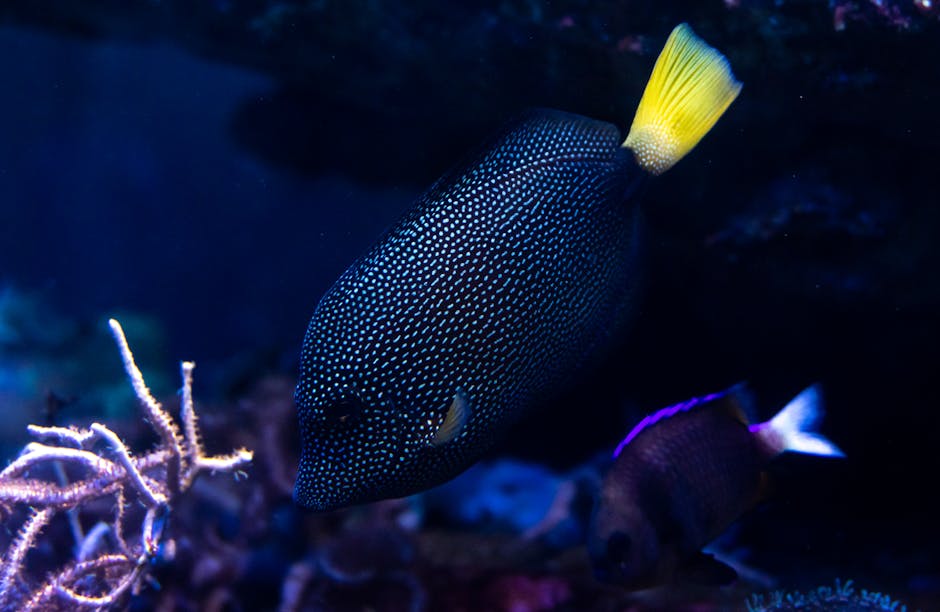
Fish species that are rare or absent in shallow water: some deepwater wrasse, certain anthias species, deepwater angelfish, and several species of basslet and grouper that have their primary distribution in the mesophotic range.
The Deep Reef Refuge Hypothesis
The hypothesis that has generated the most scientific and conservation interest around mesophotic reefs is the Deep Reef Refuge Hypothesis (DRRH): the idea that mesophotic communities can serve as refugia for coral species during bleaching events, and that larvae from these deeper populations can seed recovery of shallow reefs after bleaching.
The logic is straightforward. Mass coral bleaching is primarily a thermal event — elevated sea surface temperatures stress the zooxanthellae in coral tissues. Temperature anomalies are concentrated at the surface; they attenuate with depth. A bleaching event that kills 50% of coral cover at five metres may cause no bleaching at 40 metres on the same reef. If the deep reef retains viable populations of coral species that were decimated shallower, and if those populations produce larvae that can disperse upward and settle on recovering shallow substrate, then the mesophotic acts as a biological reservoir.
The hypothesis is attractive, but the evidence for it is more complicated than the initial framing suggested. Connectivity between mesophotic and shallow reef communities varies considerably between reef systems and coral species. Some species show strong genetic exchange between depth zones; others appear to be largely isolated by depth. The larvae of many coral species are relatively heavy and don’t disperse vertically well. The conditions required for larval settlement on recovering shallow substrate — appropriate substrate, appropriate chemical cues, appropriate current patterns — may not align well with what mesophotic populations produce.
The honest summary: the mesophotic probably provides some refuge benefit for some species in some reef systems. It is not a guarantee of recovery, and it certainly doesn’t reduce the importance of addressing the causes of bleaching. But it may mean that the prognosis for reef recovery after bleaching is somewhat better than models based only on shallow reef dynamics suggest.
Diving the Mesophotic: What It Takes
Accessing the mesophotic as a diver requires technical diving training beyond recreational certification. The standard entry point is the TDI or PADI Advanced Nitrox and Decompression Procedures courses, which qualify divers for dives to 40 to 45 metres on Nitrox with planned decompression stops. For deeper mesophotic work — below 50 metres — Trimix certification is required, using helium-blended gas to manage nitrogen narcosis at depth.
Technical diving is not an entry-level endeavour. The equipment requirements are substantial: multiple tanks or a rebreather, redundant regulators, dive computers capable of tracking multi-gas decompression profiles, and the physical fitness and psychological composure to manage extended decompression stops at depth. Most divers who pursue technical certification have several hundred recreational dives as a foundation.
The reward, for those who invest in the training, is access to a version of the reef that the vast majority of divers will never see — and that, for the reasons outlined above, may matter more to the future of reef ecosystems than we yet fully understand.
Why the Mesophotic Matters Now
Climate change is the most urgent driver of interest in mesophotic reefs. As shallow reef systems come under increasing thermal stress, the question of where the resilience in the system lies — where the reservoirs of genetic diversity and reproductive potential sit that will be needed for recovery — becomes practically important.
Research programs at James Cook University, the Australian Institute of Marine Science, and institutions throughout the Indo-Pacific are currently mapping mesophotic reef communities, characterising their species compositions, and measuring connectivity between depth zones. The data being gathered now will inform reef management decisions for decades.
For divers interested in the frontier of reef science, the mesophotic is where the most interesting questions are currently being asked. It is a reef system that was largely unknown thirty years ago and is now recognised as potentially critical to the long-term persistence of coral reef ecosystems.
It is also, on the dives I’ve been fortunate enough to do in its shallower reaches, profoundly beautiful. The light at forty metres has a quality — diffuse, blue-shifted, less direct than the sunlit shallows — that gives the reef a cathedral feeling. The gorgonian fans at this depth are enormous. The coral growth forms are unlike anything above. The fish are unhurried and largely undisturbed by human presence.
Deep reefs have their own character. Go find it, if you have the training.
Compare top-rated tours, prices, availability, and real traveller reviews before booking. See what’s actually available for your dates and departure location.
Compare tours and check availability