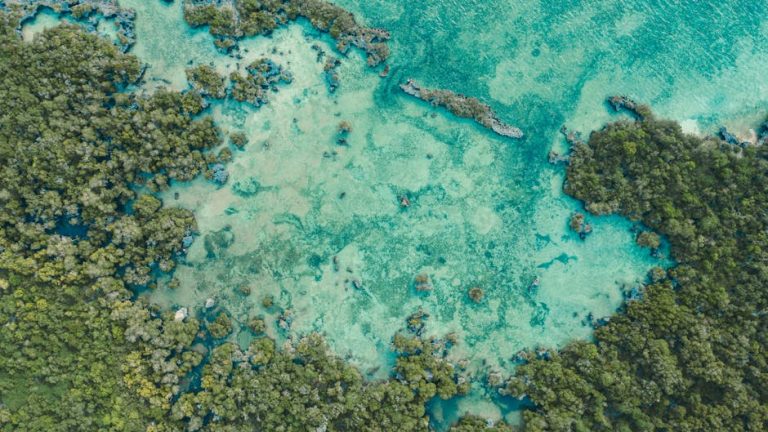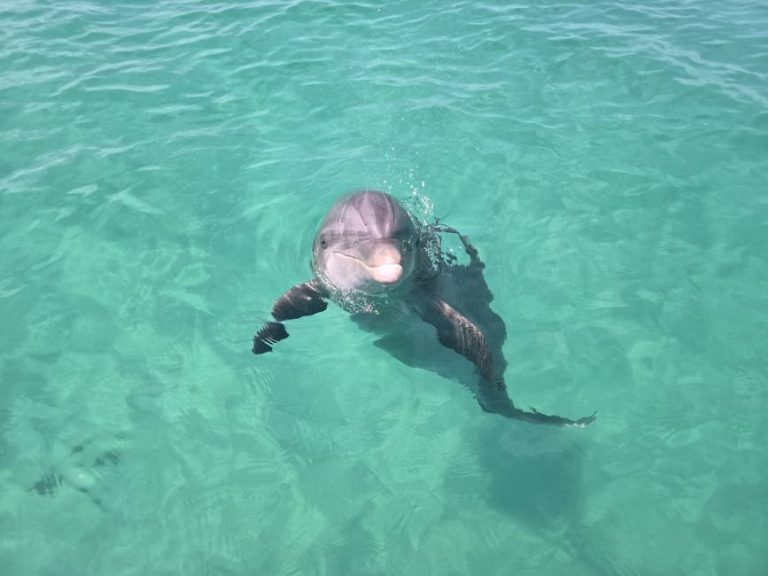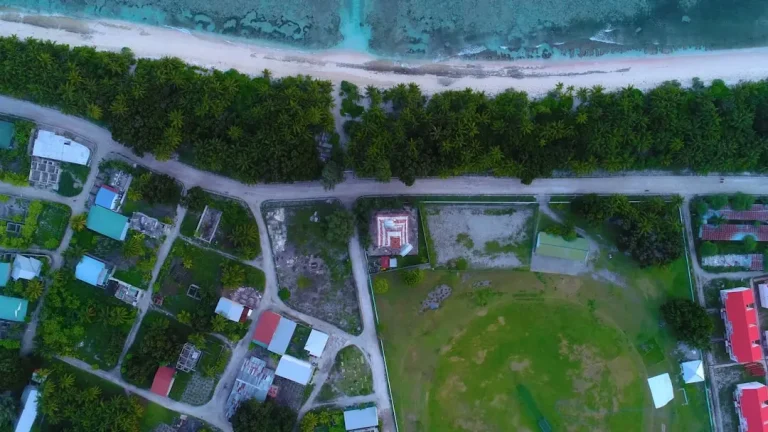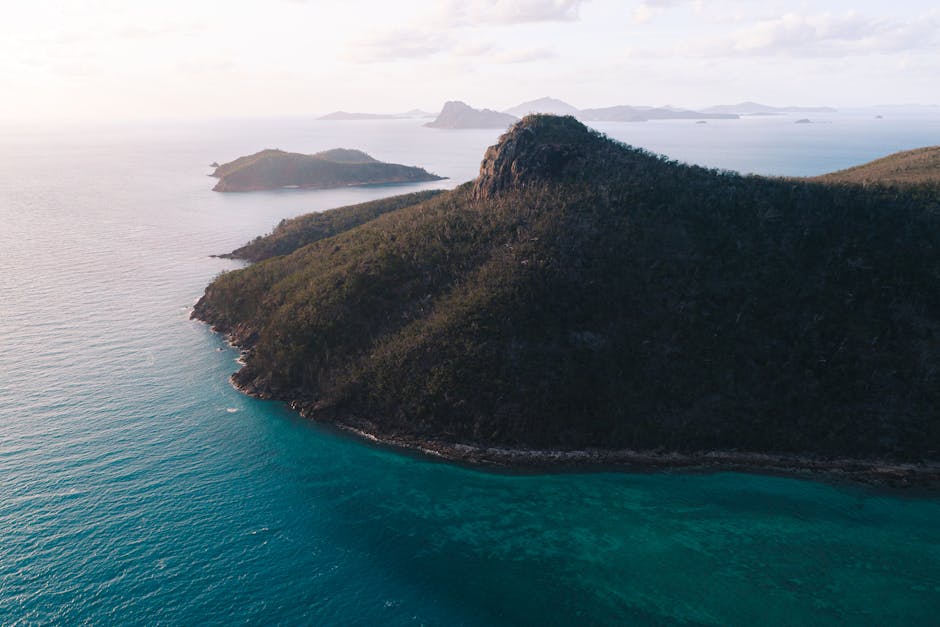
The Whitsundays is the only part of the Great Barrier Reef where the reef is not the primary thing. This is not a slight — it’s a description of what makes the region genuinely distinctive. The 74 continental islands, the sailing channels between them, the World Heritage beaches, the extraordinary tidal light over the Coral Sea: these are, for many visitors, the experience. The reef is a very good supplement to all of that.
Understanding this distinction — and understanding what the region offers across its full range, from the sailing charter to the outer reef dive — makes the planning conversation considerably more honest than the standard promotional version, which tends to telescope everything into “island paradise.”
Airlie Beach: The Hub
Airlie Beach is a small coastal town on the Whitsunday coast, 640 kilometres south of Cairns, and it is the commercial and logistical hub of the Whitsundays. The marina here is the departure point for most sailing charters, day trips, and the few liveaboard operations that work the central section of the GBR.
As a place to spend time beyond logistics, Airlie Beach has a specific character: a backpacker heritage that has been progressively overlaid with more upmarket options, a main street of reasonable quality, and the waterfront pool lagoon that serves as the social centre in the absence of a swimmable beach (the Whitsunday coast has stingers from October through May and limited beach swimming options without enclosures).
Most visitors treat Airlie Beach as a launching point. They arrive, provision, board a vessel, and return. The town itself is better than this treatment suggests — there are good restaurants, a farmer’s market worth knowing about, and the views from the hill above town across the Whitsunday Passage toward the islands are, on a clear morning, genuinely beautiful. But the town’s primary function is as a gateway, and it performs that function extremely well.
Hamilton Island: The Airport Alternative
Hamilton Island has the only commercial airport in the Whitsundays, making it the most logistically accessible of the island destinations for visitors from Sydney, Melbourne, Brisbane, and Cairns who want to avoid the drive or bus trip to Airlie Beach. Direct flights from all eastern capitals connect to Hamilton several times daily.
The island itself is a private resort development — the majority of the island is owned by the Hamilton Island resort group — and the character reflects this: well-managed, comfortable, and built primarily for visitors. The marina is the hub of activity, with restaurants, a yacht club, resort facilities, and the departure points for sailing charters and reef day trips.
Hamilton Island works best as either a destination in itself (use the resort facilities, take the reef trips available from the island, walk the nature trail to Passage Peak for the views) or as an entry point for a sailing charter into the broader island group. Its limitation is that it’s busier and more resort-oriented than the uninhabited islands of the group, which are where the real character of the Whitsundays lives.
What the Sailing Is Actually Like
I’ve described the bareboat charter experience elsewhere in more practical detail, but here I want to focus on the particular qualities of sailing the Whitsundays that make it worth doing even for people who have limited sailing experience.
The Whitsunday Passage — the main channel between the mainland and the outer island chain — is sheltered enough for novice sailors in moderate conditions and sufficiently interesting for experienced ones. The trade wind from the southeast that blows reliably from April through October produces consistent sailing conditions: enough wind to make progress without spinnaker stress, predictable enough to plan passages with confidence.
The islands are close together. A day’s sail covers four or five islands, each accessible for anchoring and exploration. The geography rewards unhurried exploration — an extra night in a sheltered bay costs nothing and frequently produces the trip’s most memorable experiences: the dawn light on the hills, a turtle in the lagoon, the beach completely yours for an hour before the day-trip boats arrive.
For non-sailors: the skippered charter and guided catamaran options described elsewhere remove the need for sailing competence while retaining the experience of island access from the water.
Whitehaven Beach and Hill Inlet
These two sites are the reason the Whitsundays appears on every list of Australian travel destinations, and they earn their reputations completely.
Whitehaven Beach — nine kilometres of 98% silica sand on Whitsunday Island’s east coast — has a physical quality that photographs consistently fail to convey. The sand is not merely white; it’s the particular white of a material so pure it reflects differently at different times of day, pale gold at sunrise, brilliant white at noon, almost pink at sunset. The water alongside it runs through every shade of blue and green simultaneously depending on depth and angle.
The beach is accessed either by water (sailing vessels anchor offshore, day-trip vessels moor at the north end) or by the short walk from Hill Inlet viewpoint. The viewpoint itself — reached by a track from the northern beach area — is where the tidal sand patterns of Hill Inlet are visible in their full aerial character: the white sand and the variously coloured water mixing at the tidal boundary in swirling patterns that shift every hour as the tide changes. I have photographed this view more times than I can count and have never produced an image that captures it accurately.
Go to the viewpoint first. Then walk the beach south while the day-trip crowds are at the lookout. By the time they’ve walked down to the beach, you’ll be far enough along it to have found your own section.
Snorkelling and Diving
Blue Pearl Bay, Bait Reef, and the outer reef accessible on extended day trips from Airlie Beach are the serious snorkelling and diving sites in the region. Blue Pearl Bay on Hook Island is the best snorkelling within the island group — sheltered, with better visibility than most Whitsunday sites and a good coral community on the bay’s northern edge.
Bait Reef, roughly 50 kilometres north of the main island group, is accessible on specific day-trip itineraries from Airlie Beach and Hamilton Island. The reef quality here — better coral coverage, clearer water than the fringing reefs around the continental islands — is the closest the Whitsundays comes to outer GBR quality without a liveaboard.
Practical Notes
The Whitsundays are at their best from April through October. The wet season (November through March) brings warmer water and higher rainfall; cyclone risk in this period is real and has historically disrupted travel plans significantly.
Accommodation ranges from camping on uninhabited islands (permits required; the islands are national park) to luxury resort villa rentals on Hamilton Island. The middle range — Airlie Beach resort hotels and self-contained apartments — is well-supplied and competitively priced in most seasons.
For first-time Whitsundays visitors with limited time, the three-night guided sailing catamaran trip (departing Airlie Beach, visiting Whitehaven Beach, Hill Inlet, and Blue Pearl Bay) is an efficient and reliable introduction. For repeat visitors or those with more time, the bareboat charter covering a week of independent island hopping is the experience that makes the Whitsundays fully make sense.