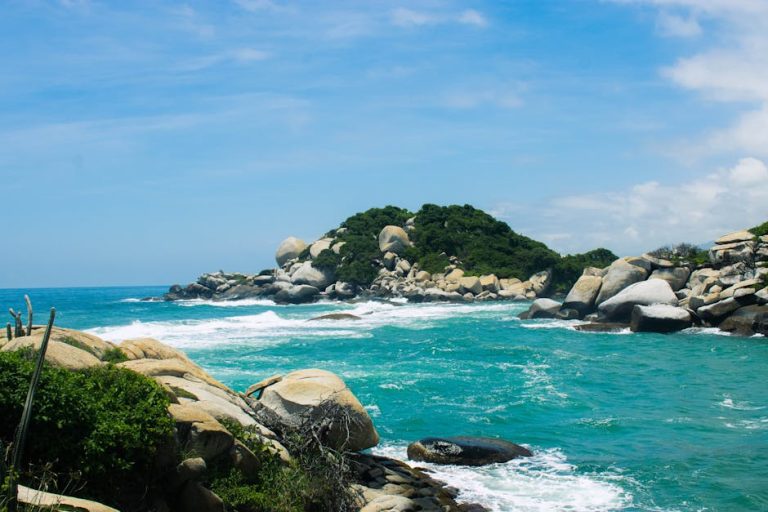
Coron sits at the northern tip of Palawan, a limestone landscape of jagged islands rising abruptly from shallow waters. The town itself is modest – a collection of concrete buildings, small restaurants, and dive shops clustered around a working harbor. You arrive expecting a sleepy island village, and that’s mostly what you get, though the waterfront carries the rhythm of a place that has learned to accommodate divers without losing its local character entirely.
The wreck diving here stems from a specific historical moment. During World War II, the Japanese navy used Coron Bay as a fleet anchorage. American air raids in September 1944 sank twelve Japanese vessels in a single day. Some went down in deep water beyond recreational diving limits, but several settled in the 15 to 40-meter range, making them accessible to experienced divers. The wrecks remain largely intact, their structures still recognizable despite decades of submersion and coral colonization.
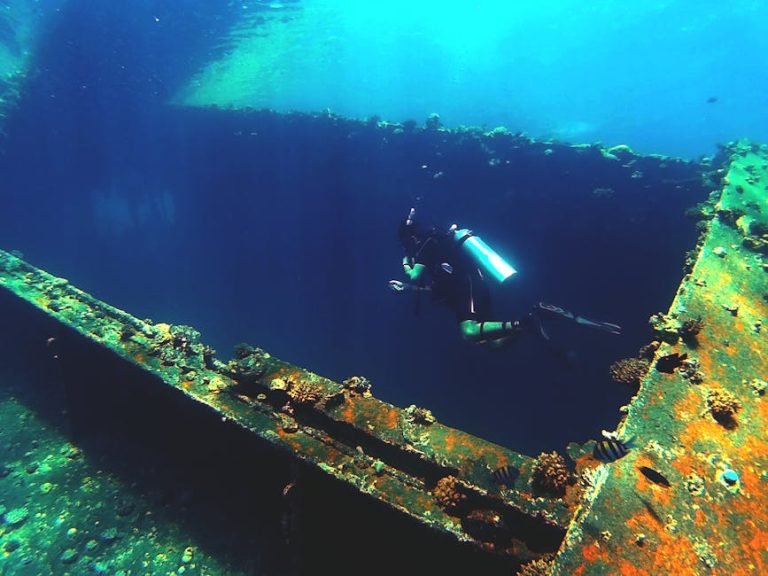
What strikes you first when you begin diving these wrecks is how quickly the corrosion and marine growth obscure the original purpose of the metal. You can identify a gun turret or an anchor winch, but the passage of time has transformed these vessels into something between wreck and reef. Schools of jacks move through cargo holds. Soft corals drape across railings. The boundary between human artifact and living ecosystem has blurred entirely.
Getting on the Water
Dive operators in Coron run a fairly standardized routine. You book the night before or early morning, pay your fee (typically 3,500 to 5,000 Philippine pesos per dive, sometimes bundled with reef dives), and meet at a designated pier. The boats are modest – fiberglass bangkas with outboard motors, no frills, designed for function rather than comfort. You’ll sit on wooden benches for 20 to 45 minutes depending on which wrecks or reefs the operator has planned.
The ride itself matters more than you’d expect. Coron Bay can be choppy, especially during the northeast monsoon season from November through March. Even in calmer months, the water moves enough to make the journey feel genuine rather than leisurely. You’re not gliding across a postcard; you’re crossing actual water with actual conditions. Seasickness is not uncommon, particularly if you’ve eaten breakfast or if the boat is crowded.
Most operators run morning and afternoon dives. Morning dives leave around 7 or 8 a.m., which means an early start from your accommodation. The water tends to be clearer in the morning, though “clear” is relative in Coron. Visibility typically ranges from 10 to 20 meters depending on season and recent weather. During the dry season (roughly December to April), you might see 20-plus meters on good days. In the wetter months, visibility can drop to 8 or 10 meters, which changes the entire character of the dive – the wrecks feel more claustrophobic, more mysterious, less like you’re viewing a landscape and more like you’re navigating through fog.
The Wrecks Themselves
The most frequently dived wreck is the Kogyo Maru, a former transport ship that sits upright in about 20 meters of water. The structure is large enough that you can spend an entire dive exploring without seeing all of it. The bridge area is recognizable. The cargo holds are open. The stern section slopes away into deeper water. Divers often swim through the holds, though this requires some caution – the openings are stable, but you’re still moving through confined spaces with a ceiling of metal above you.
Another common site is the Irako, a supply ship in slightly shallower water. The Irako feels more deteriorated than the Kogyo Maru, more integrated into the reef ecosystem. The distinction matters because it affects how the dive feels. Newer-looking wrecks read more clearly as human structures. Older, more colonized wrecks feel more like exploring an artificial reef that happens to have a history.
The Japanese patrol boat Akitsushima is smaller and sits in around 30 meters, which puts it at the limit of recreational diving. The depth changes the experience – you have less bottom time, the pressure affects your breathing and cognition slightly, and the light quality shifts. Smaller wrecks at depth feel more intimate, more like you’re visiting a specific place rather than touring a large structure.
Current can be a factor on these dives. Coron Bay is relatively protected, but water still moves through the channels between islands. Some dives are straightforward descents in calm water. Others involve current that requires you to plan your approach and exit carefully. Operators who know the site well will position the boat so you descend into the current and drift toward the wreck, then exit in a way that works with the water movement rather than against it. Divers new to the area sometimes find this disorienting.
Reef Diving Around the Islands
Most dive operators pair wreck dives with reef dives on the same day. You might do one wreck in the morning, then a reef site in the afternoon, or vice versa. The reefs around Coron are not pristine – they show signs of fishing pressure, occasional bleaching, and the general wear that comes from being visited regularly. But they’re alive and worth the time underwater.
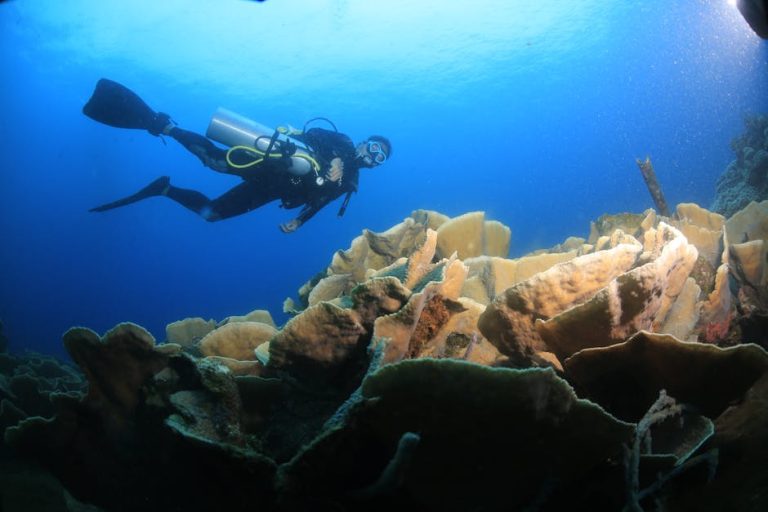
The coral formations tend toward branching corals and plate corals rather than the massive brain corals you see in other parts of the Philippines. The fish life is decent – groupers, snappers, fusiliers, the occasional larger pelagic. You won’t experience the overwhelming density of fish you might find in a pristine marine reserve, but the reef has character and diversity. The shallow reefs (5 to 15 meters) are popular for less experienced divers or for people doing their certification dives.
One detail that matters: the reefs in Coron Bay proper are different from the reefs on the outer islands. The bay reefs, closer to the wrecks, tend to be more heavily visited and show more impact. If you arrange dives with an operator who ventures to the outer islands – places like Busuanga or the smaller islands on the bay’s perimeter – you’ll see healthier coral and fewer divers. These require longer boat rides and sometimes cost more, but the water feels less trafficked.
Practical Realities of Diving Here
The diving season in Coron runs year-round, but conditions vary. The dry season from December to April offers the best visibility and calmest seas. The weather is predictable. The water temperature hovers around 26 to 28 degrees Celsius. You can dive in a thin wetsuit or a rash guard if you’re comfortable. The boats run regularly, and operators aren’t canceling dives due to weather.
The wet season from June to November brings warmer water (28 to 30 degrees), occasional rain, and choppier seas. Visibility can drop. Some operators reduce their schedule or cancel dives on rougher days. If you’re diving during this period, you need flexibility in your plans. You might book three dives and complete only two because the weather deteriorated on the third day.
The shoulder months of May and November are unpredictable. You might get perfect conditions or rough seas. Many experienced divers avoid these months if they have a choice, though budget travelers often visit then because accommodations are cheaper and crowds are lighter.
Decompression sickness, though rare, is a consideration when diving multiple deep wrecks in a day. Most operators follow conservative profiles and limit bottom times, but the cumulative nitrogen load from back-to-back dives at depth is real. If you’re planning to dive for several days, spacing out your deeper dives and including shallower reef dives helps. Some divers choose to dive only once per day for this reason.
The dive shops in Coron range from professional operations with good equipment and experienced guides to smaller outfits running on thinner margins. The difference matters. A well-run operation will have properly maintained gear, guides who know the sites intimately, and reasonable group sizes. A rushed operation might push group sizes to eight or ten divers, which changes the experience – you’re herded rather than guided, and the dive feels more like a commodity than an activity.
What It Feels Like to Be There
Diving Coron’s wrecks carries a weight that reef diving elsewhere doesn’t quite have. You’re underwater in a graveyard, literally. The wrecks are memorials to a specific historical event. Some divers find this meaningful. Others find it unsettling. The atmosphere changes depending on how you frame it in your mind.
The reef dives, by contrast, feel more straightforward – you’re observing marine life, exploring coral structures, enjoying the water. They lack the historical resonance of the wrecks but also lack the slight unease that comes with diving on sunken ships.
The overall experience of diving in Coron depends heavily on which operator you choose, which days you dive, and what your expectations are. If you arrive expecting world-class visibility and pristine reefs, you’ll be disappointed. If you arrive understanding that you’re diving in a working bay with decent wrecks and reasonable reef sites, you’ll likely find it worthwhile. The wrecks are genuinely interesting to explore. The logistics are straightforward. The cost is reasonable. The diving is safe when done with competent operators.
Most divers spend three to five days diving in Coron before moving on to other parts of Palawan or heading elsewhere. That’s enough time to hit the main wrecks and several reef sites without exhaustion setting in. Longer stays work if you want to explore more thoroughly or if you’re using Coron as a base for island hopping and occasional dives rather than diving every day.