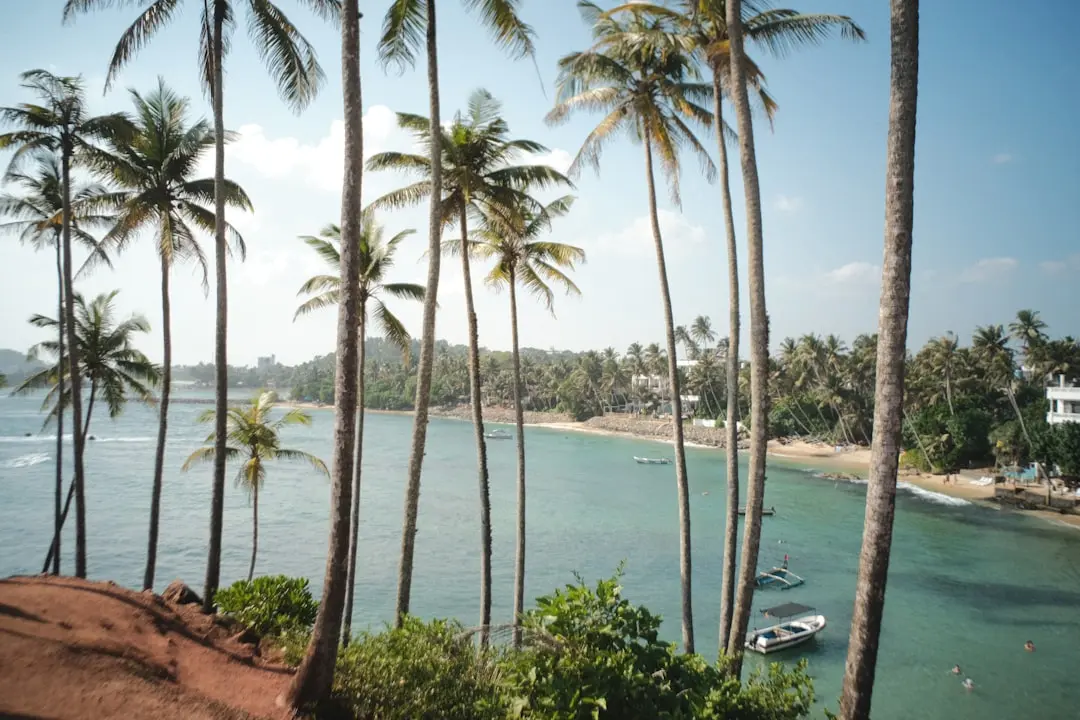
Mirissa sits on Sri Lanka’s south coast, a stretch of beach that has transformed considerably over the past decade. The town itself feels caught between two versions of itself – a working fishing village where boats still launch at dawn, and a tourist accommodation hub where guesthouses line the main road. The snorkeling that draws people here happens just offshore, in waters that shift dramatically depending on when you visit and what time of day you enter the water.
The coral reefs near Mirissa aren’t the dramatic drop-offs or pristine walls you might see elsewhere. They’re shallow, patchy systems that sit in relatively protected waters. The reef structure spreads across sandy bottoms with scattered coral heads and rock formations. On a clear morning, visibility can reach 15 to 20 meters. On an average day, expect 8 to 12 meters. After heavy monsoon swells or when sediment stirs up from the seafloor, visibility drops significantly. This matters because it changes what you actually see underwater.
The Reality of Turtle Encounters
Turtles do inhabit these waters. Green turtles and hawksbill turtles move through the area, particularly between April and October. But encountering them isn’t guaranteed, and when it happens, it’s often brief. Turtles in snorkeling depth waters are usually moving through, not stationary. You might see one for 30 seconds before it glides deeper or disappears into the blue. Operators sometimes claim they can “find” turtles, which is misleading. You’re more likely to spot them by chance than by being directed to them.
The turtles here are accustomed to human presence but not tame. They don’t perform. If a turtle appears, the instinct to rush toward it or follow it closely is strong, but that’s exactly when they accelerate away. The best encounters happen when you’re focused on the reef itself and a turtle simply passes nearby. Patience and stillness work better than searching.
Timing Changes Everything
Early morning snorkeling, between 6:30 and 8:00 AM, offers the clearest water and the fewest people in the water. The light is soft, the reef feels less crowded by boats, and you’re more likely to see fish moving naturally rather than scattering from groups of snorkelers. By 10:00 AM, tour operators have launched their boats, and the water becomes noticeably busier. The reef itself doesn’t change, but the experience does.
Afternoon sessions, particularly in the 2:00 to 4:00 PM window, tend to have slightly reduced visibility as the sun angle changes and any afternoon wind stirs the surface. The water is still swimmable and clear enough to see the reef structure, but the early morning clarity is gone.
What You Actually See Underwater
The coral composition includes branching corals, brain corals, and scattered soft corals. Bleaching has affected these reefs over the years, particularly during warm water events. You’ll see both healthy sections and areas where coral coverage is thinner. This isn’t unusual for reefs in accessible, trafficked areas. The fish life is consistent – parrotfish, wrasse, groupers, and smaller reef fish. Occasionally, larger pelagic fish pass through, but that’s not the norm.
The seafloor transitions between coral patches and sand. Rays sometimes rest on the sandy areas. Octopuses hide in crevices. Sea urchins cluster in certain spots. The reef isn’t dead or lifeless, but it’s not the densest marine ecosystem you’ll encounter either. It’s a working reef in a location that receives regular human activity.
Seasonal Patterns and Swell
The southwest monsoon, roughly May through September, brings larger swells and rougher conditions to Mirissa’s south-facing beaches. The reef itself is protected somewhat by the bay configuration, but water clarity decreases during this period due to sediment movement and wind-driven mixing. Snorkeling is still possible, but conditions are less favorable.
The dry season, November through March, offers the most stable conditions. Water clarity is generally better, the sea state is calmer, and the overall experience is more pleasant. January and February tend to be the peak tourist months, which means more boats, more snorkelers, and more activity in the water. If you’re looking for quieter conditions with good visibility, late November or early December often delivers both.
April and October sit in transition periods. Conditions can be unpredictable. You might get a perfectly clear morning or choppy water with reduced visibility. Local operators know the daily patterns and can advise on conditions, but even they can’t guarantee what the water will look like hour to hour.
Practical Considerations
Most snorkeling trips from Mirissa launch from the beach or from boats anchored in the bay. The reef is close enough that you don’t spend long traveling. Trips typically last two to three hours total, including time in the water and time for the boat operator to show you different reef sections. Guides vary in quality. Some are knowledgeable about marine life and reef ecology. Others simply point you toward the water and let you figure it out.
The water temperature ranges from about 26°C in cooler months to 29°C or higher during warmer periods. Most people find it comfortable without a wetsuit, though a thin rashguard or shirt offers sun protection and prevents chafing. The sun intensity at this latitude is significant, and even with reef-safe sunscreen, you’ll feel the exposure.
Getting to Mirissa requires traveling through southern Sri Lanka. The town sits about two hours south of Galle by road, or roughly four hours from Colombo. The journey itself is slow – Sri Lankan coastal roads wind through towns and villages, and traffic patterns are unpredictable. Budget more time than maps suggest.
Managing Expectations
Snorkeling Mirissa’s reefs delivers a genuine experience of a working coral system in a tropical location. It’s not a pristine, untouched environment, and it’s not a world-class snorkeling destination like the Maldives or parts of Indonesia. It’s a accessible, reasonably clear reef system where you can see coral, fish, and occasionally turtles without traveling far from a beach town.
The appeal lies partly in the simplicity. You can walk to the beach, arrange a snorkel trip within an hour, and be underwater shortly after. The reef is close enough that you’re not spending your day on a boat. The experience feels immediate and uncomplicated, which suits travelers who want marine time without elaborate logistics.
The turtles are present but not guaranteed. If you see one, it’s a moment worth noting. If you don’t, the reef itself offers enough visual interest to make the time in the water worthwhile. Approaching the snorkel with that mindset – where the turtle is a bonus rather than the main event – leads to more satisfying experiences than expecting a guaranteed encounter.