The Coral Sea sits off Australia’s northeast coast, a stretch of ocean that feels genuinely remote even when you’re standing on a boat in the middle of it. This isn’t the Great Barrier Reef, though people often conflate the two. The Coral Sea lies beyond the reef’s outer edge, where the continental shelf drops away and the water deepens into something altogether different. It’s the kind of place where you can spend hours on a boat without seeing another vessel, where the horizon feels genuinely empty, and where the marine environment operates on scales that make most other dive destinations feel contained by comparison.
Getting to the Coral Sea requires commitment. You’re looking at a minimum four to five-hour boat journey from the nearest mainland port, usually Cairns or Port Douglas. Most operators run multiday liveaboard trips, which means you’re committed to the experience once you leave the dock. There’s no popping back to shore if conditions shift or if you change your mind. The boats themselves are functional rather than luxurious – purpose-built vessels designed to handle open ocean conditions, not floating resorts. You’ll share cabins, eat communal meals, and spend your time either in the water or waiting for the next dive window.
The Water and What’s Below
The first thing that strikes you about the Coral Sea is the sheer depth of it. Unlike reef systems that rise from shallow platforms, the Coral Sea’s structure is fundamentally different. You’re diving on seamounts, drop-offs, and pinnacles that rise from depths of 200 meters or more. The reef walls themselves often start at 20 to 30 meters and plunge beyond recreational diving limits. This creates an entirely different visual and physical experience compared to shallower reef systems. The light changes differently. The pressure feels different. Even your breathing patterns adjust because you’re working in deeper water for longer periods.
Water clarity in the Coral Sea varies considerably depending on season and recent weather patterns. During the dry season, roughly May through September, visibility can exceed 40 meters. You get those crystalline conditions where you can see structure and fish life at distances that feel almost unreal. During the wet season, tropical storms and runoff reduce visibility to 15 to 25 meters, which is still excellent by most standards but fundamentally changes how you experience the reef. The water temperature stays warm year-round, sitting between 24 and 28 degrees Celsius, so thermal protection is more about comfort than survival.
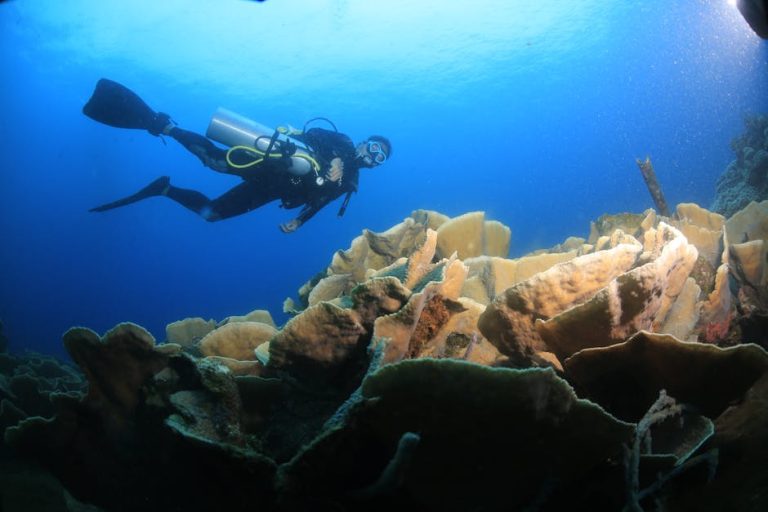
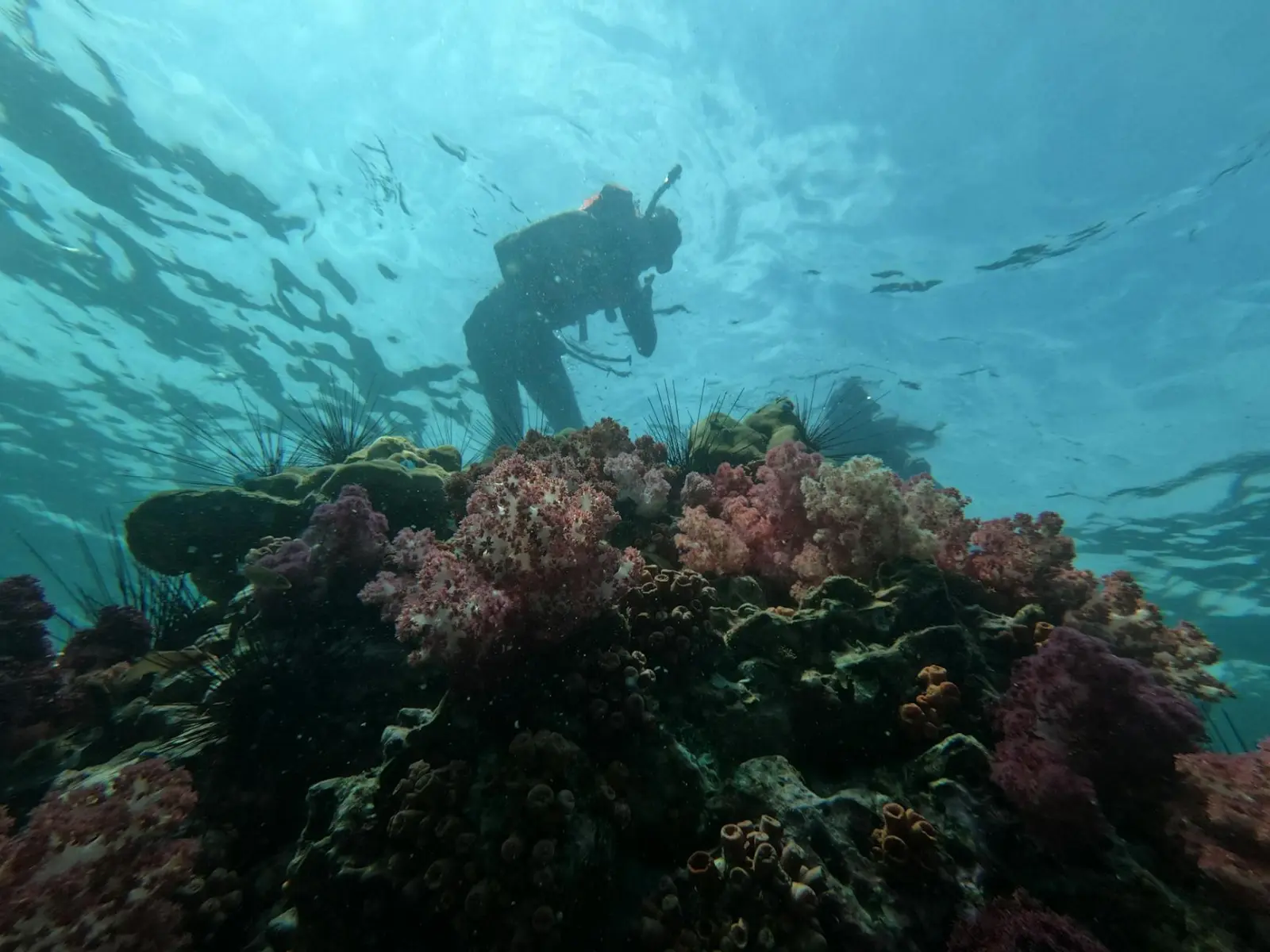
The marine life here operates at a different intensity than most reef systems. You’ll encounter sharks regularly – wobbegongs, reef sharks, occasionally larger species – but they’re indifferent to divers rather than aggressive. Schools of barracuda move through the blue in formations that feel almost choreographed. The coral formations themselves are often more dramatic than what you see in shallower reefs, with massive table corals, branching formations, and sponge gardens that create genuine three-dimensional structure. Smaller creatures – nudibranchs, crustaceans, unusual fish species – occupy niches that reward careful observation.
The Physical Reality of Being There
Diving the Coral Sea is physically demanding in ways that don’t always translate in descriptions. You’re making multiple dives per day, often in deeper water, which means managing nitrogen absorption and decompression obligations more carefully than in shallow reef environments. Most operators run dives to 30 to 40 meters, with some sites pushing deeper. This isn’t extreme technical diving, but it’s not casual either. Your bottom time is limited. Your ascent rates matter. You’re doing safety stops in open water rather than on a convenient reef structure.
The boat movement between sites means you’re spending significant time on the water. If conditions are rough – and the Coral Sea can be rough – you’ll feel it. Seasickness is a genuine consideration, not something to dismiss. Some people adapt within a day; others struggle throughout their trip. The boat’s motion affects how you feel before diving, how you feel after, and how you sleep at night in a cabin that’s perpetually moving. Experienced ocean divers know to manage this, but it’s worth acknowledging that it’s a real factor in how enjoyable your experience will be.
The diving itself requires focus. Current is common, and while drift diving is manageable, you need to be attentive to where you are relative to the boat and your group. The deeper water means you’re more aware of the blue around you – that sense of vast depth beneath and beside you. Some divers find this exhilarating. Others find it slightly unsettling. Both reactions are normal. The key is understanding your comfort level before you commit to a multiday trip.
Timing and Seasonal Patterns
The best window for Coral Sea diving runs from May through October, when conditions are most stable and visibility is typically excellent. This is also when the water is coolest, though still warm enough that most divers use minimal thermal protection. The trade winds are more predictable during this period, which means fewer cancellations and more consistent boat operations.
November through April brings the wet season, tropical cyclone risk, and generally rougher conditions. Some operators still run trips during this period, and visibility can occasionally be excellent, but you’re gambling on weather. Trips get canceled or rerouted. The sea state is less predictable. If you have flexibility with timing, the dry season is genuinely the better choice.
The early morning departures from port happen in darkness. You’re on the boat before dawn, and you spend the journey out watching the mainland recede and the open ocean expand. By the time you reach the first dive site, you’ve been awake for hours and already adjusted to the boat’s rhythm. The first dive often feels like a relief – finally in the water after the anticipation of the journey. Subsequent dives have a different quality; you’re more settled, more focused on what you’re seeing rather than processing the experience itself.
What Makes It Different
The Coral Sea isn’t better or worse than other reef systems – it’s genuinely different. The scale is larger. The depth is greater. The sense of remoteness is real. You’re not diving a reef system that’s been thoroughly explored and cataloged by millions of divers. There’s still an element of discovery, even if it’s just discovering a particular coral formation or fish behavior that you haven’t encountered before.
The cost is significant. Multiday liveaboard trips run from several hundred to over a thousand dollars per person, depending on the operator and season. This price point means the boats aren’t crowded with casual tourists. The people diving here are generally experienced and committed to being in the water. The atmosphere on the boat reflects this – it’s focused rather than festive, purposeful rather than party-oriented.
If you’re considering the Coral Sea, understand what you’re actually signing up for. You’re committing to a multiday boat experience in open ocean, with diving in deeper water than many reef systems, in conditions that require attention and respect. The rewards are genuine – the marine life, the scale, the sense of being somewhere genuinely remote. But the experience is earned through the journey itself, not just the diving. That’s what separates it from destinations where you can dive in the morning and return to a resort by evening.