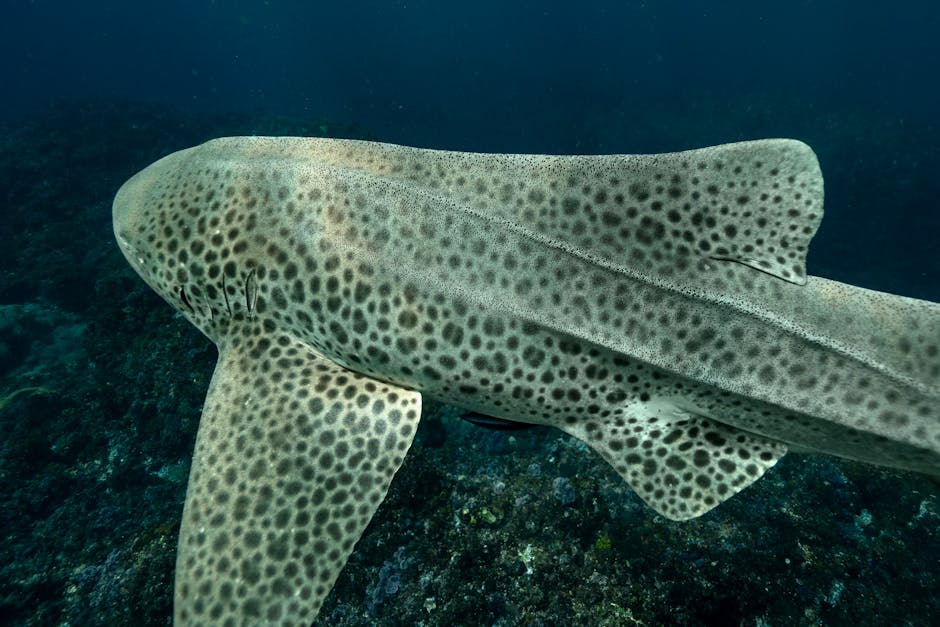
The grey reef shark came in fast, which is how they usually come in when they’re curious. It banked at about three metres, turned one eye toward me, and held position in the current for a moment – assessing, apparently deciding I wasn’t interesting – before banking again and disappearing into the blue. The whole thing took maybe five seconds. I’ve been thinking about it for years.
Sharks have a reputation problem that the data doesn’t support. The GBR averages fewer than two unprovoked shark bites per year across a system visited by two million people annually. The sharks are there – healthy populations of whitetip, blacktip, and grey reef sharks are one of the indicators of a well-functioning reef ecosystem – but the risk they pose to divers and snorkellers is, by any objective measure, negligible. What they offer in return is something harder to quantify but real: the sense of being in a complete ecosystem, one where the top of the food chain is occupied.
The Three Common Species
Whitetip reef sharks (Triaenodon obesus) are the most commonly encountered shark on GBR dives. They’re slender, typically 1.5-1.8 metres, with distinctive white tips on the dorsal and tail fins. They’re strongly site-faithful – individuals return to the same resting spots day after day, often in groups of three to eight animals lying motionless on the sand under ledges. They’re primarily nocturnal hunters, feeding on reef fish, octopus, and crustaceans, and their ability to pump water over their gills means they can rest without swimming – unusual for sharks.
Blacktip reef sharks (Carcharhinus melanopterus) are the sharks of the shallows – the ones you see in the lagoons and on the reef flats, their dorsal fins cutting the surface in water barely deep enough to swim in. They’re smaller than whitetips (typically 1.2-1.5 metres) and more skittish, usually retreating from divers rather than approaching. They’re important predators of reef fish and are often the first shark species children encounter on their first snorkel – a formative experience that, handled well, produces a lifelong appreciation rather than fear.
Grey reef sharks (Carcharhinus amblyrhynchos) are the open-water species – found on reef edges and drop-offs, often in groups, patrolling the interface between the reef and the blue water. They’re more assertive than the other two species and will approach divers, particularly in areas where they’ve been fed or where spearfishing occurs. The threat display of a grey reef shark – arched back, pectoral fins dropped, exaggerated swimming motion – is one of the clearest communication signals in the animal kingdom, and heeding it is strongly advisable.
Ecological Role
Reef sharks are apex predators, and their presence shapes the entire reef community below them. Through direct predation and the behavioural changes they induce in prey species – the “landscape of fear” effect – sharks influence the distribution, behaviour, and population dynamics of mid-level predators, which in turn affect herbivorous fish, which affect algae, which affects coral. Remove the sharks, and the effects cascade down through the system.
This has been demonstrated empirically on reefs where sharks have been depleted by fishing. Studies comparing fished and unfished reefs in the Indo-Pacific have found that reefs without sharks have higher densities of mid-level predators, lower densities of herbivorous fish, higher algae cover, and reduced coral recruitment. The sharks, by keeping the mid-level predators in check, maintain the conditions that allow coral to compete with algae.
The GBR’s shark populations are relatively healthy compared to most reef systems globally, largely because of the Marine Park’s no-take zones and the general prohibition on shark fishing within the park. But “relatively healthy” is not the same as pristine – historical fishing pressure has reduced shark densities from pre-European levels, and the recovery is ongoing.
Diving with Sharks
The practical advice for diving with reef sharks is simple: move slowly, avoid erratic behaviour, don’t corner them, and pay attention to their body language. A relaxed shark – smooth swimming, pectoral fins level – is not a concern. A shark showing the grey reef threat display is communicating clearly, and the appropriate response is to back away slowly and give it space.
Feeding sharks – either deliberately or by carrying speared fish – changes their behaviour in ways that increase risk. A reef that has been regularly fed develops sharks with conditioned responses to divers that are different from their natural behaviour. This is why shark feeding dives, while spectacular, are controversial among marine biologists.
I’ve dived with reef sharks hundreds of times. The grey reef that came in fast at Osprey Reef is the one I remember most clearly, because of that moment of mutual assessment – two animals in the same water, each trying to work out what the other was. The shark decided I wasn’t worth its time. I’ve been trying to live up to that assessment ever since.