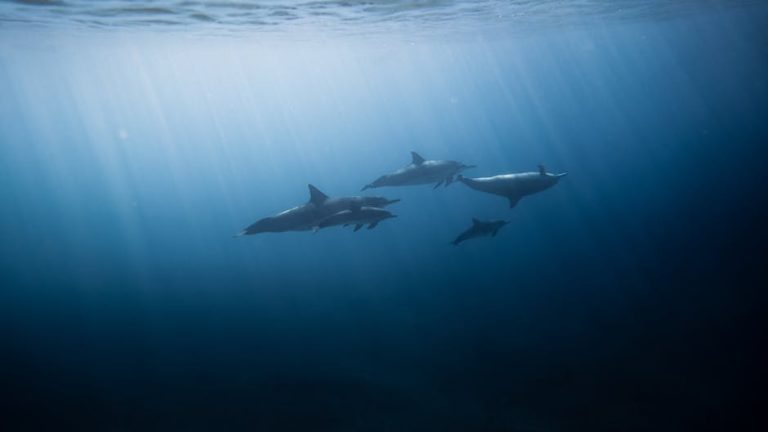
The first thing you notice is the sound. A series of low, resonant pulses – something between a foghorn and a dial-up modem – that you feel as much as hear. Then a shape materialises out of the blue: streamlined, perhaps eight metres long, moving with an unhurried confidence that makes you feel very small and very still. The whale slows. It turns one eye toward you. And then it circles.
Dwarf minke whales are the smallest of the baleen whales, and in most of the world they’re shy, fast-moving animals that surface briefly and disappear. On the northern Great Barrier Reef in June and July, they do something different. They approach divers. They linger. They seem, by any reasonable interpretation of their behaviour, curious.
What Makes the GBR Encounters Unique
Dwarf minke whales (a subspecies of the common minke whale, Balaenoptera acutorostrata) are found throughout the Southern Hemisphere, but their winter aggregation on the northern GBR is the only place in the world where they reliably interact with humans in the water. The behaviour was first documented in the 1980s, when liveaboard operators noticed whales approaching their vessels and lingering around divers. It’s been studied systematically since the mid-1990s by researchers at James Cook University.
What’s remarkable is that the whales initiate the interaction. Divers are instructed to enter the water quietly and remain still – no chasing, no approaching. The whales come to them. A single whale might circle a group of divers for 20-30 minutes, approaching to within a metre or two, before moving on. Groups of three to five whales are common; aggregations of up to 40 have been recorded at a single site.
Why they do this is genuinely unknown. The leading hypothesis is that the whales are attracted by the sounds of the dive boat and the bubbles from scuba regulators – acoustic stimuli that may resemble the sounds of other whales. But this doesn’t fully explain the sustained, apparently investigative nature of the interactions. The whales aren’t just passing through. They’re paying attention.
The Biology of a Little-Known Whale
Dwarf minke whales were only formally described as a distinct subspecies in 1985, which is remarkable given that they’re found throughout the Southern Ocean. They’re distinguished from the Antarctic minke whale by their smaller size (6-8 metres versus 9-10 metres), a distinctive white shoulder patch, and a white band on the pectoral fin. Their taxonomy is still debated – some researchers consider them a full species rather than a subspecies.
Their diet on the GBR is not well understood. Minke whales are generally filter feeders, consuming krill and small schooling fish, but what they’re eating during their GBR aggregation is unclear. They don’t appear to be feeding actively during the interactions with divers – they’re not lunge-feeding or showing the surface behaviours associated with active foraging. The GBR aggregation may be a social event, a mating aggregation, or simply a resting period during their annual migration.
Population size is uncertain. The GBR population is estimated at several hundred individuals based on photo-identification studies, but the total Southern Hemisphere population is unknown. They were historically hunted by Japanese whalers under the scientific whaling program, which listed them as a target species until international pressure led to their removal from the quota.
How to See Them
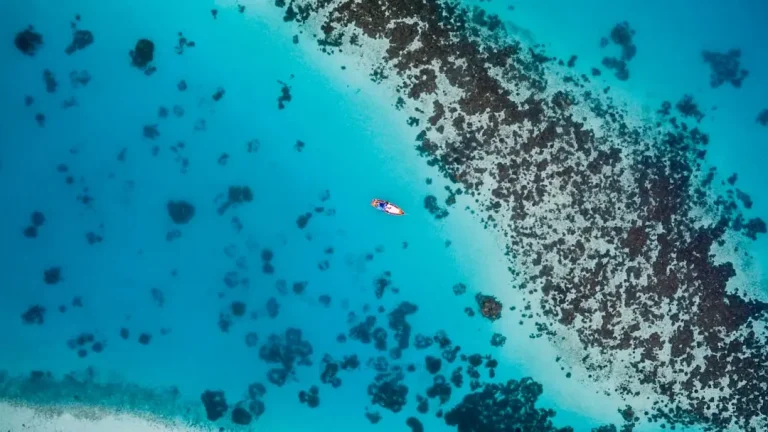
The window is narrow: mid-June to mid-July, in the northern GBR between Cairns and Lizard Island. Liveaboard operators running dedicated minke whale trips include Mike Ball Dive Expeditions and Spirit of Freedom – both operate under a permit system managed by the GBRMPA that limits the number of vessels that can conduct in-water interactions at any one time.
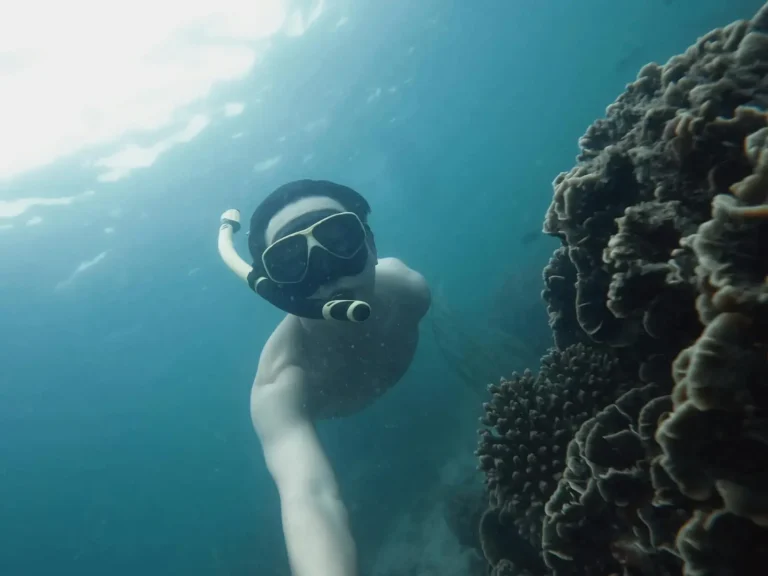
The protocol is specific. Divers enter the water and hold a rope trailing behind the vessel – this keeps them stationary and gives the whales a clear reference point. No fins, no sudden movements. The whales approach on their own terms, and the interaction ends when they choose to leave. It’s one of the few wildlife encounters I’ve had where the animal is clearly in control of the situation, and the effect is humbling in a way that’s hard to describe.
I’ve done three minke trips. Each time, the moment a whale turns its eye toward me and holds my gaze, I have the same thought: there is something going on in there. Something attentive and deliberate. Whether that constitutes curiosity in any meaningful sense, I can’t say. But it doesn’t feel like nothing.