The Great Barrier Reef needs visitors who understand it, and understanding it requires visiting it. The reef’s greatest long-term protection comes from the political and economic will to protect it, and that will is substantially generated by the two million people per year who visit and return home having been affected by what they saw. The visitor who returns as an advocate — who engages with the policy environment, who talks about the reef, who brings their children — contributes to the reef’s future in ways that extend beyond the environmental impact of their visit.
This doesn’t excuse careless travel. It means the goal is travel that is as low-impact as practically possible and as high-understanding as possible.
Getting There: The Carbon Question
A return flight from London to Cairns produces approximately 3.5–4 tonnes of CO2 equivalent per passenger. This is a real cost. My approach: fly direct where available (fewer take-offs and landings reduce total emissions by 10–15%). Carbon offset through a reputable scheme — Gold Standard or Verified Carbon Standard certified projects, not the cheapest option on an airline booking page. Choose accommodation that offsets or reduces energy consumption.
The argument for visiting despite the footprint: a visitor who returns as a genuine reef advocate — who supports reef science funding, who engages in the political economy of reef protection, who talks credibly about what they saw — has a positive long-term impact that the carbon cost doesn’t erase.
Choosing Operators
The Advanced Ecotourism certification from Ecotourism Australia is the most reliable indicator of genuine environmental commitment — it requires demonstration of active environmental management, not just minimum compliance. Questions worth asking any operator: Do they use reef-safe sunscreen? Do they participate in Reef Check or Eye on the Reef monitoring programs? What is their policy on wildlife interactions? Operators who can answer specifically demonstrate environmental engagement that vague marketing language doesn’t.
In-Water Behaviour
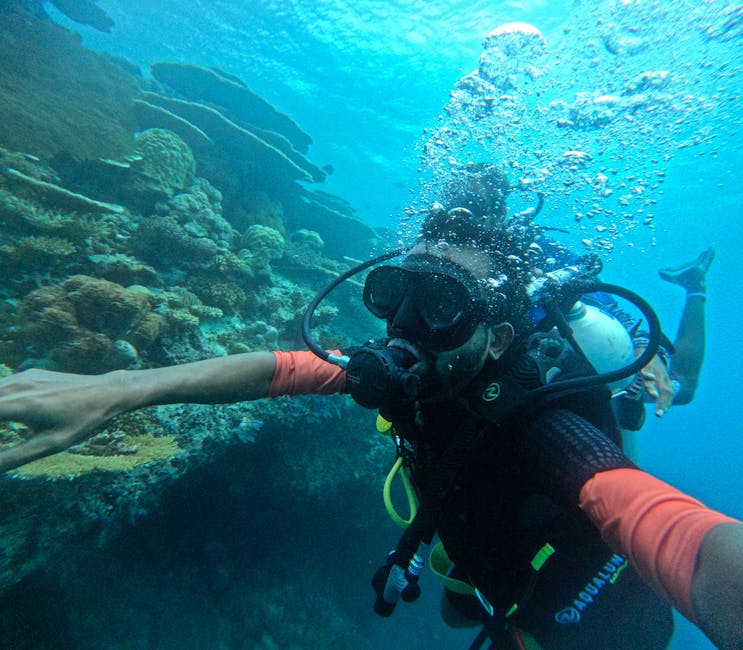
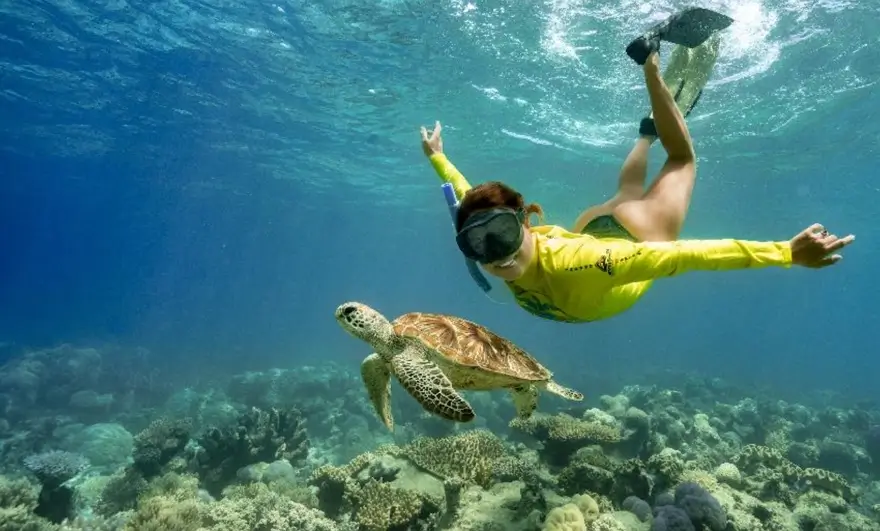
Horizontal body position away from the reef, no touching, reef-safe sunscreen, no feeding of marine life, no collecting. These are the minimum standard for visiting the reef responsibly. The aggregate impact of two million visitors per year behaving well versus carelessly is not small — across the reef’s annual visitor count, the difference is significant.
What to Do When You Return
Support reef science funding — the ARC Centre of Excellence for Coral Reef Studies, AIMS, and James Cook University’s marine programs generate the knowledge that makes reef management possible. Engage with water quality policy — agricultural runoff from the GBR catchment is the most significant non-climate stress on the reef, and the policies governing land management are actively contested. Talk about it. The visitor who returns and speaks credibly about what they saw is doing something conservation spending can’t replicate. You have firsthand knowledge of one of the most extraordinary places on Earth. Use it.