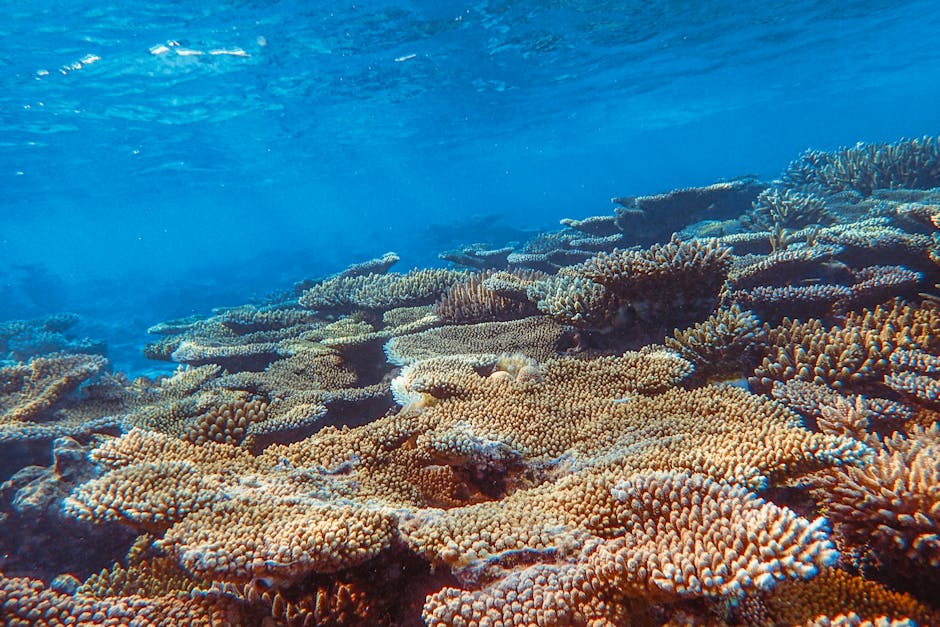
There’s a nursery on the seafloor off Fitzroy Island, about 30 kilometres east of Cairns, where coral fragments the size of your thumb are growing on wire frames suspended in the current. Each fragment is tagged, monitored, and tended by researchers who visit twice a week to remove algae, check growth rates, and record which genotypes are thriving. It looks, in the best possible way, like a garden. A very slow, very expensive, very important garden.
Reef restoration has moved from fringe science to mainstream conservation priority in about a decade. The scale of coral loss on the GBR – roughly 50% of coral cover since 1995 – has created an urgency that’s driven both funding and innovation. The question is no longer whether to attempt restoration, but how, at what scale, and with what realistic expectations.
Coral Gardening: The Foundation
The most established restoration technique is coral gardening – fragmenting healthy coral colonies, growing the fragments in underwater nurseries, and transplanting them onto degraded reef areas. The method was pioneered in the Caribbean in the 1990s and has been adapted for GBR conditions over the past 15 years.
The Great Barrier Reef Foundation’s Coral Nurture Program, run in partnership with dive operators and James Cook University, has transplanted over 100,000 coral fragments across multiple reef sites since 2018. Survival rates vary by site and species but average around 70% at 12 months – significantly better than natural recruitment rates in degraded areas.
The limitation is scale. The GBR covers 344,400 square kilometres. Coral gardening, even at its most ambitious, can restore hectares – not the thousands of square kilometres that have been degraded. It’s valuable for high-priority sites – tourist reefs, areas with high biodiversity, locations with strong natural recovery potential – but it’s not a system-wide solution.
Assisted Evolution: Breeding Heat-Tolerant Coral
The more ambitious approach is assisted evolution – selectively breeding or genetically enhancing corals to be more tolerant of the warmer, more acidic conditions projected for the coming decades.
Researchers at AIMS and JCU have been selectively breeding coral genotypes that survived the 2016-2017 bleaching events, on the hypothesis that survivors carry genetic traits for thermal tolerance. Early results are encouraging – some selectively bred lines show significantly higher survival rates under thermal stress conditions in laboratory trials.
A less controversial approach involves manipulating the zooxanthellae – the symbiotic algae that live within coral tissue. Different strains of zooxanthellae confer different levels of thermal tolerance. Researchers are investigating whether inoculating corals with more heat-tolerant algae strains can improve their bleaching resistance. Early trials have shown promise, though the long-term stability of the introduced strains is still being assessed.
Larval Seeding: Restoration at Scale
The most promising approach for large-scale restoration may be larval seeding – collecting coral gametes during mass spawning events, raising larvae in tanks, and releasing them onto degraded reef areas in concentrations far higher than natural recruitment would produce.
Trials led by Southern Cross University researcher Peter Harrison have demonstrated that larval seeding can produce measurable increases in coral cover on degraded reef patches. The 2019 trial at Heron Island produced coral recruits that were still present and growing at 18-month follow-up surveys.
The technique is being scaled up through the Reef Restoration and Adaptation Program, a $150 million initiative funded by the Australian government and the Great Barrier Reef Foundation. The goal is to develop larval seeding methods capable of treating reef areas measured in square kilometres rather than square metres.
The Honest Assessment
Every researcher I’ve spoken to about reef restoration makes the same point, usually early in the conversation: restoration cannot substitute for emissions reduction. The thermal stress driving bleaching events is a function of global ocean temperatures, which are a function of atmospheric CO2 concentrations. No amount of coral gardening or assisted evolution changes that equation.
What restoration can do is buy time – maintain reef structure and biodiversity through the coming decades while the world reduces emissions, and provide a reservoir of heat-tolerant genotypes that can repopulate the reef if conditions stabilise. It’s a bridge strategy, not a solution.
I find the restoration work genuinely moving, in a way that’s hard to articulate. There’s something about the specificity of it – the individual coral fragments, the tagged genotypes, the researchers who know particular colonies by name – that feels like the right response to an overwhelming problem. You can’t fix the whole reef. But you can tend this garden, on this reef, today. And maybe that’s enough to matter.