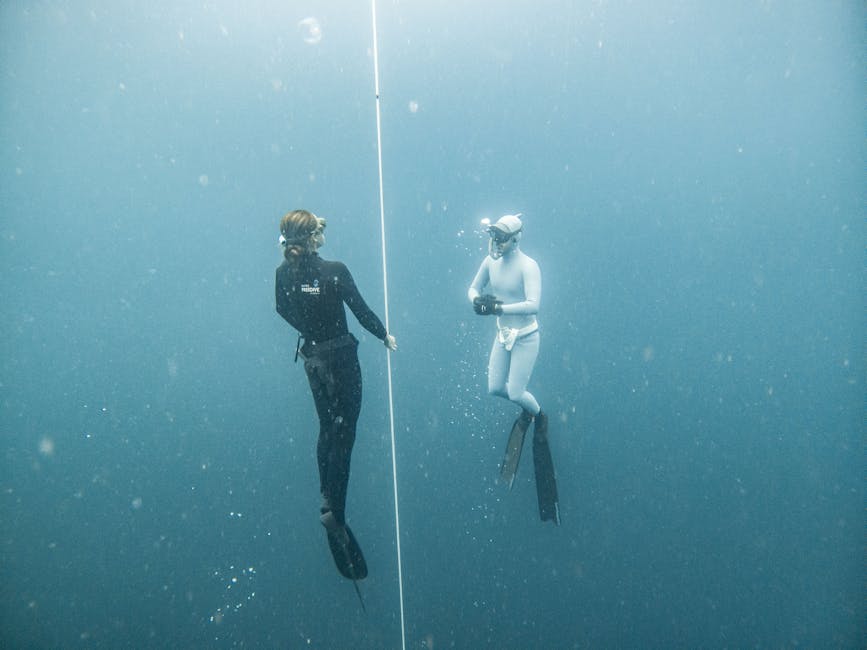
The recreational diving limit — 40 metres for Advanced Open Water divers, 30 metres for Open Water — is not an arbitrary number. It is the depth at which the risks of nitrogen narcosis, decompression sickness, and oxygen toxicity begin to increase significantly with standard compressed air and standard equipment. Below it, the rules change.
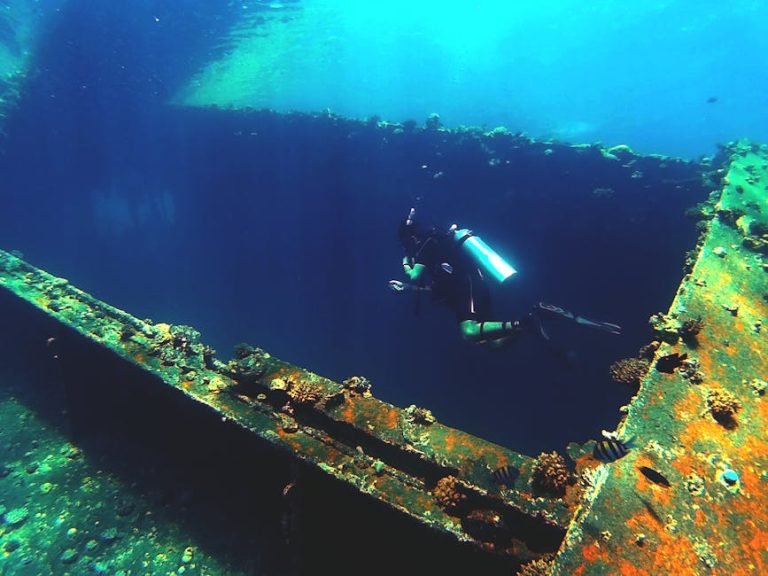
Technical diving — “tec diving” in the abbreviation divers use — is the discipline of diving beyond recreational limits, using specialised equipment, gas mixtures, and decompression procedures that manage those risks systematically. It opens access to depths between 40 and 100+ metres, to penetration of overhead environments, and to the mesophotic zone of the GBR — the deep reef world between 30 and 150 metres that fewer than 0.1% of GBR divers ever see.
What’s Down There
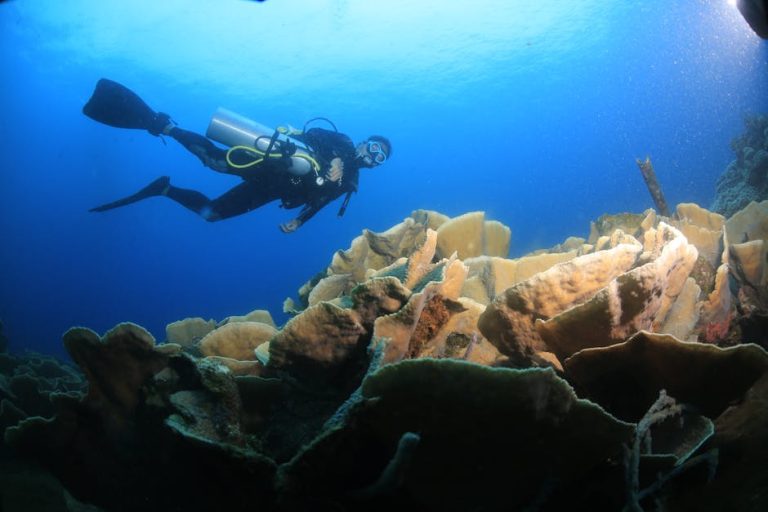
The mesophotic reef of the GBR — named for the Greek for “middle light,” referring to the reduced but still-present sunlight that penetrates to these depths — is a genuinely distinct ecosystem from the shallow reef. Species that are common at 40–80 metres are rarely encountered above 25 metres, and vice versa. The coral communities change character: massive faviid corals and deeper-adapted Leptoseris species dominate where the more colourful branching Acropora corals of the shallows can’t survive.
At 60 metres on the outer ribbon reefs, in the residual blue light of depth and with a torch to restore colour, the wall looks like something from a different planet. Different fish, different coral architecture, different sense of scale — and, because so few divers go there, marine life that behaves as if humans are a curiosity rather than a threat.
Entry Points: Enriched Air and Deep Diver
The first step beyond standard recreational diving is PADI Enriched Air (nitrox) certification, which teaches the use of oxygen-enriched air mixtures (typically 32% or 36% oxygen versus the 21% in standard air). Nitrox extends no-decompression limits at depths between 18 and 30 metres — you can stay longer before needing to ascend. It doesn’t extend your depth limit and has its own oxygen toxicity constraints, but it is the single most useful upgrade for recreational divers who want more time at depth.
The Deep Diver specialty trains divers in the additional planning, equipment, and procedures for dives to 40 metres — the recreational ceiling. Combined with nitrox, it significantly expands what’s accessible on standard recreational training.
Technical courses proper — TDI, PADI Tec, SSI Extended Range — begin at the entry-level tec diver qualification, which covers dives to 45–55 metres using air or nitrox with limited decompression. They progress through Advanced Tec to full Trimix certification, which uses helium-mixed gases to manage narcosis at depths beyond 40 metres.
Equipment Differences
Technical diving equipment is immediately distinguishable from recreational kit. The configuration is called “backmount doubles” — two tanks mounted on a backplate and wing rather than the single tank of recreational diving. The redundancy is essential: a technical diver in decompression at 20 metres cannot simply surface; they need their equipment to continue functioning.
A fully configured tec diver carries: the doubles primary gas, one or more stage cylinders of different gas mixtures for different depth ranges, a wing BCD, a dry suit in Australian conditions, a primary computer and backup computer, primary and backup lights, and a full set of lift bags and reels.
Where to Train on the GBR
Cairns has the highest concentration of technical diving infrastructure in Queensland. Several operators offer entry-level tec training in the sheltered waters of Trinity Inlet and the inner reef sites before progression to the outer ribbon reefs and Coral Sea.
Mike Ball Dive Expeditions specialises in technical and advanced diving expeditions, including dedicated tec trips to the Coral Sea with deep wall profiles. For divers with the training and the appetite for what’s below 40 metres, these expeditions offer access to reef environments that the recreational world can’t see.
The investment — in training, in equipment, in time — is significant. A full technical diver qualification from recreational Open Water to Trimix takes years and thousands of dollars. But for divers who have explored the accessible GBR thoroughly and want to understand what the reef becomes when the light fades and the depth increases, the step into technical diving is the step into a different relationship with the ocean entirely.