I once watched an octopus open a jar.
This wasn’t in a laboratory. It was in a shallow bay near a research station in Queensland, where a local biologist had lowered a sealed jar with a crab inside it to a patch of sandy rubble where a large day octopus (Octopus cyanea) had been resident for several weeks. We watched from the surface. The octopus emerged from beneath a rock, mantle pulsing with what I can only describe as caution. It approached the jar. Investigated it. Then, systematically and without apparent frustration, it gripped the lid and unscrewed it.
The whole process took about forty-five seconds. Then it pulled out the crab, tucked the jar neatly to one side, and retreated under its rock to eat.
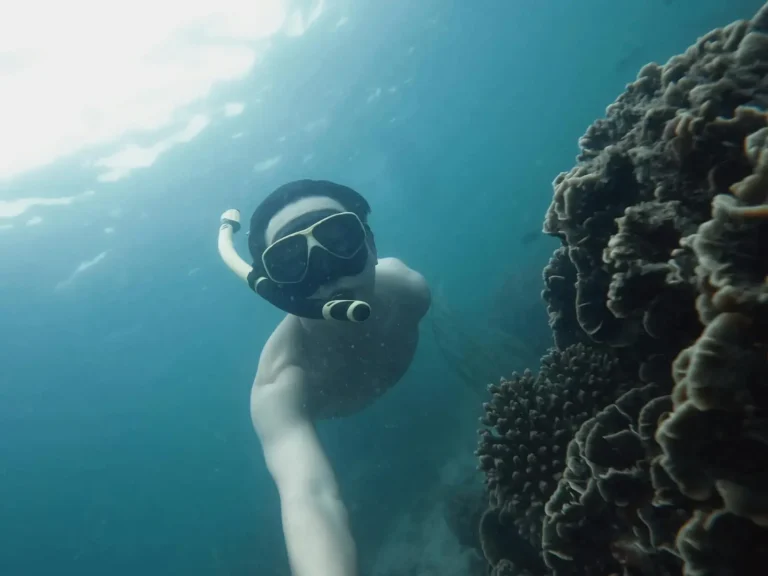
I’ve spent years underwater. I’ve seen a great deal. That forty-five seconds remains one of the most arresting things I’ve ever witnessed.
The Architecture of a Distributed Mind
Octopuses (not “octopi” — the word is Greek, not Latin, so the plural is octopuses or, if you want to be technical, octopodes) are cephalopod molluscs, more closely related to clams and snails than to any vertebrate. Their last common ancestor with us was something flat and simple that lived over 600 million years ago. And yet they have, through a completely independent evolutionary pathway, developed a nervous system of such complexity that they exhibit what can only be called — by any useful definition of the word — intelligence.
An octopus has approximately 500 million neurons. For comparison, a dog has around 530 million. The distribution of those neurons is what makes octopuses genuinely strange: only about a third are in the central brain. The rest are in the arms — roughly 40 million neurons per arm. Each arm can act semi-independently, solving tactile problems, navigating obstacles, and manipulating objects without waiting for instructions from the central brain.
What this means in practice is that an octopus can be “doing” several things at once with different parts of its body, and that the experience of being an octopus — if we can even imagine such a thing — may involve something like multiple parallel streams of sensation and action rather than the single, unified narrative most vertebrates appear to experience.
Camouflage: The Most Complex Visual Display in Nature
The most visible expression of octopus intelligence, and certainly the most spectacular, is their camouflage. Octopuses can change not just their colour but their texture in milliseconds, using two systems: chromatophores (pigment cells that expand and contract to alter colour) and papillae (muscular structures that change skin texture from smooth to highly complex three-dimensional patterns).
The result is the most sophisticated active camouflage in the animal kingdom. An octopus can simulate the texture and colour of coral, rock, sand, algae, and specific sponges. It can match not just general backgrounds but specific objects — I’ve watched an octopus press against a brain coral and replicate its ridged surface pattern so precisely that it effectively disappeared from view while I was looking directly at it.
The extraordinary thing is that octopuses are, as far as we can determine, colourblind. Their eyes have only a single type of photoreceptor, which should make colour matching impossible. Current research suggests they may exploit a property of light called chromatic aberration — the way different wavelengths of light focus at slightly different depths — through a technique of rapidly adjusting the focus of their pupil. It’s a theory, not a certainty, but it’s one of the more elegant proposed solutions to a biological paradox I’ve encountered.
Tool Use and Problem Solving
The jar-opening behaviour I described above is well-documented in captive octopuses and increasingly documented in the wild. But tool use goes further. In 2009, researchers published footage of veined octopuses (Amphioctopus marginatus) in Indonesia collecting coconut shell halves, carrying them awkwardly across open sand while looking distinctly ungainly, then assembling them into shelters in a new location. This is planning — collecting and transporting an object for future use rather than immediate benefit — and it’s a category of behaviour once considered exclusive to vertebrates.
Day octopuses in the Indo-Pacific regularly maintain “middens” — piles of shells and rubble outside their dens that they’ve arranged as protective barriers. They select rocks of particular sizes and shapes and reposition them deliberately. They remember the layout and notice when objects have been moved.
In laboratory settings, octopuses learn to navigate mazes, recognise individual human faces (and treat them differently, becoming visibly more agitated in the presence of a person who has previously been unpleasant to them), open childproof containers, and solve multi-step problems. They also appear to play — repeatedly manipulating objects that offer no food reward, in a pattern that resembles curiosity more than any other word I can think of.
The Mimic Octopus
Of the more than 300 known species of octopus, one deserves particular mention: Thaumoctopus mimicus, the mimic octopus, first documented in 1998 off the coast of Sulawesi.
The mimic octopus doesn’t just change colour and texture. It changes shape and behaviour, impersonating other animals to deter predators. Researchers have documented it mimicking flatfish (flattening its body and swimming with an undulating motion), lionfishes (spreading its arms in the distinctive lionfish posture while adopting a striped pattern), and banded sea snakes (burying most of its body while extending two striped arms in opposite directions). It appears to select its impersonation based on context — matching the mimic to the most plausible threat in its current environment.
This is behavioural flexibility operating at a level that’s difficult to account for without invoking some kind of cognitive evaluation of the situation. It’s not a fixed response pattern. It’s something that at least resembles decision-making.
Lifespan and the Problem of Intelligence
Here is the great tragedy of octopus intelligence: they are extraordinarily short-lived. Most species live between one and three years. The giant Pacific octopus (Enteroctopus dofleini), the largest octopus species with arm spans reaching over four metres, lives perhaps four or five years at most.
They die shortly after reproducing. Males die within months of mating; females die after their eggs hatch, having devoted their final weeks to aerating and defending the eggs without eating. It is a life of extraordinary compression — all that cognitive complexity, all that capacity for learning and individual behaviour, packed into a span that barely allows time for a childhood.
There is a hypothesis, which I find both plausible and quietly melancholy, that the solitary, short-lived nature of octopus existence is exactly why they evolved such extreme intelligence. With no social structure to fall back on, no conspecifics to learn from, no mother to demonstrate skills, every individual octopus must figure out the world from scratch. The intelligence is a survival tool for a creature that is completely, irrevocably alone.
Where to Find Them
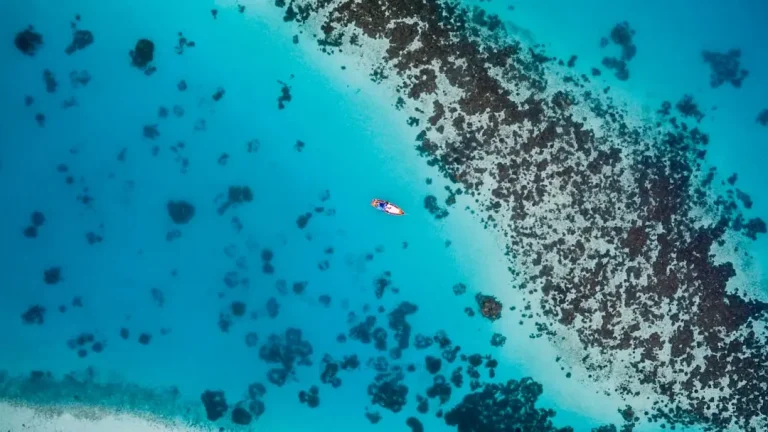
Octopuses are more widespread than most divers realise. The day octopus is abundant throughout the Indo-Pacific — across the reef flats and sandy rubble zones of Queensland, the Coral Sea, Indonesia, the Philippines, and the Indian Ocean. The southern blue-ringed octopus (Hapalochlaena maculosa) is found in southern Australian waters, from Queensland to South Australia; the larger blue-ringed (H. lunulata) further north.
Look for middens — piles of shells and rubble — as indicators of a den. Look for the tell-tale texture change on sandy bottoms: an octopus holding still and mimicking substrate moves in very slight, subtle pulses. And look in crevices, under ledges, and tucked beneath plate corals.
When you find one, slow down. Give it space. Watch what it does when it thinks you’ve stopped paying attention.
You will not be disappointed.