The conversation I have most often with people planning their first reef cruise goes approximately like this. They want to do something meaningful on the water. They’ve heard of the Great Barrier Reef. They have a budget range in mind that turns out to be both larger and smaller than they expected depending on what they actually want. And they’re not sure whether they want to dive, or snorkel, or something else entirely, because nobody has asked them what matters most.
That last part is the important one. The type of reef cruise that’s right for you depends almost entirely on what matters most — and the categories of “what matters” are more varied than the standard promotional material acknowledges.
The Questions That Actually Shape the Choice
How do you want to relate to the water? This is the fundamental filter. Scuba diving, snorkelling, and viewing from above or through glass are genuinely different relationships with the marine environment — different physical experiences, different levels of immersion, different things you’ll see and remember.
If you’re a certified diver, the question is what kind of diving you want: day trips on the inner or mid-shelf reef, outer reef from a day-trip platform, a multi-day liveaboard on the Coral Sea atolls. The ladder runs from accessible-and-good to remote-and-extraordinary, and your available time and budget determine how far along it you go.
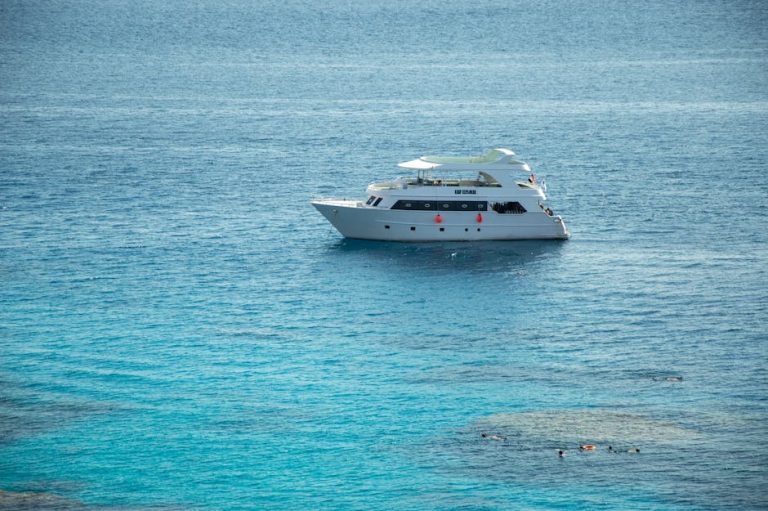
If you’re a snorkeller or non-diver, the day-trip catamaran and expedition cruise options serve you well. The outer reef day trips from Port Douglas put non-divers in genuinely excellent reef conditions. The small-ship expedition format adds natural history interpretation and multi-day immersion that a single day trip can’t match.
If you don’t snorkel or dive and won’t — that’s fine, and there are options. Scenic flights over the reef, semi-submersible tours, glass-bottom boat trips, and reef walks at low tide on certain cay islands provide genuine reef access without water immersion.
How many days do you have? A single day gives you a day trip from Cairns or Port Douglas. Two to three days gives you an island resort stay (Lady Elliot, Heron, Hamilton) with direct reef access. Four to seven days gives you a liveaboard or a small-ship expedition covering genuine variety. Ten or more days allows a combination of options — island time plus liveaboard, or an extended Kimberley or Papua New Guinea itinerary.
The minimum meaningful reef experience is, in my assessment, two nights somewhere with direct reef access — enough time to enter the water more than once and to let the reef become familiar rather than simply visited.
What is your group composition? A couple who both dive has the widest range of options. A family with young children needs shallow, calm, protected sites — the day trip platforms and coral cay island resorts are designed for them. A mixed group of divers and non-divers needs an operator who manages both simultaneously — most day-trip and expedition vessels do this well; some liveaboards are dive-exclusive. A solo traveller needs to think about the social dynamics — liveaboards tend to produce easy connection with other passengers, and the diving community is welcoming of solo travellers in a way that general tourism sometimes isn’t.
The Budget Reality
Australian reef cruising spans a very wide price range. A Cairns day trip to the outer reef costs $200–$280 per person. A mid-range Coral Sea liveaboard runs $400–$600 per day. A premium liveaboard in Indonesia runs $400–$800 per day. A Kimberley small-ship expedition costs $900–$1,200 per day.
The relationship between price and experience quality is real but non-linear. The difference between a $200 day trip and a $600-per-day Coral Sea liveaboard is large and largely justified by the reef access difference. The difference between a $400-per-day and $800-per-day liveaboard is mostly accommodation comfort rather than diving quality.
The clearest value proposition in Australian reef cruising is the mid-range Coral Sea liveaboard: the reef access is world-class, the price is manageable for a special trip, and the experience is repeatable — this is not a once-in-a-lifetime activity but something divers return to regularly because the reef rewards repeated visits.
Booking Timing
Australian reef cruising has distinct seasons, and the popular operators at the popular times sell out well in advance.
For Coral Sea liveaboards in peak season (June–September): book four to six months ahead. For Lady Elliot and Heron Island in the manta and turtle seasons: three to four months minimum. For Kimberley expeditions: twelve months is not excessive, and the best vessels at the best price points are often booked a year out.
Outside peak season, last-minute availability exists, often at reduced rates. If your travel timing is flexible, operators’ direct email lists and dive travel specialists who work with specific operators can produce significantly better rates than public booking platforms.
The Trip You Actually Take
All the planning in the world is preparation for one thing: the first morning you wake up on a vessel offshore and put your face in the water. Everything before that point is logistical. Everything after it is experience.
I’ve been planning reef trips for twenty years and I still find that the specific character of each trip — the particular guide’s knowledge, the reef on a given day, the people around you at the dive platform — is almost impossible to predict in advance and almost impossible to fully describe afterward.
What I can tell you with certainty: the investment of effort and money in getting genuinely offshore — to the outer reef, to the Coral Sea, to somewhere that requires a crossing and a commitment — is always, every single time, returned with interest by what’s in the water.
Plan it. Book it. Go. The reef has been there for eight thousand years and it is, still, more than worth your time.