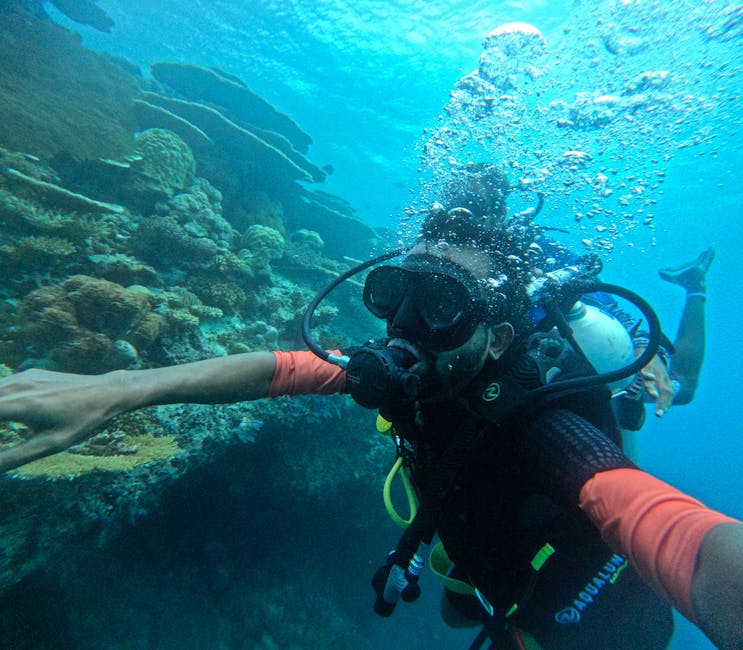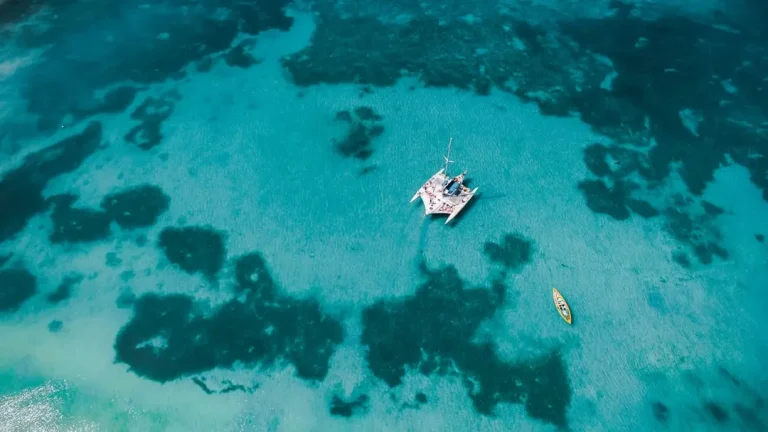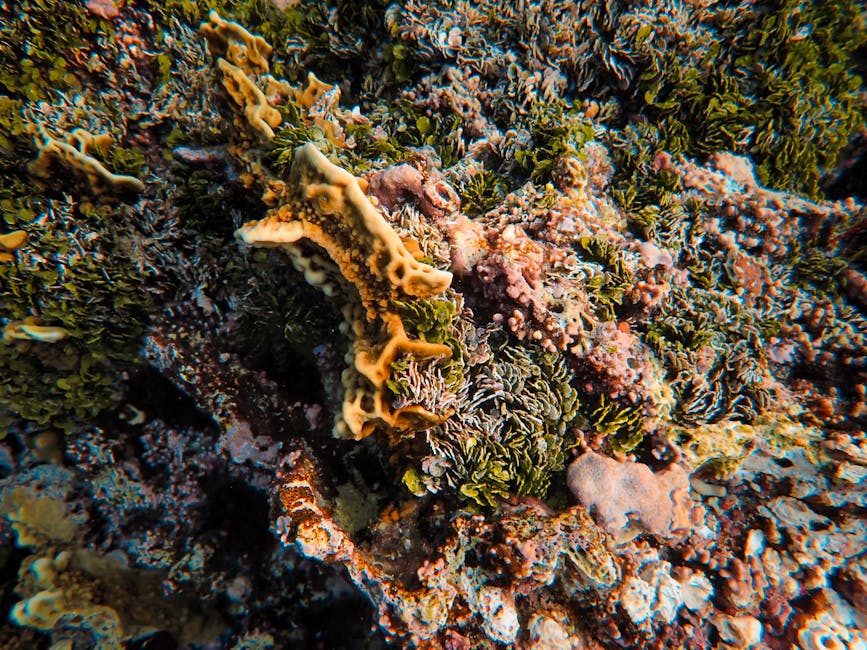
Timing a reef visit requires understanding more than just “dry season” or “wet season.” The reality is messier and more regional than any single rule suggests. I’ve spent enough time waiting for water to clear, sitting out rough swells, and watching visibility drop from 80 feet to 20 that I’ve learned to think about reefs the way locals do – in terms of specific conditions that shift month by month.
The challenge is that coral reefs exist in vastly different ocean systems. A reef in the Caribbean responds to completely different weather patterns than one in Southeast Asia or the Red Sea. What makes sense for the Great Barrier Reef might be terrible timing for the reefs off Belize. And even within regions, small variations in latitude, current patterns, and local geography create pockets of better or worse conditions.
Caribbean Reefs: Hurricane Season Complications
The Caribbean has a reputation for being accessible year-round, and technically that’s true. But the reality involves a careful dance with Atlantic hurricane season, which officially runs June through November. Most travelers visit November through April, and there’s a practical reason for this beyond just avoiding storms.
From December through March, the water is clearest and calmest. Trade winds blow steadily but not aggressively, and the ocean has that glassy quality you see in early morning light. Visibility often sits at 80 to 100 feet on healthy reefs. The water temperature hovers around 75 to 78 degrees Fahrenheit, which feels refreshing but not cold. Crowds peak during these months, particularly around Christmas and spring break, but the conditions justify the congestion.
April and May are interesting months. Fewer tourists are around, the water remains warm and reasonably clear, and the reef itself feels less stressed by visitor traffic. But swells start building as summer approaches, and occasional rain squalls can reduce visibility. If you’re flexible and don’t mind slightly choppier conditions, you can find good diving and snorkeling with far fewer people.
The June through November period isn’t impossible. Smaller operations stay open, and dedicated divers still visit. But you’re gambling with weather. A tropical system can churn up the water for days, turning visibility murky. Even without a direct hit, the atmospheric pressure changes and wind shifts that precede storms can make conditions unpredictable. I’ve experienced mornings where conditions looked manageable, only to have a dive cancelled by afternoon due to incoming swells.
Red Sea: A Different Calendar Entirely
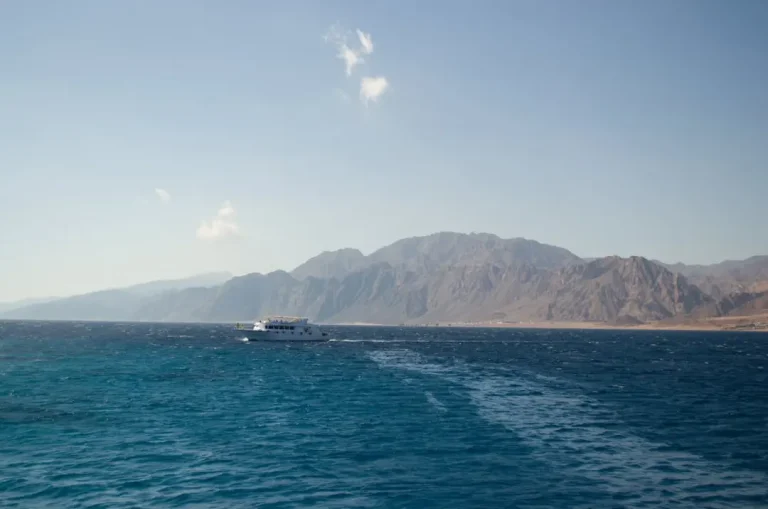
The Red Sea operates on its own schedule, and it’s one of the most reliable reef destinations if you time it right. The region has minimal rainfall and no hurricane equivalent, which simplifies things considerably. But water temperature and wind patterns still matter.
October through April is the sweet spot. Water temperatures range from 68 to 75 degrees Fahrenheit – cool enough to require a wetsuit but warm enough that you’re comfortable for multiple dives. More importantly, the winds are predictable and generally light. The water clarity is exceptional, often exceeding 100 feet. The reef feels less stressed during these months, and marine life activity is steady.
May through September brings heat and occasionally stronger winds. Water temperatures climb into the 80s, which sounds pleasant until you’re spending six hours on a boat under the sun. The real issue is that summer winds can create chop and reduce visibility to 40 to 60 feet. It’s still diveable, and some operators prefer the summer season because tourists thin out. But the conditions feel less forgiving than winter months.
Great Barrier Reef: Winter Clarity, Summer Storms
Australia’s reef system is massive and responds to Southern Hemisphere seasons, which confuses many Northern Hemisphere travelers. The best window runs from June through September, which is Australian winter. This seems counterintuitive until you understand the mechanics.
During the Australian winter, the water is coldest but clearest. Visibility regularly exceeds 80 feet, sometimes pushing 120 feet on the outer reef. The water temperature drops to around 68 to 72 degrees Fahrenheit, which requires a 3mm wetsuit but is manageable. Wind patterns are more stable, and the sea state is generally calmer. Fewer tourists visit during these months, so popular dive sites feel less crowded.
The Australian summer, from December through February, brings tropical cyclone season. Water temperatures climb to 82 to 86 degrees, which feels warm until you’re in it for hours. More problematically, cyclones can create dangerous conditions, and the threat alone keeps many operators cautious. Even without direct hits, the atmospheric instability reduces visibility and creates unpredictable currents. March through May is a shoulder season – water still warm, conditions improving, but not yet optimal.
Southeast Asian Reefs: Monsoon Patterns
Thailand, Indonesia, and the Philippines all have monsoon influences that create distinct seasonal windows. But unlike the Atlantic, these regions don’t have a single “bad season.” Instead, different coasts face different conditions depending on which monsoon dominates.
In Thailand, the Andaman coast (where most reef diving happens) is best visited November through April. The northeast monsoon brings calm seas and clear water. Visibility sits around 60 to 80 feet, and the weather is predictable. May through October is the southwest monsoon season, bringing rain, rough seas, and reduced visibility. Many operators on the Andaman side close or reduce operations during these months.
Indonesia is more complex because the archipelago sprawls across multiple ocean systems. The Lesser Sunda Islands and eastern Indonesia are generally best visited April through November, when the dry season dominates and seas are calmer. Western Indonesia, including popular sites near Bali, can be visited year-round, but conditions improve significantly from May through September. The period December through March brings heavy rains and occasional rough seas.
The Philippines experience similar monsoon influences. The best window is typically November through May, when the northeast monsoon brings calm conditions and clear water. June through October is the southwest monsoon, bringing stronger winds and occasional typhoons. Visibility can drop to 30 to 40 feet during this period, though some southern sites remain relatively protected.
Pacific Islands and Remote Reefs
Destinations like Fiji, Palau, and the Solomon Islands sit in the tropical cyclone belt, which shapes their seasons significantly. The dry season, from May through October, offers the most stable conditions. Water temperatures hover around 77 to 82 degrees Fahrenheit, visibility is typically 60 to 100 feet, and winds are moderate and predictable.
November through April is the wet season, bringing heavier rainfall and the risk of tropical cyclones. Water temperatures climb to 82 to 86 degrees, which feels warm but can be exhausting during long dive days. Visibility can be excellent between weather systems, but storms create unpredictable conditions. Some operators stay open year-round, but they’re cautious and selective about which sites they visit.
Practical Timing Considerations
Beyond seasonal patterns, a few practical realities shape when you actually experience good reef conditions. Visibility isn’t just about season – it’s about recent weather. A reef that should be clear can turn murky after heavy rain or strong currents. Conversely, a destination in its theoretically “worst” season might have exceptional clarity if weather systems have been stable.
Crowd levels inversely track with conditions in many regions. The best times for weather are often the busiest times for tourism. If you prioritize solitude over perfect visibility, visiting during shoulder seasons or slightly riskier periods can pay off. You’ll encounter fewer divers, see reef fish less skittish, and feel the place more authentically.
Water temperature matters more than many travelers expect. A 68-degree reef requires mental adjustment if you’re used to 82-degree water. Your body cools faster, and fatigue sets in quicker. Conversely, 86-degree water feels pleasant until you’re six hours into a boat day with no shade and limited fresh water.
The most reliable approach is checking specific sites within your chosen region rather than trusting broad seasonal guidelines. A reef 20 miles away might have completely different exposure to wind, current, and weather systems. Local operators know these nuances intimately. Their booking calendars and cancellation patterns reveal far more than any seasonal chart.