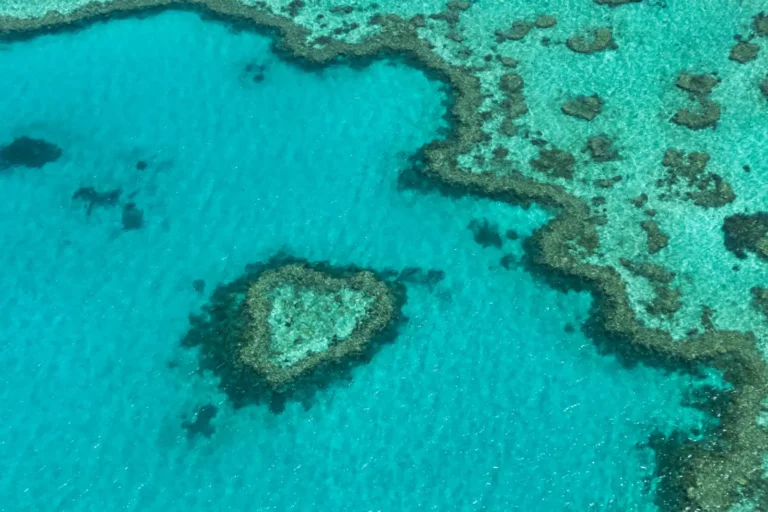
The Burdekin River drains 130,000 square kilometres of Queensland – cattle country, cane fields, mining operations, and the ranges behind Townsville. After heavy rain, it runs brown with sediment and carries a chemical signature of everything that’s happened on that land: nitrogen from fertilisers, pesticides from cane farms, fine sediment from eroded gullies. It discharges into the Great Barrier Reef lagoon at a rate that, during flood events, can be measured in cubic kilometres per day.
I’ve flown over the GBR after a major flood event, and the plume is visible from the air – a brown stain spreading across the turquoise lagoon, reaching reefs 50 kilometres offshore. It’s one of those images that makes the land-sea connection viscerally clear. The reef doesn’t exist in isolation. It exists downstream of everything.
What Comes Off the Land
The three main water quality threats to the GBR from land-based runoff are sediment, nutrients, and pesticides.
Sediment – fine particles of soil eroded from cleared land, grazed catchments, and disturbed stream banks – reduces water clarity, smothering coral and seagrass and reducing the light available for photosynthesis. The GBR catchment delivers an estimated 17 million tonnes of sediment to the reef each year, roughly six times the pre-European level. Much of this settles in the inner reef lagoon, but fine particles can remain suspended for weeks and travel significant distances offshore.
Nutrients – primarily nitrogen and phosphorus from fertilisers and animal waste – stimulate the growth of algae and phytoplankton. On the reef, elevated nutrients favour algae over coral, shifting the competitive balance on degraded reefs and making recovery harder. In the water column, elevated phytoplankton concentrations increase the survival rates of crown-of-thorns starfish larvae – the leading hypothesis for what drives outbreak events.
Pesticides – particularly herbicides used in sugarcane farming – have been detected in reef waters at concentrations that affect the photosynthesis of seagrass and coral zooxanthellae. The most commonly detected herbicide is diuron, a photosystem II inhibitor that reduces the photosynthetic efficiency of marine plants at concentrations well below those considered harmful under older regulatory frameworks.
The Science of the Connection
Establishing the causal link between land-based runoff and reef condition has been scientifically and politically contentious. The reef is a complex system with multiple stressors, and attributing specific damage to specific sources requires careful analysis.
The strongest evidence links nutrient runoff to crown-of-thorns outbreaks. Studies by AIMS and JCU have shown that outbreak initiation sites on the GBR are consistently located near river mouths and in areas with elevated chlorophyll concentrations – the signature of phytoplankton blooms driven by nutrient enrichment. The correlation is strong enough that most reef scientists now consider nutrient runoff the primary driver of outbreak initiation, even if other factors influence outbreak spread.
The link between sediment and inshore reef condition is also well-established. Inshore reefs – those within 20 kilometres of the coast – have significantly lower coral cover and diversity than mid-shelf and outer reefs, and the difference correlates with proximity to river mouths and sediment plume extent. Inshore reefs near the Burdekin and Fitzroy river mouths are among the most degraded on the GBR.
The Reef 2050 Water Quality Plan
The Australian and Queensland governments have committed to improving water quality through the Reef 2050 Water Quality Improvement Plan, which sets targets for reducing sediment, nutrient, and pesticide loads reaching the reef. The targets are ambitious – a 25% reduction in dissolved inorganic nitrogen by 2025, a 20% reduction in sediment – and progress toward them has been slow.
The primary mechanism for achieving the targets is voluntary adoption of best management practices by farmers – reduced fertiliser application rates, improved irrigation efficiency, riparian vegetation restoration to filter runoff before it reaches waterways. Government programs provide financial incentives and technical support for adoption.
Independent assessments of progress have been mixed. Pesticide loads have declined significantly, driven by regulatory changes and industry adoption of precision application technology. Nutrient and sediment loads have shown less improvement, partly because the scale of change required – across millions of hectares of agricultural land – is enormous, and partly because extreme rainfall events periodically reset progress made during drier years.
The Political Dimension
Water quality is the most politically contested aspect of GBR management, because improving it requires changing how Queensland’s agricultural industries operate. The sugarcane and cattle industries are economically significant and politically influential, and the relationship between farming practices and reef health has been disputed – sometimes in good faith, sometimes not – for decades.
The science is now sufficiently robust that the dispute is less about whether land-based runoff affects the reef and more about how much improvement is achievable, at what cost, and who should bear that cost. These are legitimate policy questions, and they don’t have easy answers.
What I keep coming back to is the simplicity of the physical reality. Water flows downhill. Everything that happens on the land eventually reaches the sea. The reef is downstream of Queensland, and Queensland’s choices about how to manage its land are, inescapably, choices about the reef. That’s not a political statement. It’s just geography.