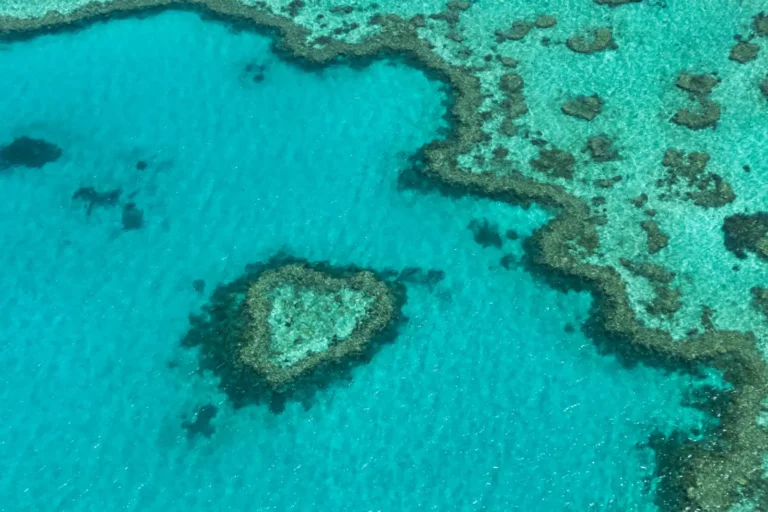
The Great Barrier Reef is often described as the largest living structure on Earth, which is true, and which somehow still fails to convey how extraordinary that is. It’s 2,300 kilometres long. It’s visible from space. It contains more biodiversity than the Amazon rainforest. And it was built, over roughly 20 million years, by animals smaller than your fingernail.
I think about this every time I’m on a reef – the sheer accumulated labour of it, the geological patience. The coral head I’m hovering over might be 500 years old. The reef structure beneath it might be 10,000 years old. And the limestone foundation it’s built on might be millions of years old, the compressed skeletons of corals that lived and died long before humans existed. It’s humbling in a way that’s hard to put into words.
The Builders: Coral Polyps
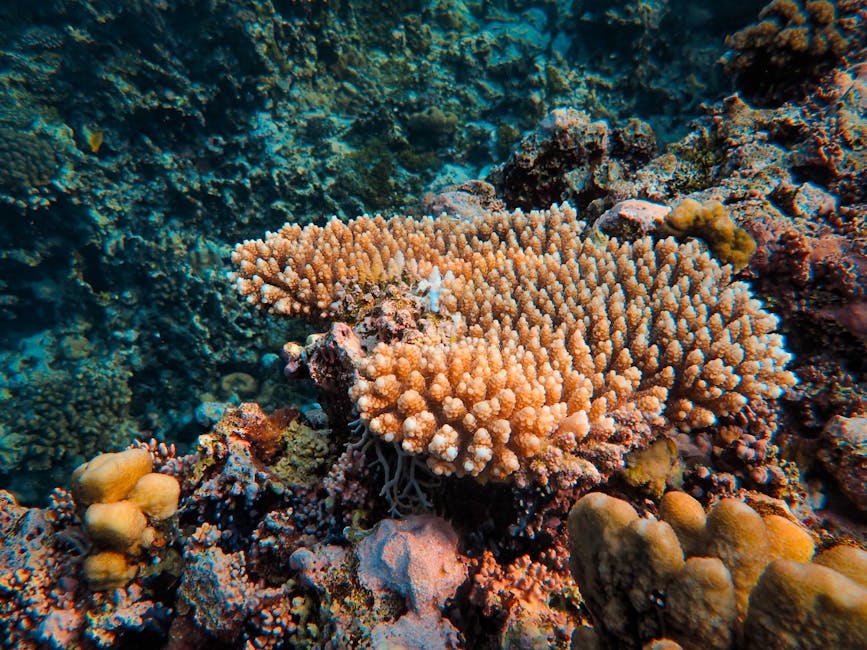
Reef-building corals are animals – members of the phylum Cnidaria, related to jellyfish and sea anemones. Each coral colony is composed of individual polyps: tiny animals, typically 1-3 millimetres in diameter, that live in cup-shaped calcium carbonate skeletons they secrete themselves. The polyp sits in its cup, extends its tentacles to feed at night, and continuously adds to its skeleton throughout its life.
When a polyp dies, its skeleton remains. New polyps grow on top of old skeletons, adding their own calcium carbonate to the structure. Over decades, centuries, and millennia, this process of growth and accumulation builds the massive limestone structures that form the reef framework. The living coral is only the thin surface layer – the reef beneath is dead skeleton, compressed and cemented into rock.
The rate of reef growth varies by species and conditions. Fast-growing branching corals like Acropora can add 10-20 centimetres per year. Massive corals like Porites grow more slowly – 1-2 centimetres per year – but live longer, with some colonies estimated at over 1,000 years old. The net upward growth of a healthy reef is roughly 1-10 millimetres per year, depending on the balance between coral growth and biological erosion.
The Role of Zooxanthellae
Coral reefs exist in tropical waters that are, paradoxically, nutrient-poor – the “deserts of the sea,” as oceanographers sometimes call them. The reason corals can build massive structures in these conditions is their symbiotic relationship with zooxanthellae, microscopic algae that live within coral tissue and photosynthesise sunlight into energy.
The zooxanthellae provide the coral with up to 90% of its energy needs, and this energy surplus is what allows corals to calcify rapidly enough to build reef structures. Without zooxanthellae, corals can survive but grow too slowly to build reefs. This is why reef-building corals are restricted to clear, shallow, sunlit tropical waters – they need light for their algal partners to photosynthesise.
How the GBR Formed
The Great Barrier Reef as we know it is geologically young. The current reef structure began forming around 20,000 years ago, at the end of the last ice age, when sea levels were roughly 120 metres lower than today and the Queensland continental shelf was dry land. As sea levels rose over the following 10,000 years, corals colonised the newly submerged shelf, building upward to keep pace with the rising water.
The reef has not always been in its current location or configuration. Older reef structures – dating back millions of years – exist beneath the current reef, preserved in the limestone of the continental shelf. The GBR is the latest in a series of reef systems that have grown, died during ice ages when sea levels fell, and regrown as conditions improved.
The three main reef types on the GBR reflect different formation histories. Fringing reefs grow directly from the shore of islands and the mainland coast. Barrier reefs – the main reef structure – grow along the edge of the continental shelf, separated from the coast by a lagoon. Coral cays – low islands like Heron and Lady Elliot – are formed from coral rubble and sand accumulated on reef platforms, stabilised by vegetation.
Reef Zones
A cross-section of a GBR reef reveals distinct zones, each with characteristic communities of coral and fish. The reef crest – the shallowest part, often exposed at low tide – is dominated by encrusting and massive corals adapted to wave energy and periodic air exposure. The reef slope descends from the crest into deeper water, with the richest coral diversity typically found between 5 and 20 metres. The reef base transitions into sand and rubble, with decreasing coral cover and increasing soft coral and sponge diversity.
The back reef – the lagoon side – is typically calmer and shallower than the ocean-facing slope, with different coral communities adapted to lower water flow and higher sediment loads. Seagrass meadows often develop in the back reef zone, providing habitat for dugongs, green turtles, and juvenile fish.
What Threatens the Architecture
Reef formation is a balance between growth and erosion. Biological erosion – parrotfish biting coral, boring sponges dissolving limestone, sea urchins scraping substrate – is a natural and important process that creates the sand of reef islands and maintains reef complexity. But when coral growth slows due to bleaching, disease, or crown-of-thorns outbreaks, erosion can outpace growth, and the reef structure begins to degrade.
Ocean acidification makes this balance more precarious. As seawater becomes more acidic, the rate of chemical dissolution of calcium carbonate increases, and the energy corals must expend to calcify against this dissolution rises. Some models suggest that under high-emissions scenarios, parts of the GBR could shift from net carbonate accretion to net erosion by the end of this century.
Twenty million years of building, and we’ve managed to threaten it in about 200. That’s not a comfortable thought. But it’s a clarifying one.