The Great Barrier Reef is one of the most photographed natural environments on Earth, and most of the photographs don’t do it justice. The light, the scale, the colour, the movement — these are things that cameras struggle to capture even in the best conditions, and the specific challenges of underwater photography produce results that frustrate new photographers and challenge experienced ones.
But the reef rewards photographic effort more than almost any other natural environment. The density and variety of subjects, the possibility of close approach to marine life with no fear of humans, and the visual complexity of the reef structure give a photographer with good technique material that is genuinely worth making.
Equipment: The Honest Assessment
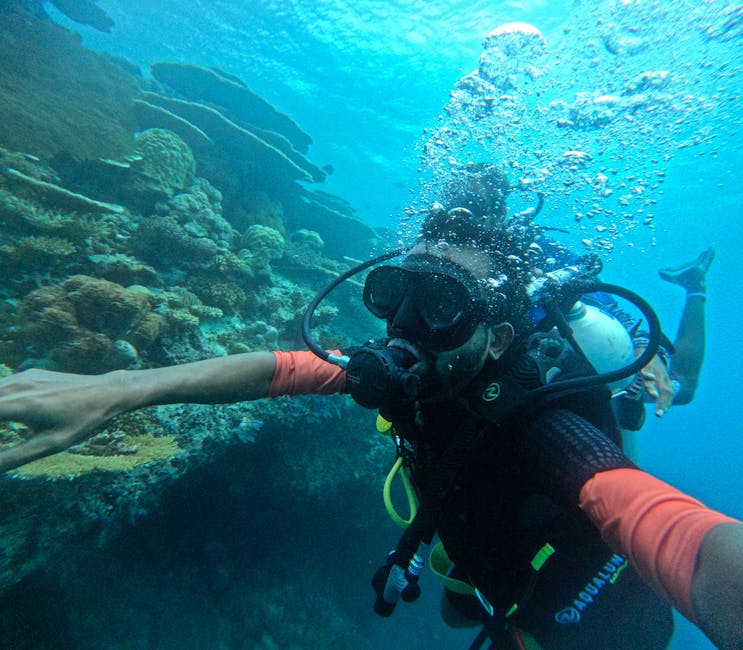
The best underwater camera is the one you have in the water. A GoPro used by someone who understands how to get close to subjects and hold still produces better results than a mirrorless camera used by someone still figuring out buoyancy.
Entry level: GoPro Hero series with red filters for colour correction at shallow depths. Mid-range: Olympus TG-7 or similar compact camera with underwater housing — proper manual controls, better sensor quality, handles the full range of reef subjects. Professional: mirrorless bodies in Nauticam or Ikelite housings with dual strobes — serious equipment at $5,000–15,000, requiring experience to use effectively.
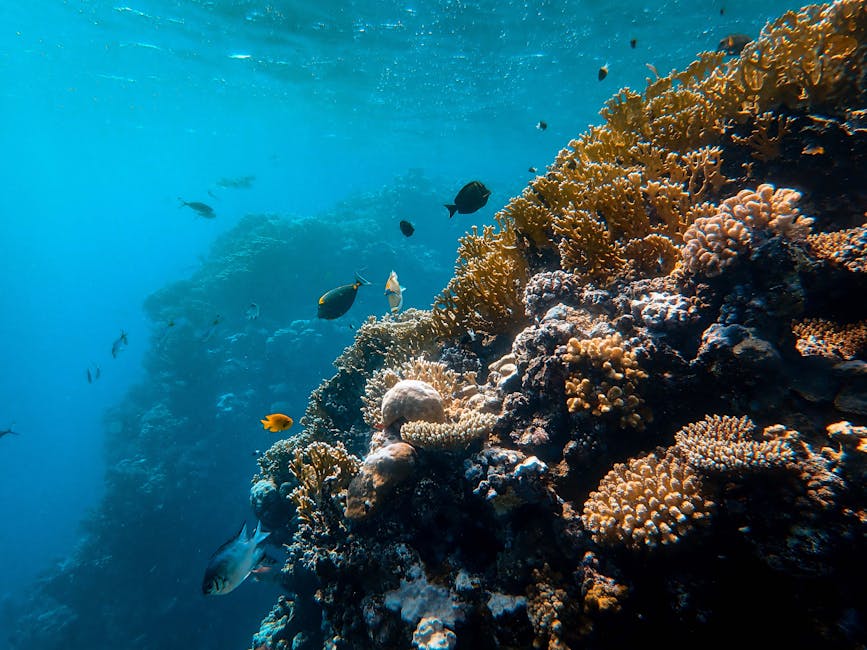
The single most important equipment consideration: strobes to restore colour. Water absorbs red light, which means images without strobes have a blue-green cast that makes coral look dull. A pair of strobes, properly positioned, restores the colour that’s actually there.
Technique Principles
Get close, then get closer. Water reduces contrast and adds particulate between lens and subject. For reef fish, approach slowly until you’re within 30–50cm. Shoot from below, not above — a fish photographed from below has the reef or open water as background; from above, it has sandy bottom. Wait for behaviour: a fish in mid-movement or in an interaction is more interesting than a fish presented side-on like a field guide illustration.
Best Sites for Photography
Cod Hole on Ribbon Reef No. 10 for macro and wide-angle: potato cod at close range, giant moray eels, excellent coral architecture. Geoffrey Bay on Magnetic Island for muck and macro: nurse sharks, cuttlefish, nudibranchs. The SS Yongala for wreck and fish aggregation: extraordinary subject density, dramatic structure, bull sharks. Ribbon reefs at night on a liveaboard for nudibranchs, flatworms, and sleeping fish. Osprey Reef for pelagic and shark photography with 40+ metre visibility.
Photography-Specific Trip Planning
Solo diving certification is worth pursuing for serious underwater photographers — the freedom to spend forty minutes on a single subject is not compatible with buddy diving on a group itinerary. Liveaboards on the ribbon reefs, particularly Spirit of Freedom and Coral Sea Dreaming, cater explicitly to photographers. Some departures are photography-themed, with on-board presentation and critique sessions. The Underwater Photography Australia workshops, run periodically from Cairns and Townsville, compress years of trial and error into days.