The first time you spot a seahorse on the Great Barrier Reef, you understand why they’ve captivated human imagination for centuries. They’re impossibly small, impossibly fragile-looking, and impossibly difficult to find if you don’t know where to look. Most visitors who spend a week diving or snorkeling the reef never see one. The ones who do are usually the ones who’ve slowed down enough to notice them.
Seahorses and pipefish exist in a different speed category than the rest of reef life. While parrotfish crunch through coral and trevally dart through the water column, these creatures move with deliberate slowness, anchoring themselves to seagrass and soft corals with their prehensile tails. They’re herbivores and detritivores in a reef dominated by hunters, which means they’ve evolved to be nearly invisible. Their camouflage is so effective that you can swim past the same patch of seagrass a dozen times and never notice them.
Where to Find Them
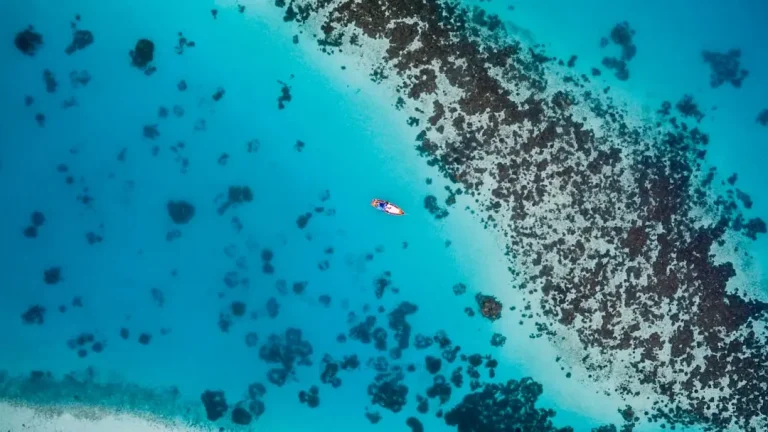
The shallow lagoons and protected bays scattered along the reef system are where seahorses and pipefish actually live. These aren’t the dramatic wall dives or the coral gardens that appear in tourism videos. They’re the quiet places – the seagrass beds, the mangrove-adjacent shallows, and the sheltered areas behind reef crests where the water is calm enough for a creature that weighs almost nothing to maintain its position.
Places like Heron Island, Lizard Island, and the waters around the Whitsunday Islands have healthy populations of both species. But you won’t find them by accident. You need to either hire a guide who knows the specific patches of seagrass where they congregate, or you need to spend time in the water doing what amounts to careful botanical observation rather than reef exploration. The second approach is slower and requires patience, but it’s also how you actually learn to see the reef as a system rather than as a collection of photogenic moments.
Early morning is genuinely better for spotting them. The water is calmer, the light is softer, and there are fewer people moving around. By mid-morning, when the dive boats have dropped their groups and the snorkelers are scattered across the shallows, the seahorses have retreated deeper into the seagrass or into crevices. They’re not aggressive or territorial, but they’re also not indifferent to disturbance. A shadow passing over them repeatedly will cause them to move.
The Difference Between Species
The Great Barrier Reef is home to several seahorse species, with the White’s seahorse and the Black seahorse being the most common in accessible shallow water. There are also pipefish – which are essentially seahorses that have evolved a more linear body plan and lost the prehensile tail. They’re related enough that seeing both species in the same dive isn’t unusual, but they occupy slightly different niches.
Seahorses tend to stay in one location for extended periods, anchoring themselves to a single piece of seagrass or coral and moving only when they need to feed or when they’re disturbed. Pipefish are more mobile, drifting through the water column with their heads down, using their elongated snouts to probe into the substrate for tiny crustaceans and plankton. If you’re watching a seahorse, you’re essentially watching it wait. If you’re watching a pipefish, you’re watching it hunt.
The color variation within species is remarkable. A seahorse that appears bright yellow in one location might be olive-green in another, depending on the seagrass it’s anchored to and the algae growing on its body. This isn’t a choice they’re making consciously – it’s a slow process of color change that happens over weeks. If you move a seahorse to a different environment, it will gradually change color to match.
Breeding and Behavior
One of the stranger facts about seahorses is that males are the ones who become pregnant. The female deposits her eggs into a pouch on the male’s body, where they develop in a fluid environment that the male controls, adjusting salinity and oxygen levels as needed. It’s a more complex arrangement than typical fish reproduction, and it means that seahorse populations are limited not by how many eggs females can produce, but by how many males are available to carry them.
This reproductive strategy makes seahorse populations vulnerable to overfishing and habitat loss. A single male can only carry so many offspring, and if the population of males drops, the entire population struggles to recover. The reef’s seahorse populations are stable, but they’re not abundant. You’re not going to see dozens of them in a single dive. Seeing three or four in a morning session is actually quite good.
Seahorses are also monogamous, at least within a breeding season. A pair will stay together in the same small area of seagrass, and if one is removed or dies, the other will often remain in that location for weeks before moving. Local guides sometimes know specific pairs and can predict where they’ll be on any given day. This makes them useful for photography and for researchers, but it also makes them vulnerable to collection.
The Reality of Observing Them
Spending time with seahorses requires a shift in perspective. You can’t hurry them. You can’t make them perform. You can’t even guarantee you’ll see them on any given day, even if you know where they’re supposed to be. Weather, tides, and the simple fact that they move occasionally means that a seahorse you saw yesterday might be ten meters away today.
The water temperature matters. During the cooler months (May through September), seahorses are less active and harder to spot. During the warmer months, they’re more visible, but the water is also more crowded with tourists. The best window is usually late April or early May, when the water is still warm but the peak season crowds haven’t arrived. September and October can also be good, though the water is starting to cool.
Visibility varies dramatically depending on tides and recent weather. After heavy rain, the seagrass beds become turbid as freshwater runoff clouds the shallows. During strong tidal movements, the water can churn up sediment. The calmest, clearest conditions typically occur during neap tides – the tides with the smallest range – which happen twice a month. Planning a trip around these windows significantly improves your chances of actually seeing what you came to see.
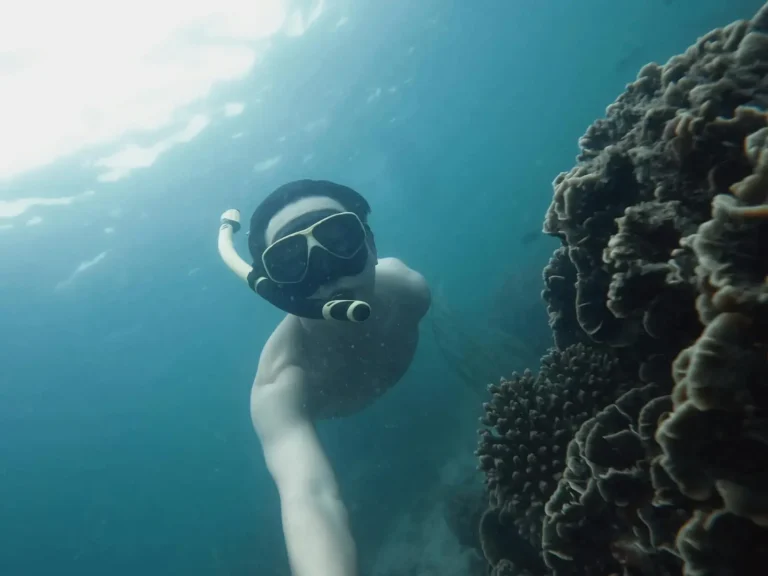
If you’re snorkeling rather than diving, you’re actually in a better position to find seahorses. They live in water so shallow that you can often see them while standing up. The limitation is that snorkelers tend to move faster and cover more area, which means they often miss the small details. The best approach is to pick a small section of seagrass, anchor yourself in one spot, and spend thirty minutes watching. This is boring by conventional snorkeling standards, but it’s how you actually see seahorses.
Conservation and Access
The Great Barrier Reef Marine Park Authority has strict regulations about collection and disturbance of marine life. Seahorses are protected, which means you can observe them but you cannot touch them or remove them. These regulations exist because seahorse populations have been decimated in other parts of the world by collection for the aquarium trade and for traditional medicine.
The reef itself is under stress from warming waters and coral bleaching, which indirectly affects seahorse populations by degrading the seagrass beds and shallow habitats they depend on. A healthy seagrass meadow is the foundation of seahorse survival. Without it, there’s nowhere for them to anchor, nowhere for them to hide, and nowhere for their food sources to thrive.
If you’re planning to visit specifically to see seahorses, booking a guide is worth the cost. Local guides know the specific patches where seahorses are most likely to be found, and they understand the timing and tidal conditions that make spotting them most probable. They also tend to move slowly and quietly, which means they’re less disruptive to the animals. A good guide will spend time explaining seahorse behavior and ecology rather than rushing you through a checklist of reef sights.
The experience of finding a seahorse on the Great Barrier Reef is quiet and anticlimactic in the way that real wildlife observation usually is. You won’t get a dramatic moment or a story with a clear narrative arc. You’ll get a small creature anchored to seagrass, moving almost imperceptibly, existing in its own rhythm. And if you’re patient enough to watch it for a few minutes, you’ll understand why people have been fascinated by seahorses for so long.