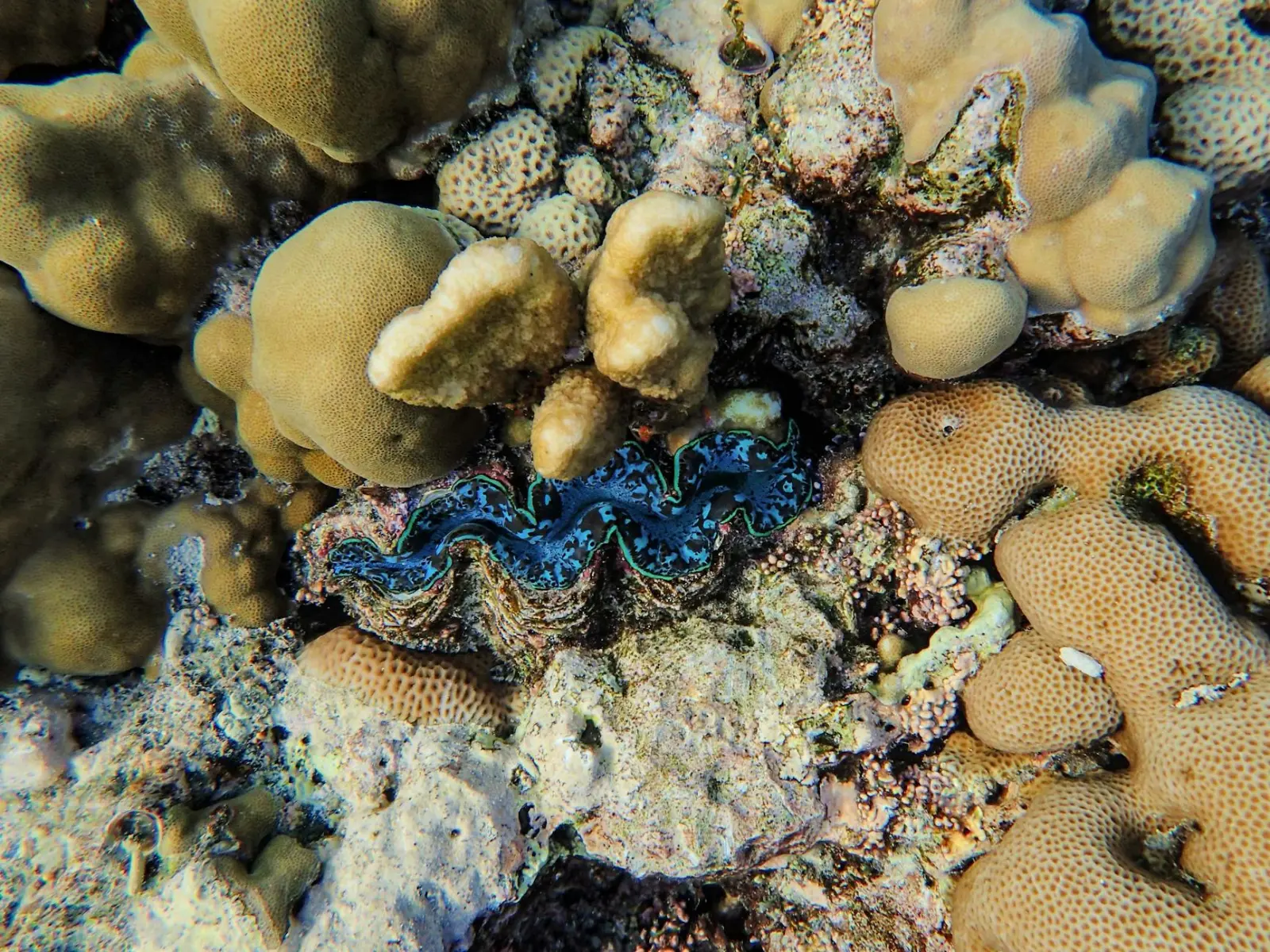
The first time you see a giant clam on a reef, you don’t quite believe it’s alive. It sits there like something sculpted from stone and stained glass, a creature that seems to belong more to geology than biology. The shell gapes open in the shallow water, revealing mantles that shift between electric blues, greens, and purples – colours so vivid they look artificially enhanced even when you’re standing directly above them. But they’re real, and they’ve been living this way for longer than most people realise.
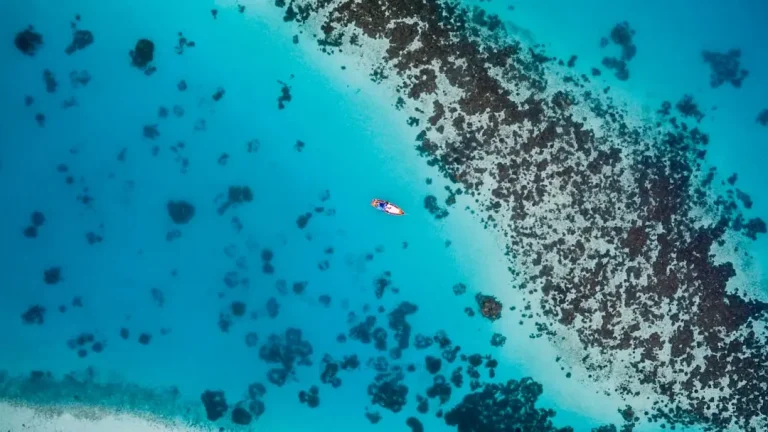
Giant clams are among the largest bivalves on Earth, and they occupy a strange ecological position that makes them worth understanding if you spend time around tropical reefs. They’re not mobile. They don’t hunt. They don’t migrate. Instead, they’ve anchored themselves to the reef and developed a relationship with their environment so intimate that removing one from its home is genuinely harmful. Most reef systems where giant clams thrive are found in the Indo-Pacific region – places like the Philippines, Indonesia, the Great Barrier Reef, and Palau – where the water is warm, clear, and rich enough to support them.
How They Actually Live
Giant clams feed through a process called filter feeding, but they’re not passive about it. Their mantles – those colourful, fleshy parts you see exposed when the shell is open – contain millions of zooxanthellae, which are symbiotic algae. These algae photosynthesize in the sunlight and provide the clam with energy. The clam, in turn, provides the algae with a protected environment and access to the nutrients in its tissues. It’s a partnership that’s been running for millennia, and it works so well that the clam barely needs to filter-feed at all. The algae do most of the work.
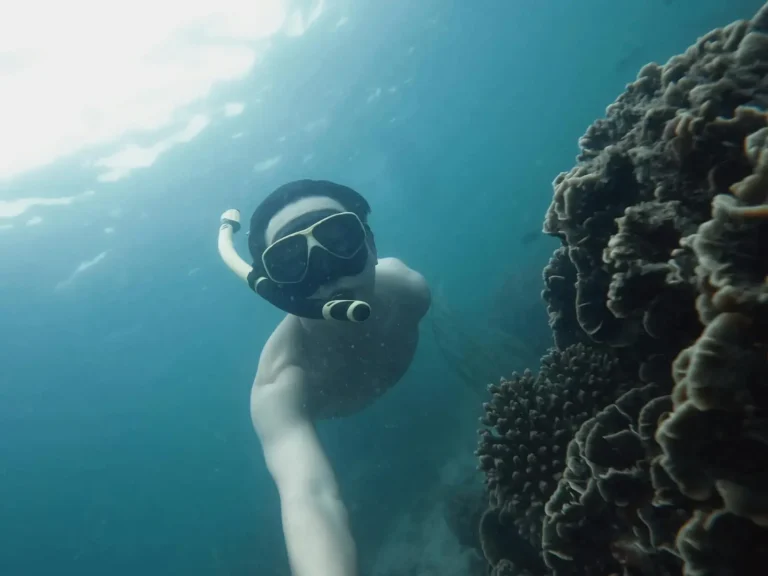
What strikes you when you’re actually diving near one is how still they are. A clam might spend weeks in the same position, opening and closing its shell in response to light and shadow. If you approach too quickly or cast a shadow over it, the shell snaps shut with surprising speed – a defensive reflex that’s been refined over millions of years. The clam can sense vibrations and changes in light intensity, and it reacts. But there’s no aggression in it, no predatory intent. It’s purely protective.
The colours you see aren’t random. They’re partly determined by the types of zooxanthellae living in the mantle, and partly by pigments the clam itself produces. Some clams are brilliant blue, others deep purple or emerald green. A few are patterned with stripes or spots. These colours serve a purpose – they help regulate light absorption and protect the sensitive algae from getting too much direct sun. In the bright shallows of a reef, where sunlight penetrates all the way to the bottom, a clam needs to manage its light exposure carefully.
Age and Longevity
Giant clams live extraordinarily long lives. A clam that’s two feet across might be 50 or 60 years old. Larger specimens, those massive shells you see in photographs, could easily be over a century old. Some researchers believe they might live considerably longer, but tracking individual clams across decades is difficult. What we do know is that they grow slowly and steadily, adding layers to their shell year after year in a pattern that’s almost like tree rings. If you’ve ever examined a clam shell closely, you can sometimes see these growth bands, each one representing a period of time.
This longevity means that the giant clams you see on a reef today might have been there when your grandparents were young. They’ve weathered storms, survived bleaching events, and adapted to changing water conditions. They’ve watched the reef around them transform. In some ways, they’re living archives of reef history, their shells recording environmental conditions through their chemistry and structure.
What Happened to Them
Giant clams were nearly hunted to extinction in the 20th century. Their shells were valuable – used for decoration, carved into ornaments, and sold to collectors. Their meat was also harvested for food in some regions. By the 1980s, populations had crashed across much of their range. Some reef systems that once had dozens of giant clams per hectare were left with almost none. The loss was ecologically significant because these clams are ecosystem engineers. They filter enormous quantities of water, they provide shelter for small fish and invertebrates, and they’re part of the reef’s overall health.
Conservation efforts have helped in many places. Several countries established marine protected areas where clams are fully protected. Aquaculture programmes have been developed to breed clams in captivity and release them back into the wild. The results have been mixed but encouraging. In places like Palau and parts of the Philippines, clam populations have recovered somewhat. You can visit reefs where clams are common again, where you can spend an hour watching them and observing the small ecosystem that forms around each individual.
Visiting Reefs with Giant Clams
If you’re diving or snorkelling on a reef where giant clams are present, the experience is different from visiting a reef without them. The clams add a sense of permanence and history. They’re not flashy like a school of barracuda or a hunting octopus. They’re quiet, static, and oddly meditative to observe. The best time to see them is in the morning, when the water is calmest and the light is clear. As the day progresses and more divers enter the water, clams tend to close up more frequently, reacting to the disturbance.
The water conditions matter enormously. Clams thrive in clear, warm water with good visibility. After heavy rain or during monsoon season, visibility drops and clams are less visible. The best reef systems for seeing them are those protected from heavy wave action and siltation. Atolls and lagoons often provide ideal conditions because the water is sheltered and relatively stable.
One practical note: if you encounter a giant clam while diving, don’t touch it. Not because it will hurt you – though the shell can close on a hand if you’re careless – but because the clam is stressed by contact. It will close its shell and divert energy to defence rather than feeding and growth. In a marine protected area, touching is usually prohibited anyway. The best approach is to observe from a respectful distance, let your eyes adjust to the colours, and appreciate the fact that you’re looking at a creature that’s been alive longer than most human relationships last.
Giant clams represent something that’s easy to overlook when you’re focused on the more dramatic marine life. They’re not apex predators. They don’t move. They’re not rare in the way that certain sharks or rays are rare. But they’re remarkable because of their longevity, their symbiotic relationship with algae, and their role as a barometer for reef health. When giant clams are thriving on a reef, it usually means the reef itself is in reasonable condition. Their presence is a quiet indicator that something is working right.