There are places that require some effort to reach, and then there are places that require the kind of effort that filters out everyone who isn’t genuinely committed. The Cocos (Keeling) Islands are the second type.
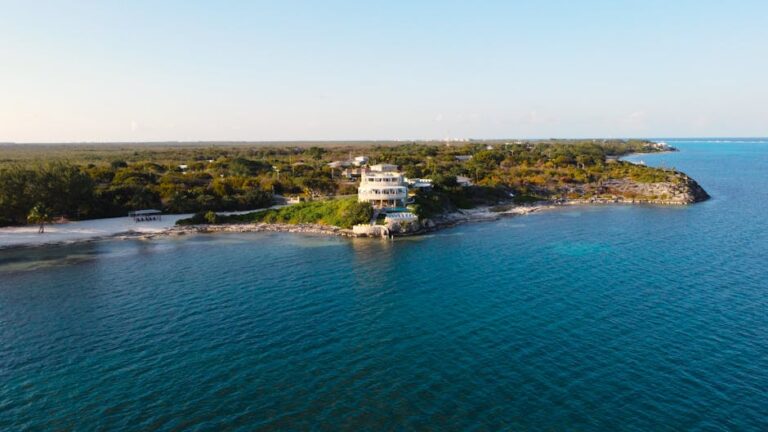
Two and a half hours west of Christmas Island, almost exactly halfway between Australia and Sri Lanka, the Cocos (Keeling) Islands are an Australian territory comprising 27 coral islands arranged around two atolls. The population is approximately 600 people, mostly concentrated on the Home Island of the South Keeling atoll. Flights from Perth take approximately four hours, operate only a few times per week, and are full of people with dive bags.
This is the relevant demographic fact: almost everyone who makes the effort to get to Cocos is there for the water.
The Atoll
The South Keeling atoll is the place Charles Darwin visited in 1836 and used as the primary evidence for his theory of coral atoll formation — that atolls are fringing reefs around volcanic islands that have subsided, with the reef growing upward to maintain its position relative to the sea surface as the volcanic base sinks. The theory was correct, and the reef Darwin studied is still here, still growing, and still extraordinarily good to dive.
The atoll’s lagoon is shallow — mostly less than ten metres — with a sandy floor and good coral coverage on the bommies and patch reefs that dot the interior. The outer reef, accessed through the single navigable channel (Direction Island Channel), drops away sharply to oceanic depths in walls that are among the finest wall dives in the Indian Ocean.
The key feature of Cocos diving, stated plainly: the fish. The biomass of fish life in the Cocos Marine Reserve is among the highest measured in any Australian marine protected area. Grey reef sharks, blacktip reef sharks, and whitetip reef sharks are present in numbers that experienced divers consistently describe as exceptional. Hammerheads are reported regularly, particularly at the deeper sections of the outer wall. Schools of bumphead parrotfish move through the lagoon in groups of fifty or more, their combined feeding producing a crackling, crunching sound audible from considerable distance.
Direction Island and the Outer Wall
Direction Island is the most northerly of the easily accessible islands, a small sand cay with a day shelter and the island group’s only reliable wave-break. The snorkelling and shallow diving in the lagoon immediately south of Direction Island is excellent — clear water, good coral cover, resident turtle population — but the reason most divers make the boat trip to Direction Island is access to the outer reef wall.
The channel beside Direction Island is where the tidal exchange between the lagoon and the open Indian Ocean creates current that concentrates feeding activity. Pelagic fish stack up in the channel: big-eye trevally in tight schools, barracuda in loose aggregations, tuna cutting through at speed. The outer wall, accessible by drifting out through the channel on the outgoing tide, starts at the surface and drops to beyond recreational depth in sections of clean, encrusted wall.
The soft coral coverage on the outer wall is excellent — the isolation of Cocos and the relatively low fishing pressure mean that the reef structure has accumulated decades of undisturbed growth. At fifteen metres, table corals extend their plates horizontally into the light. At twenty-five metres, sea fans of considerable size grow from the wall face. At the limit of recreational depth, black coral trees are visible in the blue below.
The Turtles of Home Island
Home Island, the main inhabited island of the South Keeling atoll, has a small Muslim Malay community — the Cocos Malays, whose ancestors were brought to the islands as plantation labourers in the nineteenth century — and the jetty off Home Island is, somewhat improbably, one of the finest snorkelling sites in the group. The wooden jetty pilings are encrusted with marine growth that supports a fish community far denser than the surrounding open water, and green turtles haul out to rest on the jetty’s submerged cross-bracing with a frequency that makes them essentially guaranteed on every visit.
Snorkelling the Home Island jetty at high tide — when the depth below the structure is at its maximum — with turtles resting on the beams above you and glassfish in flickering clouds around the pilings is one of the more quietly spectacular marine experiences I’ve had anywhere.
Logistics and Accommodation
The Cocos (Keeling) Islands are reached by Qantas codeshare flights from Perth (Thursday and Sunday typically, subject to schedule changes) and occasionally from Christmas Island. The limited flight frequency makes Cocos a minimum five or six-night destination in practice — you cannot go for a long weekend.
Accommodation options are limited but functional: the Cocos Seaview lodge on West Island (the larger Australian settler community) is the primary tourist accommodation, with cabins and a small restaurant. Camping is possible on Direction Island with permits. Self-catering options are limited by what you can bring in and what the small island store stocks.
Dive operations on the islands are small and owner-operated, reflecting the scale of the place. This is an advantage rather than a limitation: guides who have dived these waters for years know where the hammerheads appear, when the bumphead parrotfish come through the lagoon, and which section of outer wall has the best current at which state of the tide.
Why Go
Cocos is remote in a way that makes remoteness feel like its own reward. There are no cars on most islands, no crowds anywhere, and the reef has the particular quality of ecosystems that have been allowed to develop without significant human disturbance. The fish are not afraid of divers. The sharks are present in the numbers that sharks exist in when nobody has been removing them. The turtles use the jetty because the jetty has been there long enough that the turtles have decided it belongs to them.
You go to Cocos to see what a reef looks like when it’s mostly been left alone. It looks very good indeed.