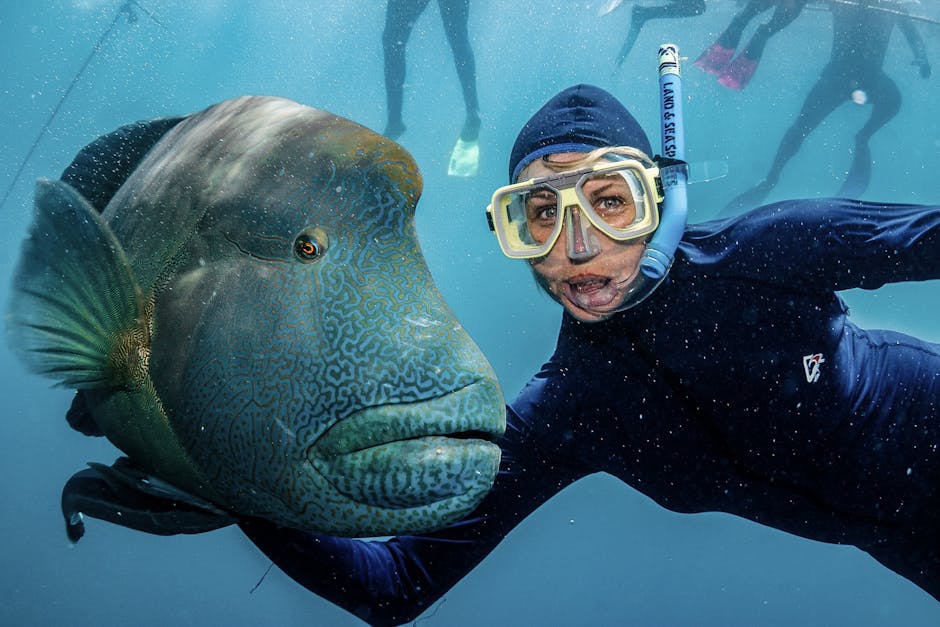
Not all Great Barrier Reef snorkelling is equal. This seems obvious when stated plainly, but it’s a point worth making explicitly, because the promotional shorthand — “snorkel the Great Barrier Reef!” — treats a 2,300-kilometre reef system as if it’s a single experience with consistent quality. It isn’t.
I’ve snorkelled at over sixty distinct GBR sites over fifteen years, in conditions ranging from glassy to marginal, on reefs ranging from heavily impacted to genuinely pristine. Here is my honest assessment of where the snorkelling is best, organised by access point, with the caveats each site deserves.
Port Douglas and the Outer Reef: Agincourt Reef
The best day-trip snorkelling available from any Queensland port is, in my view, from Port Douglas to the Agincourt Reef — a string of ribbon reef structures on the outer edge of the GBR, approximately 75 kilometres offshore. The operators who run these trips use high-speed catamarans that cover the distance in about 90 minutes, and the reef they arrive at is categorically different from the inner reef sites accessible from Cairns.
Visibility at Agincourt is routinely 20 to 25 metres. The coral communities on the reef crest — the shallow section most accessible to snorkellers — include large Acropora table formations, fields of branching staghorn corals, and the kind of fish density that results from an outer reef in reasonable condition. Giant clams are abundant along the reef flat. Turtles are present on most visits.
The platforms moored at Agincourt are large, well-equipped, and busy in peak season. The crowds are the main downside — on a good day in July, there may be several hundred snorkellers in the water simultaneously. The reef handles it because the area is large, but the experience of solitary contemplation is not available here.
Best for: First-time GBR snorkellers, families, visitors wanting the maximum convenience-to-quality ratio.
The Low Isles: The Calm Alternative
The Low Isles — two small coral cays in the inner reef approximately 15 kilometres from Port Douglas — offer a completely different experience from the outer reef trip. The water is shallower and often less clear (10 to 15 metres visibility typically), the coral not as spectacular as Agincourt. But the snorkelling is accessible from the beach, the site is calm and protected, and the pace is entirely different from the large catamaran trips.
The Low Isles are particularly good for families with children who are new to snorkelling. The shallow lagoon around the main cay is knee-deep in places and transitions gradually to snorkelling depth — there’s no commitment required, and children can wade out, put their faces in, and decide for themselves how deep to go. The fish life in the lagoon is accessible without any swimming skill whatsoever.
The resident green turtles at the Low Isles are one of the site’s defining features. They rest and feed in the lagoon throughout the day, and encounters with turtles in the shallow seagrass beds are effectively guaranteed on any visit.
Best for: Families with young children, non-swimmers, visitors who want calm conditions and turtle encounters over coral spectacle.
Heron Island: The Cay Experience
Heron Island, discussed in depth elsewhere, is the finest snorkelling available from any GBR island resort. The immediate proximity of the reef — you enter the water from the beach and you’re on it — combined with the resident turtle population in the lagoon and the quality of the Heron Bommie for intermediate snorkellers produces a site that repays multiple days of repeat exploration.
The reef flat at low tide is a legitimate snorkelling environment in itself: pools left by the receding tide contain reef fish, sea urchins, and the exposed coral architecture of the platform. Walking the flat (carefully, in suitable footwear, without touching anything) followed by floating over it when the tide returns is one of the finest introductions to reef ecology available anywhere on the GBR.
Best for: Extended stays, reef ecology enthusiasts, anyone who wants to snorkel the same site repeatedly and understand it in depth.
Lady Elliot Island: Mantas at the Surface
Lady Elliot’s snorkelling reputation rests primarily on the manta ray encounters in the lagoon, and these are as good as advertised. The mantas that visit Lady Elliot’s cleaning stations and feeding areas regularly come to the surface or into snorkelling depth, and the combination of warm clear water and large, unhurried animals produces encounters that snorkellers — not just divers — reliably describe as the finest marine wildlife experience of their lives.
The rest of the snorkelling at Lady Elliot is good rather than outstanding by GBR standards — the visibility and coral coverage are both somewhat variable — but the manta encounters elevate the site above any comparable snorkelling destination in Australia.
Best for: Anyone whose primary goal is manta ray encounters. Also excellent for turtles and general reef exploration.
Whitehaven Beach and Hill Inlet: The Aesthetic Peak
Whitehaven Beach, in the Whitsundays, doesn’t make this list for the quality of its snorkelling — the beach itself has limited reef structure, and the snorkelling is modest. It makes the list because the combination of the beach’s visual perfection, the sand-and-water patterns of Hill Inlet visible from the lookout above, and the adjacent coral gardens accessible by short boat trip from the beach creates a complete sensory experience that is in a category of its own.
The snorkelling at Bait Reef, accessible on extended Whitsundays day trips, is the genuine reef highlight of the region — better coral, better fish life, reasonable visibility. But the Whitehaven experience — the white silica sand, the swirling Hill Inlet patterns, the gin-clear shallow water lapping against the beach — is the Whitsundays’ defining offer, and the snorkelling is a welcome addition to it.
Best for: Visitors whose trip includes the Whitsundays regardless, who want to add snorkelling to a beach and sailing experience.
Ningaloo Reef: The Walk-In Wonder
Ningaloo, on Western Australia’s Coral Coast, offers something no Queensland reef site can: the ability to walk directly from the beach into excellent snorkelling without a boat trip. At Turquoise Bay, near Exmouth, the current that flows along the reef edge delivers a drift snorkel experience of remarkable quality — you enter the water at one end of the bay, drift with the current along a reef edge in 3 to 5 metres of water, and exit at the beach further along.
The fish density in the drift at Turquoise Bay is exceptional by any standard. Large schools of surgeonfish, parrotfish in several species, wrasse, and the occasional turtle drifting alongside you. Visibility is typically 15 to 20 metres. The whole experience takes twenty minutes and can be repeated immediately by walking back along the beach.
Best for: Snorkellers who want excellent quality without a boat trip, visitors combining reef snorkelling with the whale shark swim, West Australian itineraries.
A Final Note on Conditions
Every site on this list has good days and not-so-good days. Wind creates chop that reduces visibility. Rainfall on the mainland increases runoff that clouds inner-reef water. Cyclone swell creates surge that makes shallow reef snorkelling uncomfortable. Ask your operator about current conditions before you book, and be prepared to adjust plans if conditions are marginal. A good operator will tell you honestly when a site isn’t performing well. A great operator will suggest an alternative that is.
The reef is worth being selective about. Once you’ve snorkelled Agincourt in 25-metre visibility, you can’t quite return to a 10-metre Inner Reef with the same enthusiasm.