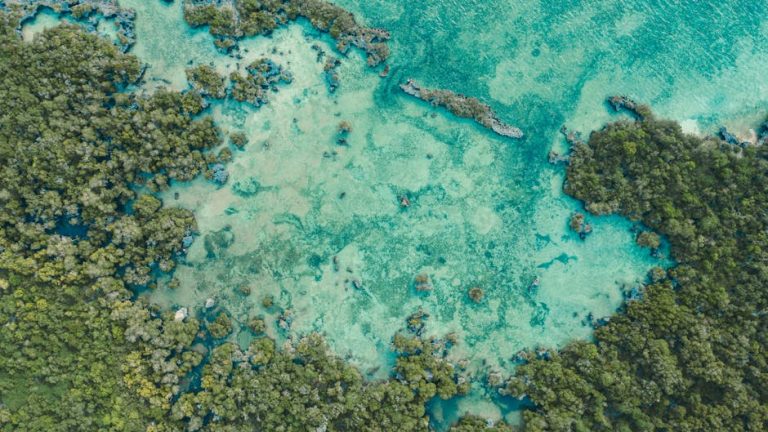
Cairns is the city that reef travel built. Not entirely, obviously — it has a port, a sugar industry history, a regional economy with agricultural roots — but the thing that defines Cairns as a destination, the reason people fly from Tokyo and Berlin and São Paulo to a mid-sized Australian city on the edge of the tropics, is the reef. The Great Barrier Reef begins roughly ninety minutes offshore by fast catamaran. The rainforest of the Wet Tropics World Heritage Area begins twenty minutes west of the city. Cairns sits between two of the most significant natural environments on Earth, and its entire tourism infrastructure exists to make both accessible.
I’ve been based in Cairns for extended periods several times over the past decade and a half, and I’ve watched it change. It’s busier than it was. The marina has more dive operators, more departure pontoons, more liveaboard vessels. The international airport handles more routes. The accommodation has broadened upward toward luxury options that barely existed fifteen years ago. Through all of this, the fundamental offer remains the same: the reef, the rainforest, and the coral-coloured light that the tropics produce at certain hours of certain days.
Using Cairns as a Reef Base
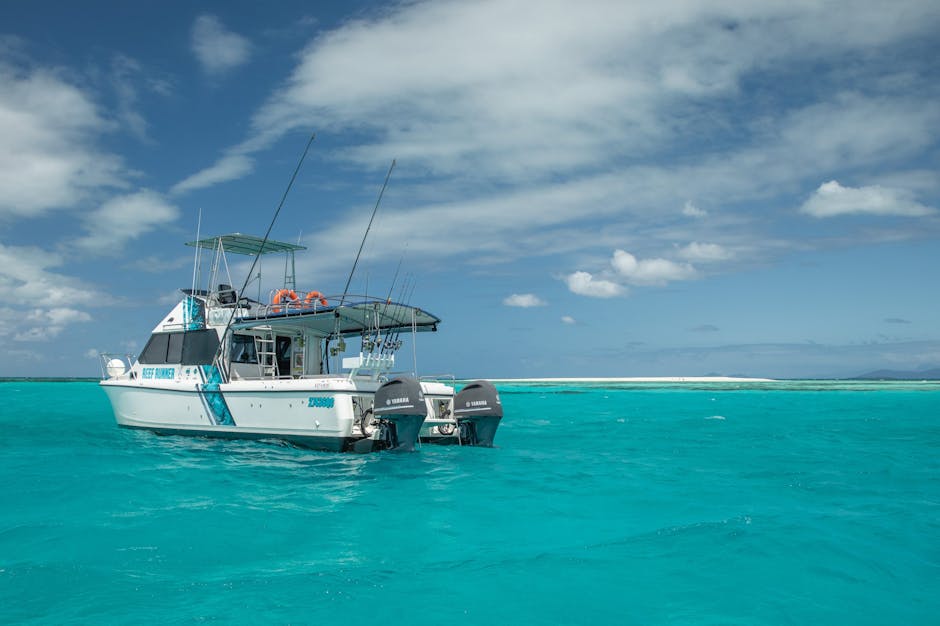
The Cairns marine tourism industry is the most developed in Australia. You can be on a certified dive course, a first-time snorkel trip, or a liveaboard bound for the Coral Sea from the same marina precinct, on the same morning, with departures that are co-ordinated with impressive efficiency. If you arrive in Cairns wanting to get on or in the reef, the infrastructure to make that happen exists at essentially every time and price point.
The outer reef sites accessible on day trips from Cairns — Norman Reef, Saxon Reef, Flynn Reef, Milln Reef — are mid-shelf platform reefs between 50 and 80 kilometres offshore. They’re good reefs. They’re not the outer ribbon reefs or the Coral Sea atolls, which require a liveaboard. For first-time reef visitors, for snorkellers, for families, and for divers who want a reliable outer reef experience without committing to a multi-day trip, the Cairns day-trip operations serve them well.
For serious divers, Cairns is the launchpad rather than the destination. The liveaboards depart from Cairns marina. The Ribbon Reefs require a three-day minimum run north. The Coral Sea requires an overnight crossing. The value of Cairns for the diving-specific traveller is as access infrastructure — international flight connections, gear rental, equipment servicing, and the commercial ecosystem that makes the remote reefs reachable.
Check real traveller reviews, prices, availability, departure points, and flexible booking options in one place.
The Esplanade and City Character
The Cairns waterfront — the Esplanade — is the city’s social centre: a long promenade above the tidal mudflats of Trinity Inlet, lined with restaurants, the free public swimming lagoon (the ocean here is too shallow and the mudflats too extensive to swim directly from the foreshore), and the unobstructed view north toward the mountains of the Atherton Tablelands rising from the coast.
The mudflats visible at low tide from the Esplanade are, despite their appearance, ecologically significant — they’re feeding habitat for migratory shorebirds, and the Cairns foreshore is one of the better birding locations in northern Queensland for species that use the tidal zone. This isn’t why most people walk the Esplanade, but it’s worth knowing.
The city itself has the loose, permissive character of a tropical tourist town that has had many years to settle into itself. It’s not trying to be sophisticated. It has good restaurants at every price point, markets that function without excessive self-consciousness, and the particular social atmosphere of a place where many of the people around you are mid-trip somewhere more remote.
The Atherton Tablelands
Forty minutes west of Cairns on the Kennedy Highway, the landscape transforms from coastal lowland to volcanic plateau. The Atherton Tablelands is a highland agricultural region of remarkable natural diversity: crater lakes, waterfalls, patches of Wet Tropics rainforest that connect to the coastal strip, and the best birdwatching in Queensland outside the Cape York Peninsula.
The tablelands are the non-reef half of the Cairns experience that most reef-focused visitors don’t make time for, and they’re genuinely worth a day or two. Lake Eacham and Lake Barrine are maar volcanoes — explosion craters filled with rainwater — with swimming, walking tracks through the surrounding rainforest, and resident platypuses in the outlet creeks at dawn. The Millstream Falls National Park has the widest single-drop waterfall in Australia. The town of Yungaburra has a platypus viewing platform on Peterson Creek where the animals are reliably visible from the bank at dawn and dusk.
Daintree and Cape Tribulation
North of Cairns — 110 kilometres by road, crossing the Daintree River by ferry — the Wet Tropics rainforest and the reef share a coastline that exists nowhere else in the world. Two World Heritage Areas meeting at a single beach: standing on the sand at Cape Tribulation with the Daintree rainforest rising directly behind you and the coral reef visible through the clear water in front, you can see why this specific piece of coastline was considered worth protecting absolutely.
The Daintree is older than the Amazon. It contains plant families whose evolutionary lineages predate the flowering plants. Cassowaries live in the forest behind the beach at Cape Tribulation and occasionally cross the road with the unimpressed manner of animals that understood this landscape before roads existed.
For reef visitors based in Cairns, a day trip to the Daintree is a logical and rewarding extension. The drive north through Port Douglas (worth stopping for the Four Mile Beach), past the Mossman Gorge, and across the ferry to the forest road beyond gives you a version of Far North Queensland that the reef itself can’t provide: the ancient terrestrial world that sits behind everything you’ve been looking at from the water.
Getting In and Out
Cairns International Airport is served by direct flights from Japan, South Korea, Singapore, Hong Kong, and domestic connections from all Australian capitals. Qantas, Jetstar, Air Asia, China Southern, and others operate various routes. For international travellers, direct connections to Asia make Cairns more logistically straightforward than Sydney or Melbourne as a starting point for reef travel.
The city is compact. From the airport to the marina is fifteen minutes. From the marina to the outer reef is ninety minutes. The distance between “arriving” and “being on the reef” is, by international reef destination standards, unusually short.
Stay at least four nights. Two days for the reef, one day for the Atherton Tablelands, one day for the Daintree. Add liveaboard days either side if the diving is your primary purpose. Cairns is the kind of city that makes you wish you’d booked one more night, and almost nobody does.
Compare top-rated tours, prices, availability, and real traveller reviews before booking. See what’s actually available for your dates and departure location.
Compare tours and check availability