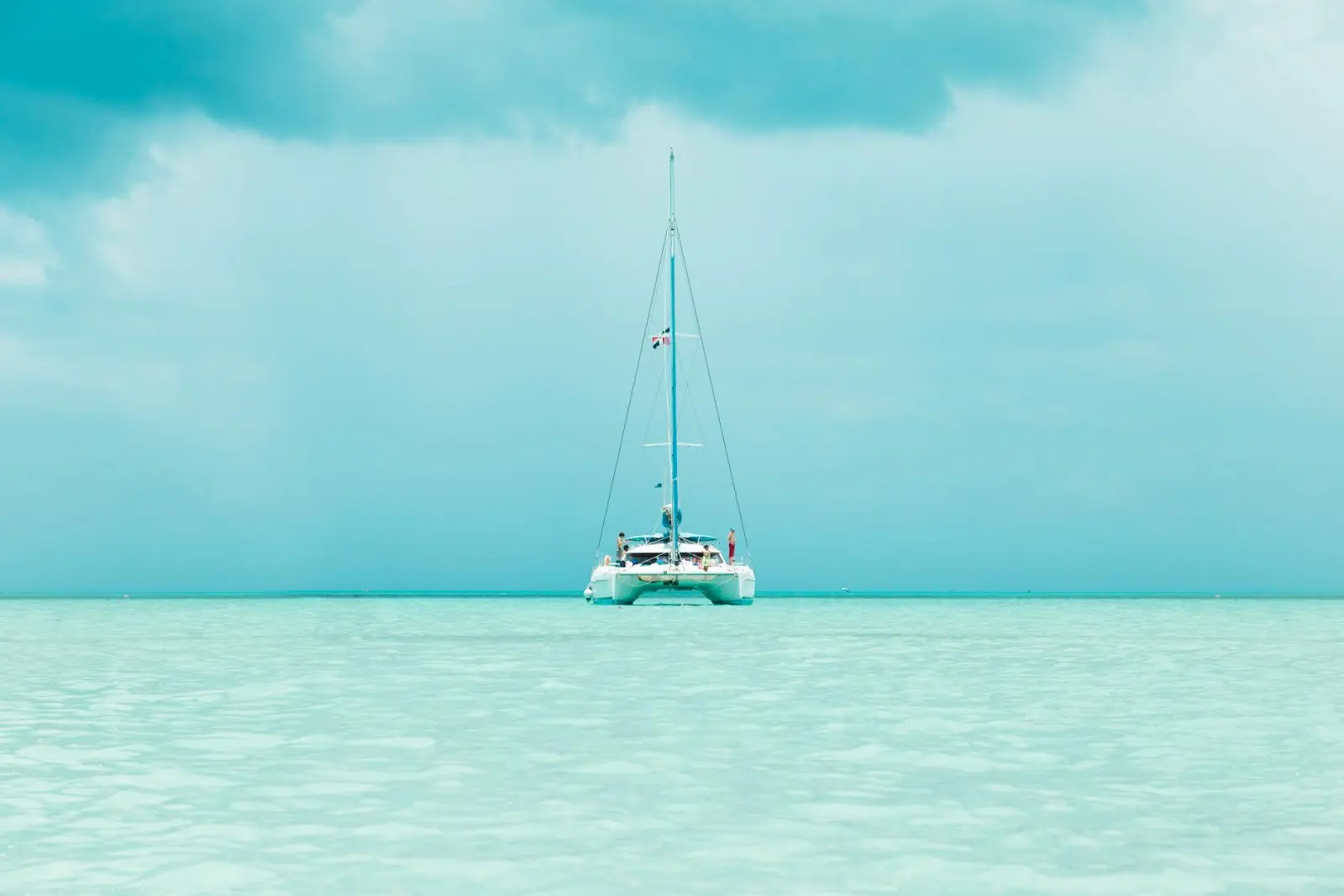
Punta Cana’s catamaran reef snorkeling tours operate on a simple premise: load tourists onto a boat, motor out to shallow coral formations, and let people spend a few hours in the water. The reality of how this actually unfolds depends heavily on timing, weather, and which operator you choose. Most tours depart between 8 and 9 in the morning, which means an early pickup from your resort – often around 7 or earlier if you’re staying on the north coast.
The boats themselves are predictable. Double-hulled catamarans with capacity for 80 to 150 people, equipped with a small bar, bathroom, and a shaded upper deck. They’re stable enough that seasickness isn’t usually a problem unless the Atlantic swell is running high, which happens more frequently during late summer and fall. The ride out to the reef typically takes 30 to 45 minutes depending on which site your operator uses. During this time, you’ll notice the water transitions from murky nearshore brown to clearer turquoise as depth increases. This shift happens gradually, and by the time you reach the snorkeling site, visibility is usually between 40 and 70 feet on a decent day.
The Reef Experience and What You’ll Actually See
The reefs around Punta Cana sit in relatively shallow water, mostly between 20 and 35 feet deep. This is manageable for snorkelers who are comfortable floating and breathing through a tube, though it’s not the dramatic drop-off scenery you might imagine. The coral formations are modest by Caribbean standards – brain coral, elkhorn, and some staghorn patches. The fish life is present but not overwhelming. You’ll see parrotfish, sergeant majors, wrasses, and the occasional grouper. Spotted eagle rays appear sometimes, and if you’re lucky, a sea turtle might drift through, though they’re becoming less common than they were five years ago.
The actual snorkeling window is usually two to three hours, split across two or sometimes three different reef sites. Operators rotate locations based on conditions and crowd distribution. The first site tends to be busier because everyone enters the water at once. By the second site, the novelty has worn off and fewer people are as enthusiastic. The water temperature hovers around 80 to 84 degrees Fahrenheit year-round, so a light wetsuit or rash guard helps if you’re sensitive to cold or plan to stay in the water for extended periods.
One thing that catches many visitors off guard is the current. Depending on the time of year and which reef you’re visiting, there can be a noticeable drift. Operators brief you on this, but it’s worth listening. You’ll be anchored near the reef, but the current can pull you away from the boat if you’re not paying attention. Most people handle this fine, but if you’re a weak swimmer or anxious in open water, this can feel more stressful than expected.
Crowds and the Reality of Shared Experiences
Peak season runs from December through April, and during these months, catamaran reef tours operate at full capacity almost daily. You’ll be sharing the water with 60 to 100 other snorkelers on the same reef site. This changes the experience significantly. The reef doesn’t feel remote or pristine. Fish scatter more frequently. Coral gets inadvertently touched. The underwater atmosphere is more like a crowded beach than a quiet marine environment.
If you’re flexible on timing, visiting during shoulder months like May or November reduces crowds noticeably. September and October are quieter still, though these months carry higher hurricane risk and occasional rough sea conditions that can cancel or shorten tours. The trade-off between solitude and weather reliability is real here.
What Operators Include and What They Don’t
Most catamaran tours include snorkeling equipment, though the quality varies. Some operators provide decent masks and fins. Others hand out worn equipment that doesn’t fit properly. Bringing your own mask is worth considering if you have a sensitive face or specific preferences. Fins are less critical since most people manage fine with provided ones.
Food and drinks are typically included. You’ll get a light lunch – usually grilled fish, chicken, or pasta with rice and salad. The quality is functional rather than memorable. Drinks flow throughout the day: rum punch, beer, water, and soft drinks. The bar operates on an honor system or tab basis depending on the operator. Some tours advertise “unlimited drinks” but this usually means the basic options, not premium spirits.
What’s often not included: underwater cameras, GoPro rentals, or professional photography. Some operators offer these as add-ons. Gratuity isn’t technically required but is expected, typically 15 to 20 percent if the crew was attentive.
Practical Timing and Physical Demands
A full catamaran tour runs 6 to 8 hours from pickup to drop-off. This includes travel time, snorkeling, lunch, and the return journey. You’re spending significant time on a boat, which means sun exposure is real. Sunscreen is essential, and reef-safe formulas are important for the marine environment. Reapply frequently, especially after getting wet.
The physical demand is moderate. You’re floating and snorkeling, which requires some comfort in water but not athletic ability. The boat has a ladder for entry and exit, and crew members assist. If you have mobility issues or difficulty getting in and out of water, this is worth confirming with your operator beforehand.
Fatigue is a factor that catches people off guard. Floating for hours, breathing through a snorkel, and processing new visual information is more tiring than it sounds. By hour four or five, many people are ready to be done. This is normal and doesn’t mean anything is wrong with you.
Seasonal and Environmental Considerations
Water clarity varies by season. Winter months (December through March) tend to have the best visibility, often 60 to 80 feet on calm days. Summer brings occasional algae blooms and higher sediment from rainfall, which can reduce visibility to 30 to 40 feet. This doesn’t ruin the experience, but it’s noticeable.
Coral bleaching has affected reefs throughout the Caribbean, including Punta Cana’s sites. Some areas show recovery, while others show ongoing stress. This isn’t something operators advertise, but it’s worth knowing. The reefs you see today are less vibrant than they were 10 or 15 years ago.
Hurricane season runs June through November, with peak activity in September and October. Tours operate during these months, but rough seas can cause cancellations or shortened trips. This is unpredictable and not something you can plan around reliably.
The catamaran reef snorkeling experience in Punta Cana is straightforward and accessible. It’s not adventurous or exclusive, but it delivers what it promises: a few hours on a boat, time in the water with coral and fish, and a break from the resort. The experience is better if you manage expectations, choose your timing carefully, and understand that you’re participating in a commercial operation designed for volume rather than intimacy. For many visitors, that’s exactly what they want.