Most travelers arrive at coral reefs expecting silence. They slip beneath the surface, hold their breath, and anticipate a quiet, peaceful escape from the noise of the world above. What they actually encounter is something entirely different. The reef is not silent. It is loud, complex, and constantly communicating in ways that have nothing to do with human language.
The first time you stop and really listen underwater, the experience is disorienting. Your ears are flooded with sound. Crackling, popping, clicking, grinding – the reef produces a continuous acoustic landscape that most casual snorkelers and divers miss entirely because they are not expecting it. The sounds are there from the moment you submerge, but they require attention. They require you to slow down and adjust your perception of what an underwater environment actually is.
This soundscape is not random noise. It is the reef speaking. Every sound has a source and a function. Understanding what you are hearing transforms how you experience a reef, and it reveals something important about the health and activity of the marine ecosystem you are visiting.
The Crackling and Popping
The most prominent sound on a healthy reef is the crackling – a constant, gentle popping noise that fills the water like distant fireworks or the sound of a bowl of cereal. This comes from snapping shrimp, small crustaceans that live in reef crevices and burrows throughout the structure. There are thousands of them on any given reef, and each one produces sharp, audible snaps by rapidly closing their claws. The noise is their primary means of communication and hunting.
The intensity of this crackling is a practical indicator of reef health. On vibrant, active reefs with dense populations of shrimp and other small organisms, the sound is nearly constant and loud enough to be heard clearly even without specialized equipment. On degraded reefs, the crackling becomes sparse and intermittent. Travelers who have visited the same reef over multiple years often notice this difference immediately. The acoustic landscape changes before visual degradation becomes obvious.
In the early morning, before most boats arrive and before the reef becomes crowded with divers, the crackling is at its most intense. The shrimp are most active during low-light hours, and the absence of human disturbance allows you to hear the full acoustic spectrum. By mid-morning, when boat traffic increases and divers are moving through the reef, the sounds often diminish. The shrimp retreat deeper into their burrows, and the reef becomes acoustically quieter.
Fish Sounds and Reef Behavior
Beyond the shrimp, individual fish produce distinct vocalizations. Grunts make low, rumbling sounds. Parrotfish create grinding noises as they scrape algae and coral polyps from the reef structure – a sound that resembles sandpaper on wood. Damselfish produce clicking and chirping sounds, often territorial in nature. Groupers and other larger fish emit deep, resonant calls that travel through the water column.
These sounds serve multiple purposes. Some are territorial, establishing boundaries and warning other fish away from feeding or breeding areas. Others are related to feeding behavior or mating. A few are still not fully understood by marine biologists, which is a reminder that despite decades of research, the reef remains a place where human understanding is incomplete.
What travelers notice, if they listen carefully, is that fish sounds correlate with activity levels and time of day. During dawn and dusk, when many reef fish are most active, the acoustic complexity increases noticeably. During the heat of midday, when many fish rest in deeper water or in crevices, the soundscape becomes simpler. This rhythm is consistent across most tropical reefs, from the Caribbean to Southeast Asia to the Pacific Islands.
What Silence Tells You
Paradoxically, the absence of sound is also meaningful. On some reefs, particularly those in areas with heavy fishing pressure or significant environmental stress, the soundscape is notably quiet. The crackling is minimal. Fish vocalizations are sparse. The reef sounds muted and subdued in a way that is difficult to articulate but immediately noticeable to anyone who has experienced a healthy reef’s acoustic richness.
This silence is not peaceful. It is unsettling. Experienced divers and snorkelers describe it as eerie or wrong, even if they cannot immediately identify why. The reef feels depleted because it is. The organisms that produce sound are either absent or suppressed. The ecosystem has lost its voice.
Reefs recovering from bleaching events or other disturbances often show a gradual return of acoustic complexity. Scientists now use underwater acoustic monitoring as a tool for assessing reef recovery, recognizing that sound is a reliable indicator of biological activity and ecosystem function. Travelers who visit the same reef across multiple seasons or years often notice this acoustic recovery before they notice visual improvements.
Practical Listening
To actually hear reef soundscapes while traveling, you do not need specialized equipment, though it helps. A basic underwater camera with audio recording capability will capture the sounds. Some dive operators in popular reef destinations now offer guided listening experiences, where a guide takes a small group to a specific reef location and simply sits quietly, allowing everyone to focus on the acoustic environment.
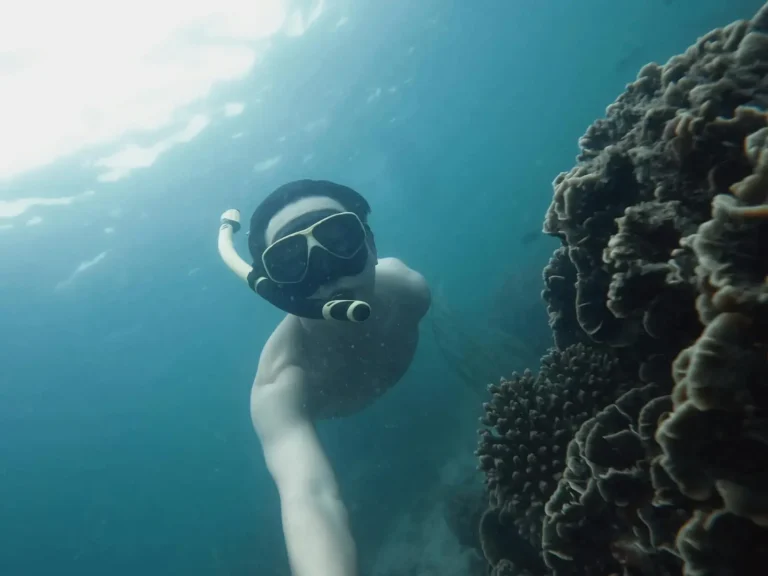
The best conditions for hearing reef sounds are early morning, on calm days when water visibility is good and boat traffic is minimal. Snorkeling is often better than diving for this purpose because you can remain still and quiet without the distraction of managing your air supply. Freediving, if you have the skill and training, allows for even greater acoustic clarity.
The depth at which you listen matters. Shallow reefs, typically 3 to 8 meters deep, produce different soundscapes than deeper reef walls. Shallow areas tend to have higher concentrations of snapping shrimp and smaller fish, resulting in a more intense crackling sound. Deeper reefs often feature lower-frequency sounds from larger fish and more complex vocalizations from species that live in lower light conditions.
Understanding What You Hear
Spending time listening to reef soundscapes changes how you perceive the underwater world. It shifts your attention from visual observation to acoustic awareness. You begin to understand the reef not as a static landscape but as a living, communicating system. The sounds become a language, not in the sense that you can decode specific meanings, but in the sense that you recognize intentionality and complexity behind them.
This shift in perception has practical value for travelers. It deepens engagement with the environment. It creates a more memorable experience. It also builds awareness of environmental change. Once you have heard what a healthy reef sounds like, you notice when a reef sounds different. This awareness often translates into greater concern for reef conservation and more thoughtful behavior while visiting marine environments.
The soundscape also reveals the reef’s daily and seasonal rhythms. The same reef sounds different at different times of day, during different seasons, and under different weather conditions. Learning to recognize these patterns helps you understand when and where to visit if you want to experience the reef at its most active and acoustically rich.
For travelers seeking a deeper connection to coastal and marine environments, listening to reef soundscapes offers a direct path. It requires no special training or equipment beyond patience and attention. It costs nothing. And it reveals something fundamental about how ocean ecosystems actually function, beyond what any photograph or written description can convey.