The humpback whales arrive on a schedule that feels almost ceremonial. Every year between June and November, they move south along Australia’s eastern coast, passing through waters near the Great Barrier Reef on their migration route. It’s not a detour for them – it’s their highway. But for travelers positioned along the Queensland coast, it becomes a window into something that rarely feels routine, no matter how predictable the timing.
Most people assume whale watching on the reef means boarding a boat and heading straight into the heart of the marine park. The reality is more scattered. The whales don’t congregate at a single reef break. They’re moving through a corridor of ocean that spans hundreds of kilometers, and your success depends less on choosing the “best” spot and more on understanding where and when they’re likely to be passing through.
The Migration Pattern and Timing
Humpbacks travel from Antarctic feeding grounds to breeding areas in tropical waters. The journey takes weeks, and they don’t move at a constant pace. Some years the peak numbers arrive in late July or early August. Other years, significant groups don’t show until September. The variation isn’t random – it responds to water temperature, food availability, and breeding cycles. If you arrive expecting peak activity in June, you might see scattered individuals. Wait until August, and the water can feel alive with movement.
The window closes faster than many travelers anticipate. By late November, most humpbacks have moved north into breeding grounds. If you’re planning a trip specifically for whale watching, mid-July through September offers the most reliable sightings, though the experience varies considerably depending on where you position yourself and what kind of boat you’re on.
The migration isn’t a single event but a rolling presence. Early in the season, you’ll see mothers with calves moving slowly, sometimes stopping for days in sheltered bays. These groups are easier to approach and often stay visible longer. Later in the season, the whales move faster, sometimes covering significant distances in a single day. The difference between watching a whale that’s resting and one that’s actively traveling changes the entire tenor of the experience.
Cairns and Port Douglas: The Northern Corridor
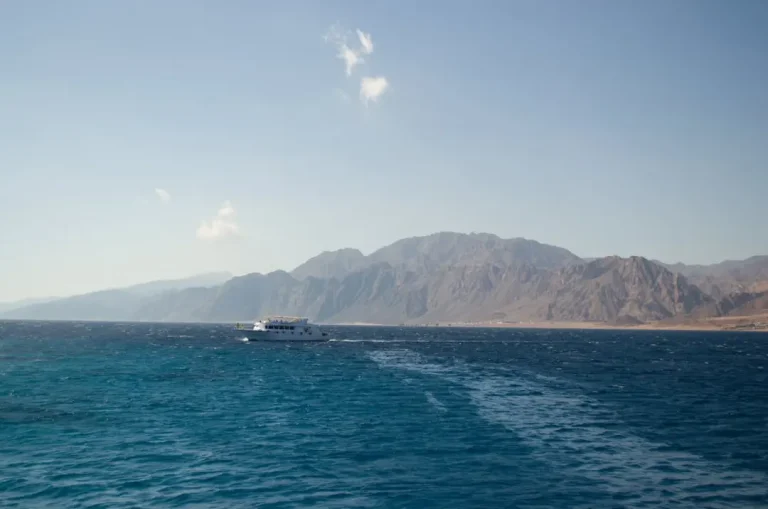
Cairns sits at the southern edge of the Coral Sea, and boats departing from here typically head toward outer reef systems and deeper water. The advantage is that you’re positioned where whales often swim in open ocean, sometimes in groups. The disadvantage is the boat ride itself – it’s usually 45 minutes to over an hour to reach productive waters, and the ocean swells can be substantial, especially in winter when weather systems move through.
Port Douglas, about an hour north of Cairns, offers similar access but with a slightly different vantage. Boats here often work the northern sections of the reef and the waters toward Lizard Island. The journey is similar in length, and the conditions are comparable. Both ports see reliable humpback activity, but neither guarantees sightings. I’ve been on boats from both towns where whales appeared within minutes of departure and others where hours passed without a single breach.
The crowds in these towns are heaviest during peak season. Cairns especially becomes busy with tour operators, and the boats themselves can feel crowded. If you’re sensitive to motion or prefer smaller groups, booking with operators who run smaller vessels makes a tangible difference, though it typically costs more and limits your flexibility with timing.
The Whitsunday Islands and Central Reef Region
The Whitsundays sit roughly in the middle of the reef system, and this location offers something different from the northern ports. Whales passing through this region often move through shallower, more protected waters. The boat rides are shorter – sometimes 20 to 30 minutes – and the ocean tends to be calmer. This matters more than it sounds when you’re spending several hours on the water.
The trade-off is that sightings here can be less predictable than in deeper waters. Whales don’t always move through the same channels, and the reef itself creates a more complex geography. You might see whales from the shore or from a boat in relatively shallow water, which changes the experience entirely. There’s something different about watching a humpback in 30 meters of water versus 200 meters – the whale feels more present, more tangible.
Airlie Beach serves as the main hub for Whitsunday whale watching tours. The town itself is geared toward reef tourism, so logistics are straightforward. Accommodation ranges from budget to mid-range, and there’s no shortage of tour operators. The disadvantage is that popularity has made some tours feel assembly-line oriented, with multiple boats departing simultaneously and heading to similar areas.
Hervey Bay: A Different Kind of Encounter
Hervey Bay, further south near Fraser Island, occupies a unique position in the migration. Whales often linger here longer than they do further north. The bay itself is shallow and protected, and mothers with calves frequently spend days resting before continuing their journey. This creates a different dynamic for watching. Instead of brief encounters with whales in transit, you sometimes get extended observations of animals that are stationary or moving slowly.
The downside is that Hervey Bay is further from the main reef system. If you’re interested in combining whale watching with reef diving or snorkeling, the logistics become more complicated. Hervey Bay is primarily a whale-watching destination during migration season, not a reef hub. The boats here are often larger and more comfortable, which appeals to travelers who prioritize stability over intimacy.
The atmosphere in Hervey Bay during peak season has a different quality than the northern ports. It feels less like a reef tourism destination and more like a seasonal event. The town shifts into whale-watching mode, and that focus creates a certain energy. Whether that appeals to you depends on what you’re seeking.
What Actually Happens on the Water
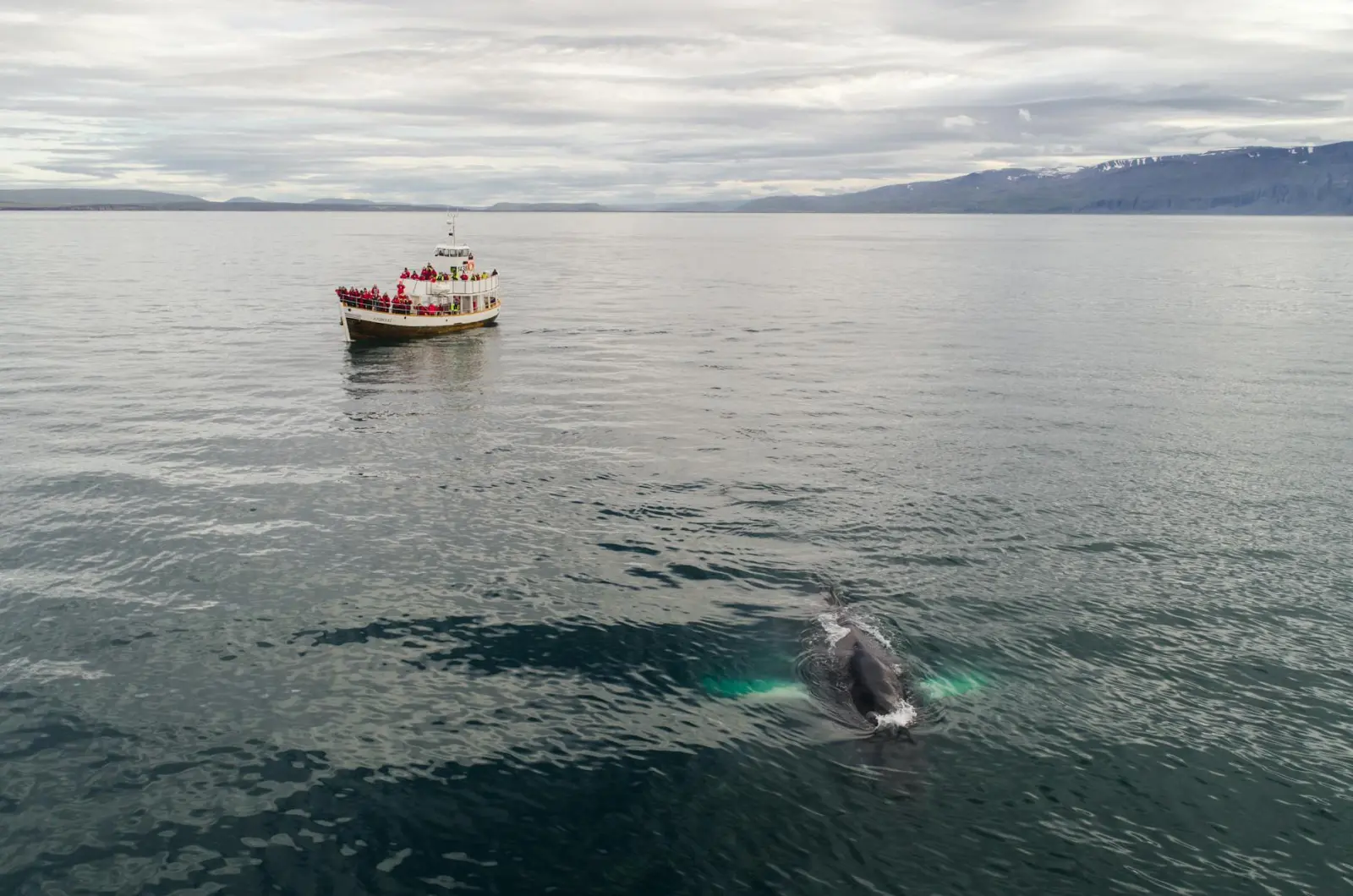
Most whale-watching tours last four to five hours. The first hour or so involves getting to productive waters. Then comes the waiting and scanning. Whale watching isn’t continuous action. There are stretches of open ocean, conversations among passengers, and periods where nothing visible happens. Then a spout appears, or a tail flukes, and the boat adjusts course. Sometimes whales approach the boat closely. Other times they maintain distance. The regulations require boats to stay a certain distance away, and whales don’t always cooperate with those boundaries.
The experience varies dramatically based on sea conditions. Calm days offer clear visibility and smooth rides. Rough days make scanning difficult, and the boat motion can be exhausting. Winter weather along the Queensland coast is generally mild, but swells can develop quickly, especially in exposed areas. If you’re prone to seasickness, taking medication before departure makes a real difference.
The number of whales visible on any given day fluctuates. Some tours see dozens of individuals. Others see three or four. A few see none, though this is less common during peak season. The variation depends on where the migration is concentrated on that particular day, what the weather is doing, and simple chance. Tour operators can’t control these variables, and the best ones are honest about that.
Practical Considerations for Planning
Book tours with operators who have been working these waters for multiple seasons. They understand the migration patterns better than newer companies, and they often know how to read the ocean and position boats more effectively. Check reviews, but understand that a single bad experience – often due to weather or unlucky timing rather than operator failure – can skew ratings.
Bring layers. The ocean is cooler than the air, and wind on the water accelerates heat loss. Even in winter, when northern Queensland is warm, being on the water for hours requires more clothing than you’d expect. Sunscreen is essential. The reflection off the water intensifies sun exposure, and you’ll be outside for extended periods.
Manage expectations about photography. Whales move unpredictably, and getting a clear, close shot requires luck and a good camera. If you’re hoping for dramatic breaching photos, understand that this happens occasionally, not regularly. Most sightings involve a spout, a back, or a tail fluke – beautiful but not the cinematic moments travel brochures feature.
The best time to go depends on your priorities. Early season (June-July) offers fewer crowds and sometimes more dramatic whale behavior as animals are energized from their journey. Mid-season (August-September) provides the most consistent sightings. Late season (October-November) means smaller groups of whales but also fewer tourists and calmer seas in some locations.
If you’re combining whale watching with reef activities, the northern ports work better logistically. If you want a focused whale-watching experience without the reef component, Hervey Bay is more efficient. The Whitsundays split the difference, offering access to both but requiring more planning to do either well.
Whale watching on the reef corridor isn’t a guarantee, and that’s actually part of what makes it worthwhile. You’re not paying to see a curated experience. You’re positioning yourself in the path of a natural migration and hoping for moments of connection with something genuinely wild. Some trips deliver those moments clearly. Others require patience and imagination. Both are legitimate experiences, and understanding that difference before you book makes the whole thing feel less like a failed tour and more like a day on the ocean during one of nature’s regular, remarkable movements.