The reef coast of northern Australia feels different when you understand what you’re actually looking at. Not just the water, the coral, the fish – but the landscape as a text that’s been read the same way for tens of thousands of years. When Aboriginal guides talk about “listening to country,” they’re describing a relationship to place that most travelers arrive without, and it changes how you move through these spaces entirely.
This isn’t about visiting a cultural center and leaving with a souvenir. It’s about spending time in places where the reef, the tides, the seasonal shifts, and the stories are inseparable. The coast between Cairns and the tip of Cape York, and further west toward Broome and the Kimberley, holds some of Australia’s oldest continuous cultures. The people who live here have been reading the ocean, the weather patterns, the animal behavior, and the land itself as a single integrated system. When you actually engage with that knowledge – not as a tourist attraction, but as a framework for understanding where you are – the experience becomes something quite different from what most visitors expect.
What “Listening to Country” Actually Means
The phrase gets used loosely in tourism marketing, but the practice is specific. It refers to learning to observe and interpret the landscape the way Aboriginal people have – noticing which plants are flowering, what that means for water sources and animal movement, how the tides are running, what the wind direction tells you about weather coming, which areas are significant for particular reasons tied to stories, law, and history.
When you’re on a guided experience with an Aboriginal guide from the area, you’re not just hearing information delivered. You’re being shown how to look. An elder might point out a tree and explain its uses – food, medicine, tools, ceremony. But they’re also showing you how to read the landscape for yourself. They notice things that are invisible to visitors: the subtle color change in water that indicates a shift in depth or current, the bird calls that signal time of day or season, the plant growth that tells you about water availability.
The timing of your visit matters more than most travelers realize. The reef coast has distinct seasons that aren’t just about weather. There are periods when certain foods are ready, when particular animals move through, when the ocean conditions change dramatically. Visiting during the dry season (May to October) is more comfortable – less rain, fewer cyclones, calmer seas. But the wet season (November to April) is when the country is actively alive in different ways. Rivers run, vegetation responds, and the whole system shifts. Aboriginal guides will explain what’s happening in the landscape during whatever season you visit, but understanding that you’re arriving into a specific moment in an annual cycle changes how you interpret what you’re seeing.
The Reef and the Seasonal Rhythms
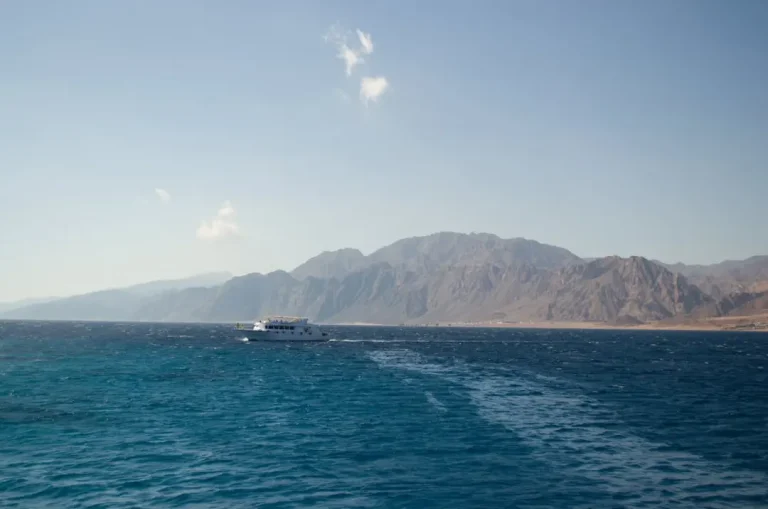
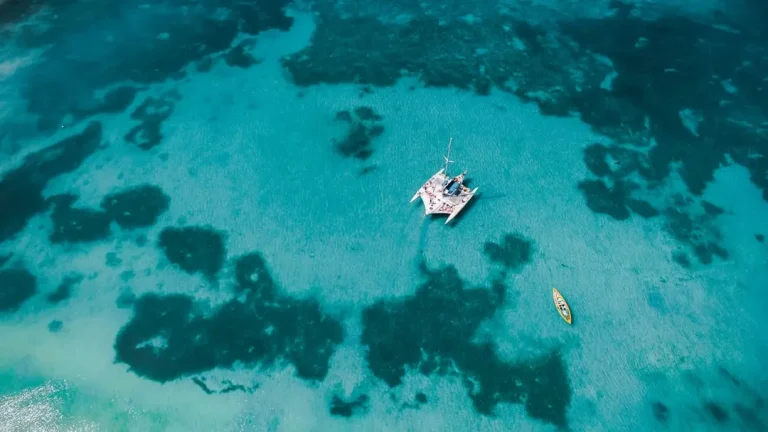
The Great Barrier Reef is the obvious draw, but the reef system extends along the entire coast, and each section has different characteristics. The reef near Cairns is heavily visited and heavily managed. Further north and west, toward places like Lizard Island, Cooktown, or the remote islands of the Torres Strait, the reef is less trafficked but also less accessible – you need boats, guides, and time.
What Aboriginal guides understand about the reef is different from what marine biologists or dive operators emphasize. They know which reefs are significant in stories, which areas have been used for specific purposes for generations, how the reef changes through the year, and how to move through it in ways that respect both the environment and the cultural protocols around it. Some reefs or areas might be restricted during certain times or for certain groups – not as a tourist limitation, but because that’s how the country has always been managed.
The water clarity varies dramatically by season and location. In the dry season, visibility is generally better. But after heavy rain or during tidal shifts, the water can become murky quickly. This isn’t a problem – it’s information. An Aboriginal guide will explain what’s happening and why. The reef itself changes through the year. Coral spawning events, fish breeding seasons, turtle nesting – these are all part of the rhythm that guides understand and can point you toward if the timing aligns.
Where These Experiences Actually Happen
Cairns is the main hub, but most authentic cultural experiences happen away from the city. Cooktown, about three hours north, sits on the coast where Captain Cook beached his ship in 1770. It’s also where several Aboriginal groups have strong presence and offer guided experiences. The town itself is small and feels genuinely remote despite being accessible by road. The surrounding country – rainforest meeting reef – is where many guides work.
Further north, places like Lizard Island and the islands of the Great Barrier Reef have Aboriginal guides and rangers working on conservation and cultural programs. Access requires boat travel, and these experiences are more expensive and require more planning. West of Cairns, toward the Daintree and Cape Tribulation, Aboriginal communities offer experiences that combine rainforest and coastal knowledge.
The Kimberley coast in Western Australia – around Broome, Derby, and the remote islands – has some of the most significant Aboriginal cultural sites in Australia. The Dampier Peninsula, Horizontal Falls, and the islands of the Buccaneer Archipelago are places where Aboriginal guides work with visitors. The Kimberley is vast, isolated, and requires serious travel commitment. Roads are rough, distances are long, and the dry season (May to October) is when most travel happens. But the cultural depth here is profound. The rock art sites, the stories, the connection to country are among the oldest and most continuously maintained in the world.
How These Experiences Work in Practice
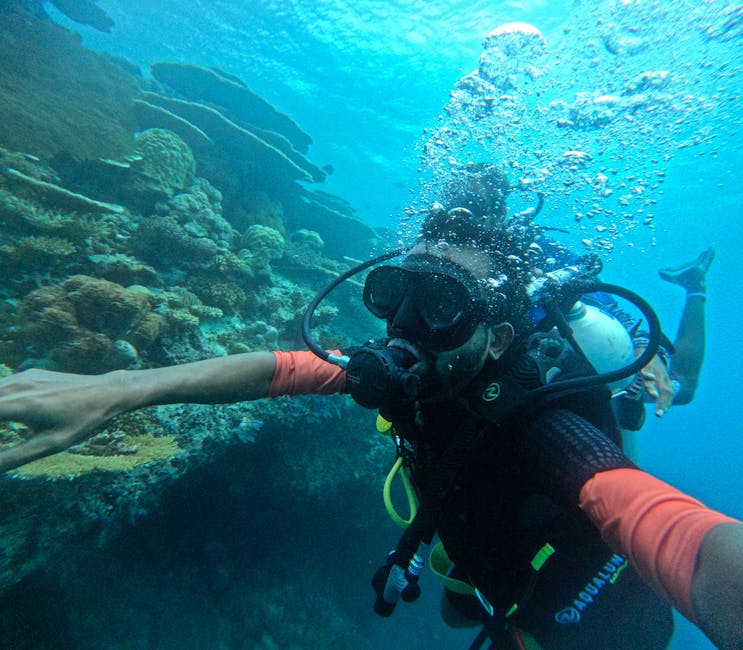
Most guided cultural experiences along the reef coast run between two and eight hours, though some are longer. A typical day might involve a boat trip to a reef or island, time spent with a guide who explains the landscape, stories, and uses of plants and animals, and time in the water if that’s part of the program. Some experiences include fishing or hunting demonstrations using traditional methods. Others focus on storytelling, art, or plant knowledge.
The physical demands vary. Some experiences require swimming or snorkeling ability. Others are accessible to people with limited mobility, though you should check specifics with operators. The sun exposure is intense – bring serious sunscreen and a hat. The water can be cold in the dry season, particularly early morning. Insects are present year-round but worse in the wet season. Crocodiles exist in some areas, particularly river mouths and mangrove areas – guides will explain where it’s safe and where it isn’t.
Cost varies widely. A half-day experience with a guide might run $150 – 300 per person. Multi-day experiences, particularly in remote areas like the Kimberley, can cost $2,000 – 5,000 or more. The price often reflects the remoteness, the expertise of the guide, and the size of the group. Smaller groups mean more personalized experience and more time for actual learning rather than logistics.
Booking directly with Aboriginal-owned operators, where possible, means the money goes to the communities doing the work. Many experiences are offered through tourism operators in Cairns or other towns, but these are often intermediaries. If you have time, contacting guides or communities directly – through local tourism boards or community websites – can lead to more authentic arrangements and better value.
What Actually Happens When You Show Up
Most visitors arrive expecting a performance or a lesson. What actually happens is more subtle. You’re moving through a landscape with someone who knows it deeply, and they’re sharing that knowledge in whatever way makes sense for that day, that weather, that season, that group. Some guides are more talkative. Others are quieter, pointing things out and letting you observe. Some experiences include ceremony or art-making. Others are purely about land and water knowledge.
The early morning is the best time for these experiences. The light is softer, the water is calmer, and the animals are more active. You’ll be up before dawn, moving through the landscape as the day begins. This is when the country feels most alive and most like what it actually is, rather than what it becomes once the sun is high and the heat is intense.
Fatigue is real. You’re in the sun for hours, often on a boat, often in or near water. The physical and mental engagement required to actually pay attention – to listen rather than just observe – is tiring. This is worth knowing because it means pacing yourself and not overloading your schedule. One good guided experience is better than three rushed ones.
The reef itself can be underwhelming if you’re expecting the dramatic coral gardens you see in documentaries. Much of the reef is damaged from bleaching events, cyclones, and other pressures. What you see depends on location and timing. A guide will explain what you’re looking at and what it means. The experience isn’t diminished by damaged reef – if anything, understanding what’s happening to the ecosystem adds depth to the experience.
The stories you hear aren’t entertainment. They’re explanations of how the country works, why things are the way they are, and how people are meant to live in relationship to place. Some guides share extensively. Others share selectively, and that’s appropriate – not all knowledge is meant for outsiders, and respecting those boundaries is part of engaging respectfully with the culture.
After spending time on the reef coast with Aboriginal guides, the landscape stays with you differently. You notice things you wouldn’t have noticed otherwise. You understand that the reef isn’t just a tourist attraction or an ecosystem to be managed – it’s a living text that’s been read the same way for thousands of years. That shift in perception is the actual value of these experiences, and it’s not something that happens in a few hours. It builds over time, through attention and genuine engagement with people who know the country.