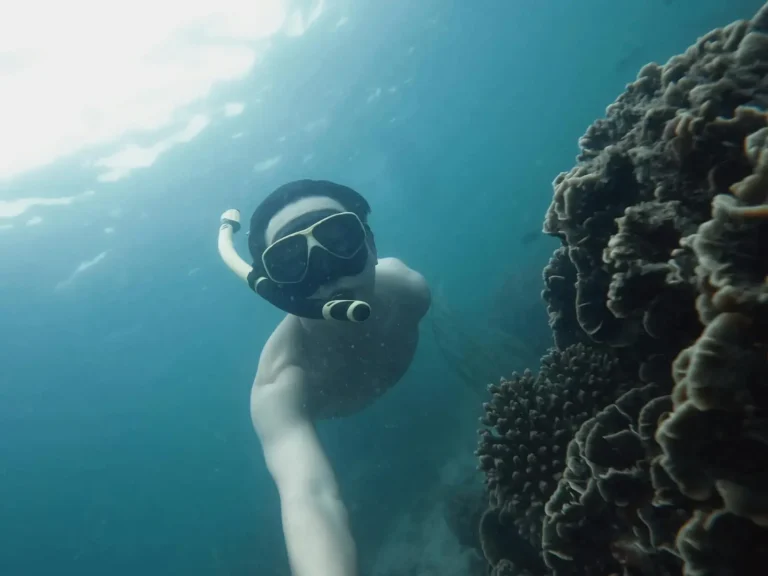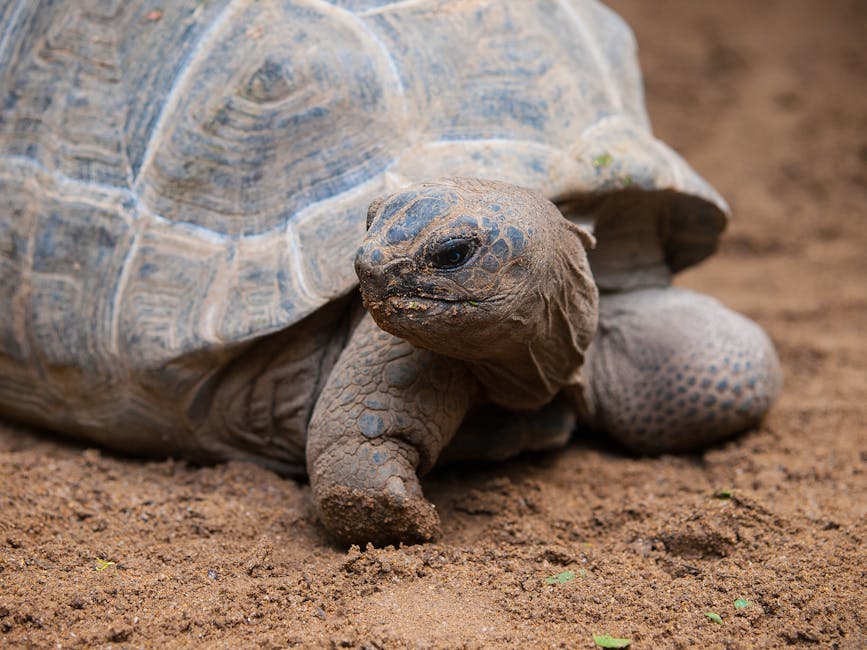
There’s a green turtle at Heron Island that I’ve been watching for three years. I don’t know if it’s the same individual each time – I haven’t photo-identified it – but it’s always in the same area of the reef flat, grazing seagrass with the methodical patience of a lawnmower. It surfaces every few minutes, takes a breath with a sound like a small explosion, and goes back down. It pays no attention to snorkellers. It has been doing this, or something very like this, for longer than I’ve been alive.
Sea turtles are among the oldest vertebrate lineages on Earth. The ancestors of modern sea turtles were swimming in the oceans 100 million years ago, when dinosaurs still walked the land. The animals you encounter on the GBR today are essentially unchanged from those ancient forms – the same body plan, the same life history, the same navigational abilities that allow them to cross ocean basins and return to the beach where they were born to lay their own eggs. They are, in the most literal sense, living fossils.
The GBR’s Six Species
Six of the world’s seven sea turtle species are found in GBR waters: the green turtle (Chelonia mydas), loggerhead (Caretta caretta), hawksbill (Eretmochelys imbricata), flatback (Natator depressus), leatherback (Dermochelys coriacea), and olive ridley (Lepidochelys olivacea). The seventh species, the Kemp’s ridley, is found only in the Atlantic.
The green turtle is the most commonly encountered on reef dives and snorkels – large, herbivorous, and relatively unafraid of divers in areas where they’re not disturbed. The hawksbill is the reef specialist, with a narrow, pointed beak adapted for extracting sponges from reef crevices. The loggerhead is the open-water species, with a massive head and powerful jaws for crushing hard-shelled prey. The flatback is the Australian endemic – found only in Australian waters and nesting only on Australian beaches.
The GBR hosts two of the world’s largest green turtle nesting populations: the southern GBR population, which nests primarily on Heron Island and the Capricorn-Bunker Group, and the northern GBR population, which nests on Raine Island – the largest green turtle rookery in the world, with up to 60,000 females nesting in a single season.
Navigation: The Magnetic Map
Sea turtles navigate using the Earth’s magnetic field – a capability that has been studied for decades but is still not fully understood. Each location on Earth has a unique magnetic signature, defined by the intensity and inclination of the magnetic field. Sea turtles can detect both parameters and use them as a map, allowing them to navigate to specific locations across thousands of kilometres of open ocean.
Female green turtles return to the beach where they were born to lay their own eggs – a behaviour called natal homing. The magnetic imprinting hypothesis suggests that hatchlings imprint on the magnetic signature of their birth beach and use this as a navigational target throughout their lives. Studies tracking turtles across the Pacific have confirmed that they navigate with extraordinary precision, arriving at target beaches within kilometres of their birth site after migrations of 2,000 kilometres or more.
The practical implication of magnetic navigation is that sea level rise and coastal erosion – which change the physical location of nesting beaches – may disrupt natal homing. If the beach a turtle was born on no longer exists, or has moved significantly, the magnetic address it’s navigating to may no longer correspond to a suitable nesting site.
Threats and Conservation
All six GBR sea turtle species are listed as either vulnerable or endangered on the IUCN Red List. Their threats are multiple and cumulative: bycatch in fishing gear (particularly longlines and trawls), ingestion of marine debris (plastic bags are mistaken for jellyfish), boat strike, coastal development destroying nesting beaches, and climate change affecting both nesting beach temperatures (which determine hatchling sex ratios) and the seagrass meadows that green turtles depend on.
The GBR’s turtle populations are better protected than most globally, but “better protected” is not the same as secure. The Raine Island population has shown declining nesting success in recent years, with hatchlings dying in the nest due to flooding from sea level rise and overheating from rising sand temperatures. The GBRMPA and Queensland Parks and Wildlife Service are conducting active management – shading nests, improving beach drainage – but these are interventions against a trend that only emissions reduction can reverse.
That green turtle at Heron Island will outlive me, probably. It may have been grazing that reef flat since before I was born. There’s something about that continuity – an animal whose lineage predates the mammals, still doing what it has always done – that I find both humbling and clarifying. The reef’s problems are urgent and human-caused. The solutions are also human. The turtle is just waiting to see what we decide.