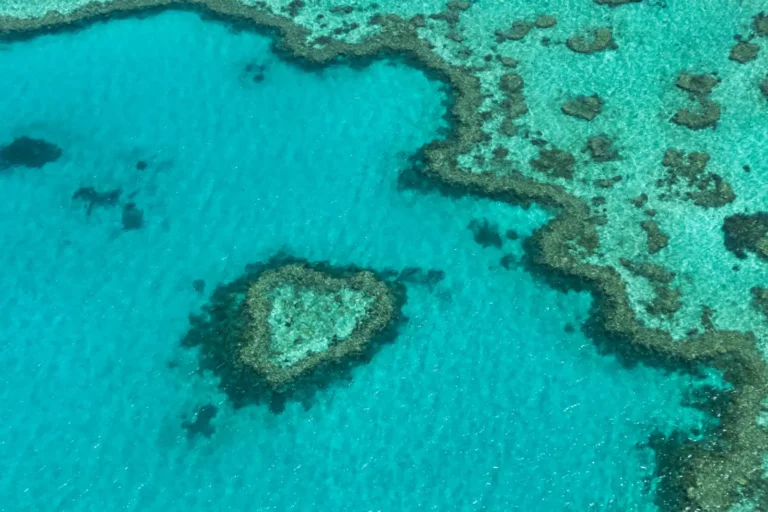
Put your head underwater on a healthy reef and listen. Really listen, past the sound of your own breathing and the rush of water past your ears. What you’ll hear is extraordinary – a constant, layered crackling and popping, punctuated by the grinding of parrotfish teeth on coral, the low grunts of territorial damselfish, the occasional high-pitched chirp of something you can’t identify. A healthy reef is loud. Surprisingly, almost shockingly loud.
I first became aware of reef acoustics on a night dive at Ribbon Reef No. 10, north of Cooktown. Without the visual distraction of the reef’s colour and movement, the sound became the dominant sense – and it was remarkable. The reef was talking, in a language I didn’t have the vocabulary for but could feel was meaningful.
The Acoustic Ecology of a Reef
Coral reefs produce sound through multiple mechanisms. The dominant source of the characteristic crackling is snapping shrimp – small crustaceans that produce a cavitation bubble by rapidly closing a specialised claw. The bubble collapses with a snap that, multiplied across millions of shrimp on a reef, creates a continuous broadband noise that can be heard from hundreds of metres away.
Fish contribute a remarkable variety of sounds. Parrotfish produce a loud grinding as they bite coral with their fused, beak-like teeth – a sound audible to snorkellers without any equipment. Damselfish produce aggressive chirps and grunts to defend territories. Grouper produce low-frequency booms during spawning aggregations. The reef’s fish community is, acoustically, a complex and dynamic soundscape that changes with the time of day, the season, and the health of the reef.
Sound as a Health Indicator
Researchers at the University of Exeter and the Australian Institute of Marine Science have demonstrated that reef soundscapes are reliable indicators of reef health. Degraded reefs – those with reduced coral cover, lower fish diversity, and depleted invertebrate populations – are measurably quieter than healthy reefs. The snapping shrimp chorus is reduced. The fish sound diversity is lower. The acoustic complexity of the soundscape correlates with the biological complexity of the reef.
This has practical applications for reef monitoring. Deploying hydrophones on reef sites and recording soundscapes over time provides a continuous, non-invasive measure of reef condition. Machine learning algorithms can now analyse reef recordings and estimate species diversity, coral cover, and overall reef health with accuracy comparable to traditional visual surveys – at a fraction of the cost and effort.
The GBR’s scale makes acoustic monitoring particularly valuable. Visual surveys require divers or ROVs at specific sites; acoustic monitoring can cover large areas with relatively few instruments. AIMS has been deploying hydrophone arrays across the GBR since 2018, building a longitudinal dataset of reef soundscapes that will allow researchers to track changes over time.
Larvae and the Sound of Home
Perhaps the most remarkable application of reef acoustics research is in larval settlement. Coral and fish larvae spend days to weeks in the open ocean before settling on a reef. How do they find the reef? Partly by chemical cues – the smell of reef water. But research has shown that sound plays a significant role.
Larvae are attracted to the sounds of healthy reefs. In laboratory experiments, larvae offered a choice between recordings of healthy and degraded reef soundscapes consistently move toward the healthy reef recording. In field experiments, playing healthy reef sounds through underwater speakers on degraded reef patches increases larval settlement rates – in some studies, by more than 50%.
This has led to a genuinely novel restoration technique: acoustic enrichment. Researchers at the University of Exeter and the Woods Hole Oceanographic Institution have conducted trials in which speakers playing healthy reef soundscapes are deployed on degraded reef patches during larval settlement seasons. Early results are promising – fish settlement rates increased, and the fish that settled showed higher survival rates.
What We’re Losing
Degraded reefs are not just visually impoverished – they’re acoustically impoverished. The loss of snapping shrimp populations, the reduction in fish diversity, the physical simplification of reef structure as coral dies and erodes – all of these reduce the acoustic complexity of the reef soundscape. A bleached reef is quieter than a healthy one. A rubble field is quieter still.
There’s something about this that I find particularly affecting. We talk about reef loss in terms of coral cover percentages and species counts – the language of ecology and conservation. But the silence of a degraded reef is immediate and visceral in a way that statistics aren’t. The reef is supposed to be loud. When it goes quiet, something fundamental has been lost – and the good news is that sound, like coral, can come back.