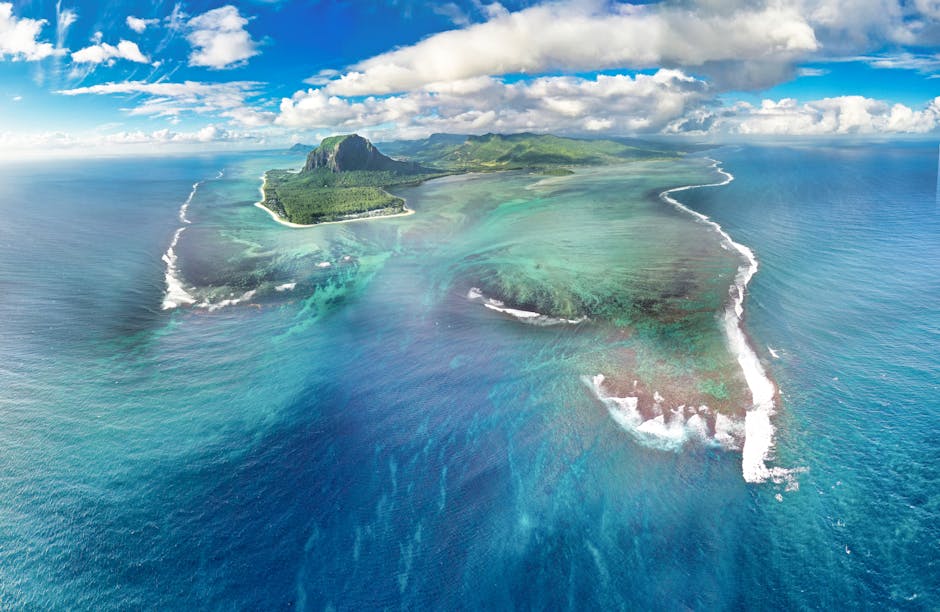
James Cook named Cape Tribulation in 1770 when his ship, HM Bark Endeavour, ran aground on the reef at night and nearly sank. Standing on the headland now, looking out at the Coral Sea, it’s easier to understand why he named places as he did. The reef is close — you can see the colour change where the shallow water begins — and the rainforest behind you is so dense and so ancient that the word “tribulation” has an honest ring to it.
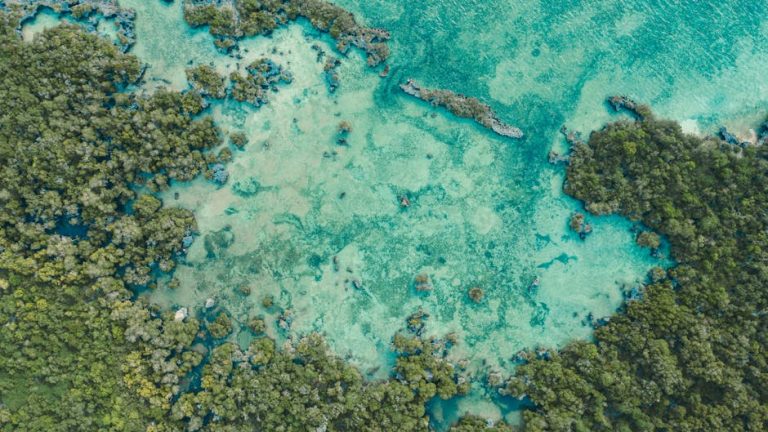
Cape Tribulation is where the Wet Tropics World Heritage rainforest meets the Great Barrier Reef World Heritage Marine Park — two World Heritage Areas meeting at a single point. The beach here, where the forest literally ends at the sand, looks like something from before human history.
The Daintree
Cape Tribulation is an hour north of Port Douglas and accessible only by ferry across the Daintree River — there is no bridge, and the decision not to build one is one of the better planning decisions made in Queensland in the last fifty years. The ferry is a flat-bottomed barge that carries perhaps eight vehicles; the crossing takes five minutes; the architecture of arrival — driving onto a barge, crossing a river into rainforest — provides a transition that a bridge wouldn’t.
The rainforest here is not secondary growth — it is an unbroken tract of ancient tropical forest, parts of which have existed in continuous form for 135 million years, making it significantly older than the Amazon. The Cassowary Trail winds through this forest with wildlife present and visible: Boyd’s forest dragons on tree trunks, the occasional cassowary crossing the track, enormous golden orb-weaver spiders in webs across the path.
Snorkelling and Diving from Cape Trib
Ocean Safari runs small-boat trips to two reef sites directly offshore — a maximum of twelve people — in conditions of reliable good visibility in the dry season. The reef sites are mid-shelf reef in the 10–20 metre range, not the outer ribbon reefs. But on a boat with twelve people, with a guide who knows every cleaning station and resident turtle, the experience has an intimacy that the large Cairns day-trip operations don’t offer.
For swimmers and snorkellers, the beaches at Cape Tribulation and Myall Beach are accessible from the road, with the reef visible from the beach at low tide. Stingers are present in season; most people swim in stinger suits available at the accommodation.
Staying at the Cape
Cape Tribulation has accommodation in the rainforest itself — Daintree Ecolodge, Cape Trib Beach House — that offer the experience of sleeping in tropical forest rather than a coastal resort. The night sounds in the Daintree are extraordinary: frogs, fruit bats, strange bird calls from species active after dark.
There is one petrol station north of the Daintree River, at Cape Tribulation. Fill your tank before you cross on the ferry. Cape Tribulation has excellent accommodation but limited services — no shopping centre, no chain restaurants. This is entirely deliberate and entirely correct.