There are destinations you visit and destinations that reset your sense of what’s possible. Raja Ampat is the second kind.
I first heard the name from a marine biologist at a conference in Cairns who had just returned from a research trip to West Papua. She was describing a reef system with 553 coral species — nearly the same as the entire Indo-Pacific combined. I was sceptical in the way you’re sceptical of superlatives. Then I went.
Everything she had described was accurate. It was also insufficient.
What Raja Ampat Is
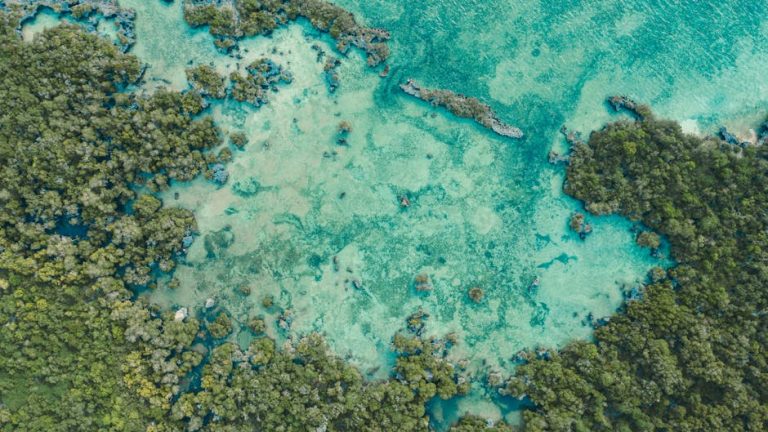
Raja Ampat — “Four Kings” in Indonesian, referring to the four main islands of Waigeo, Salawati, Batanta, and Misool — is an archipelago of roughly 1,500 islands, islets, and reefs off the northwestern tip of the Bird’s Head Peninsula in West Papua, Indonesia. It covers approximately 40,000 square kilometres of ocean and sits at the epicentre of the Coral Triangle — the geographic point where the Indian and Pacific Oceans meet and where marine species diversity reaches its global maximum.
The numbers are genuinely staggering: 553 coral species (the world maximum for any single region), 1,604 reef fish species, 700 mollusc species, and more species of mantis shrimp than have been documented anywhere else. The birds are also extraordinary — the Wilson’s bird-of-paradise, the red bird-of-paradise, and the magnificent Riflebird all occur here — but the birds are what you see when you’re above the water.
The Underwater Experience
What you actually experience underwater in Raja Ampat is different from what the statistics suggest, because statistics don’t convey sensation.
The first sensation is visibility. In the Dampier Strait — the main channel between Waigeo and Batanta — visibility commonly runs 25 to 30 metres. In the outer sites of the Misool area, 40 metres is not unusual. In this visibility, the full three-dimensional scale of the reef becomes apparent in a way that 15-metre visibility doesn’t allow.
The second sensation is density. The fish community in Raja Ampat is not simply diverse — it’s present at a biomass that the GBR, even at its outer reef best, doesn’t match. At Cape Kri, a site on the northern end of Kri Island in the Dampier Strait, researchers documented 374 fish species on a single dive — the world record for a single dive site. On a normal dive at Cape Kri, the reef is alive with fish in numbers that overwhelm the usual mental categorisation process. You stop identifying species and simply experience the density.
The third sensation is coral coverage. On the best walls and pinnacles of Raja Ampat — Fam Islands, the outer face of Misool, the pinnacles of the Wayag area — the coral coverage approaches 100%. Every surface of every wall is occupied: hard coral, soft coral, sea fans, sponge, and encrusting organisms in overlapping layers. There is no bare rock.
Specific Sites Worth Knowing
Manta Sandy, in the Dampier Strait, is a cleaning station where reef manta rays are reliably present, hovering above a sandy slope at 18 to 25 metres. The site is accessible from Sorong on a day trip, though its remoteness makes the liveaboard approach more practical. On a good morning — with current from the right direction and the cleaning station active — multiple mantas are in the water simultaneously.
Blue Magic, in the southern Dampier Strait, is a current site that concentrates marine life with an almost theatrical efficiency: wobbegong sharks on the coral shelf, schools of bumphead parrotfish in the water column, manta rays feeding in the surface plankton, and the occasional oceanic species moving through in the deeper water. It’s the kind of site that experienced divers photograph without thinking because everything in every direction is worth photographing.
The Misool Eco Resort area, in the southern Raja Ampat, has been managed as a no-take zone since 2007 through a partnership between the resort and local communities. The marine life recovery in this zone over fifteen years is measurable and visible — shark populations are dense, the fish community is intact, and the coral coverage on the local sites is among the finest in the archipelago.
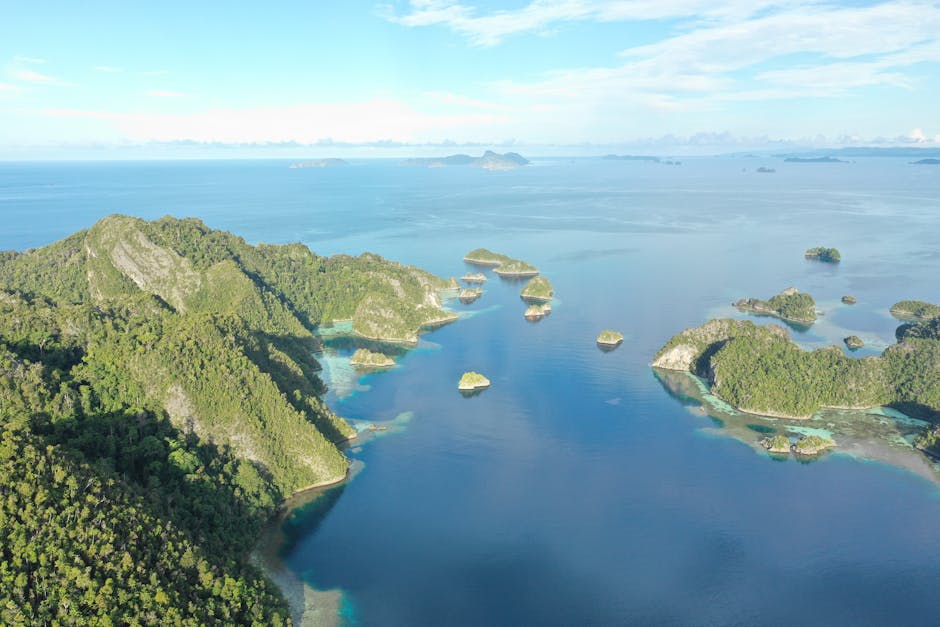
Wayag, in the far north, is primarily known for its above-water character: a series of forested limestone karst islands rising from clear water, photographed from the hill above the main island in an image that has become one of the most reproduced photographs of the Indonesian archipelago. The diving around the Wayag islands is excellent but the remoteness — several hours from Sorong by liveaboard — limits access.
Practical Information
Access is via Sorong, in West Papua, which is reached by domestic flight from Jakarta or Manado. From Australia, the standard routing is Cairns or Darwin to Bali, Bali to Makassar or Manado, then to Sorong. Total journey time from Cairns: approximately 10 to 14 hours depending on connections.
Liveaboards depart from Sorong and are the recommended format for comprehensive Raja Ampat diving. The archipelago is large, the best sites are distributed across significant distances, and a seven to ten-day liveaboard covering the Dampier Strait, Fam Islands, and Misool is the most thorough introduction to what the region offers.
The best season is October through April — the northwest monsoon period, which produces calmer conditions in the main diving areas. May through September brings stronger southeastern winds and rougher conditions in some areas, though specific sites in the Dampier Strait remain diveable year-round.
Raja Ampat has a marine park fee — currently around US$100 per person per year — that supports the management infrastructure and community partnerships that maintain the reef’s protected status. Pay it without begrudging it. The reef you’re diving exists in the condition it does partly because of it.