The Coral Sea begins where the Great Barrier Reef ends. East of the ribbon reefs and the outer barrier, the continental shelf drops away and the water deepens to 2,000, 3,000, 4,000 metres — an immense open-ocean wilderness that most visitors to Queensland never see and few divers ever reach.
Those who do reach it don’t forget it.
The Coral Sea is not convenient diving. Getting there requires a liveaboard of at least two days’ sailing from Cairns or Port Douglas, which means a commitment of five to eight days minimum for a meaningful expedition. The weather windows are narrower than on the inner reef. The diving is not for beginners.
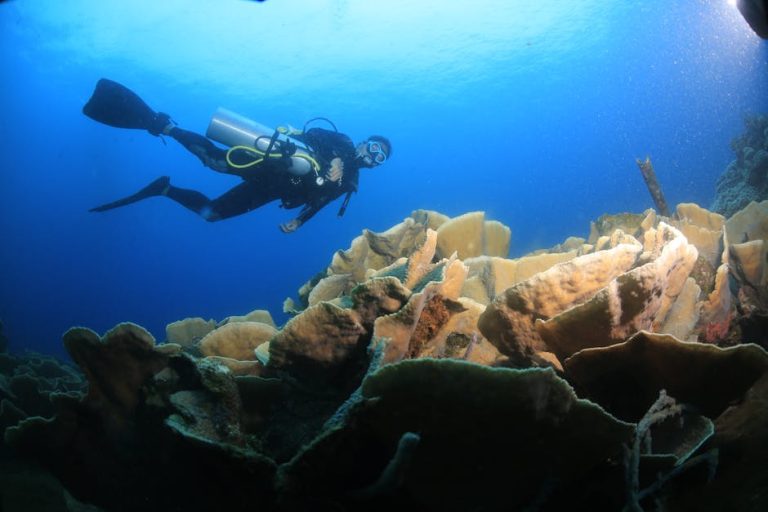
What it offers in return is diving of a different order entirely: walls that drop into black water, pelagic fish in concentrations that feel prehistoric, visibility that regularly exceeds 50 metres, and reef systems that receive so few divers that the marine life treats humans with a curiosity that the heavily visited GBR sites haven’t seen in decades.
Osprey Reef
Osprey Reef is the closest Coral Sea destination to the mainland — approximately 350km east-northeast of Cairns — and the most visited, which in this context means perhaps a dozen liveaboards per month rather than a dozen per day.
The reef is an atoll: a roughly oval ring of shallow reef surrounding a central lagoon that drops to around 30 metres. The outer walls drop vertically into open ocean. At North Horn — the northernmost point of the atoll — sharks have been aggregating for decades.
The shark dive at North Horn is not a feeding dive in the traditional sense, though some operators carry shark feeds to concentrate the animals. On a calm morning with good visibility, you descend to a sandy bottom at 18 metres and watch grey reef sharks, silvertip sharks, and whitetip reef sharks circle in numbers that remind you sharks are not rare animals in healthy ocean — they are abundant ones. The rarity is healthy ocean.
The walls at Osprey are among the most dramatic wall dives in Australian waters: sheer coral faces dropping beyond recreational limits, with sea fans the size of doorways, schools of barracuda suspended in the blue water, and the occasional hammerhead appearing and disappearing at the edge of visibility.
Holmes Reef and Flinders Reef
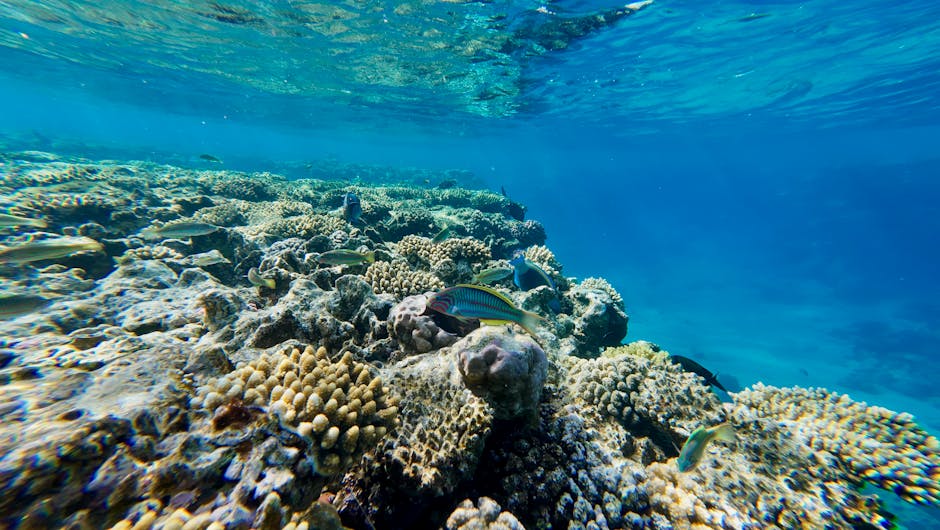
Further south and west, Holmes and Flinders reefs offer diving less dramatic than Osprey’s North Horn but in some ways more varied: extensive shallow reef systems ideal for extended drift dives, large populations of bumphead parrotfish, and the spectacular Flinders Cay — a tiny sand island surrounded by reef that feels like the edge of the world.
The Yongala
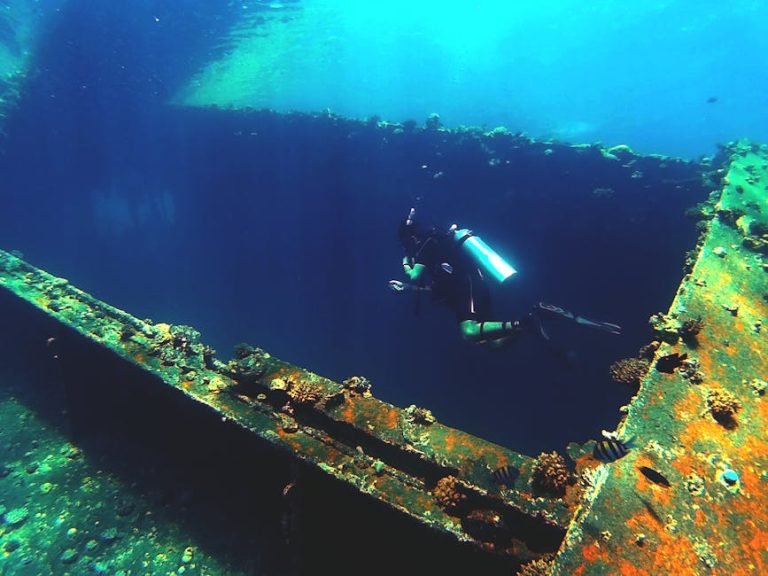
Technically in the Coral Sea approaches rather than the open Coral Sea, the SS Yongala is the most celebrated wreck dive in Australian waters and arguably one of the best in the world. The ship sank in a cyclone in 1911 with 122 passengers and crew and was not located until 1958. She lies at 14–28 metres in the waters off Townsville, encrusted beyond recognition in coral and swarming with marine life.
The life on the Yongala is the product of a century of colonisation in a nutrient-rich environment: enormous grouper, bull sharks circling the superstructure, sea snakes in improbable numbers, manta rays visiting from the open water. The wreck sits on a featureless sandy bottom, and the contrast between the barren seabed and the densely colonised ship is striking.
Dive operators from Townsville and from Ayr on the Burdekin run day trips and liveaboards to the Yongala. She is a protected historic shipwreck under Australian law — no penetration diving, no touching anything.
Logistics
The Coral Sea requires a liveaboard. Day trips don’t exist at this distance. The main operators — Spirit of Freedom, Mike Ball Dive Expeditions, Tusa Dive — run regular expeditions to Osprey Reef with departures from Cairns, typically three to four night trips that combine outer ribbon reef diving with the Coral Sea crossing.
Weather matters more here than on the inner reef. The best conditions are typically August through November, when the southeast trade winds have moderated and before the cyclone season builds. Visibility is consistently extraordinary in this period — 40–60 metres is not unusual at Osprey.
Certification requirements vary by operator, but most Coral Sea expeditions expect Advanced Open Water at minimum, with drift diving experience preferred. The wall dives at Osprey are recreational-depth dives, but the blue water environment — no reef nearby, nothing beneath you but open ocean — is psychologically demanding for divers who haven’t experienced it.
It is also, for those who have dived the GBR extensively and want to understand what the inner reef’s neighbourhood looks like before human pressure, revelatory. The Coral Sea is what the outer barrier faces into: deep, wild, extraordinarily productive ocean that supports everything you see on the reef on your side.