Reef travel with children is one of the most rewarding versions of the trip and one of the most logistically complex. The rewards are real: children who encounter the reef at formative ages develop relationships with the marine environment that shape their understanding of the natural world for the rest of their lives. The logistics are equally real: children have different attention spans, different physical tolerances, different anxiety thresholds, and different needs from adults.
The families I’ve seen do reef travel well have one thing in common: they adjusted the trip to the children rather than asking the children to manage an adult trip. This adjustment isn’t a sacrifice — it produces a trip that’s genuinely better for everyone.
Age-Appropriate Expectations
Under five: The reef experience for this age is primarily about the beach and the shallow water. Tidal pools, shallow lagoon snorkelling with flotation support, the seabirds on a coral cay beach, the turtle in the shallows. The key experiences are immediate, sensory, and don’t require sustained attention. Short sessions (20–30 minutes), high parent engagement, and no agenda beyond “let’s see what we find.”
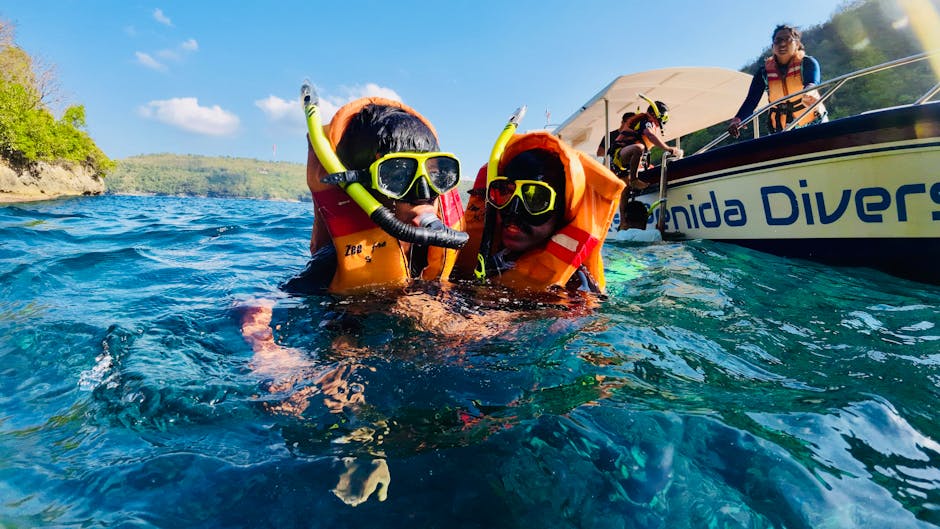
Five to ten: The age bracket where reef encounters begin to create lasting memories. Snorkelling with good equipment (see the snorkelling with kids article) becomes accessible. The turtle in the lagoon is the moment this age group consistently describes decades later. Guided reef walks, junior naturalist programs, and the seabird colony experience at coral cay islands all work well. Introductory scuba (resort dives) is available for children over eight at most major operators.
Ten to fourteen: Approaching the experience level of adults for most reef activities. Many can complete open-water certification (minimum age is ten for junior certification with most agencies). Night snorkelling in calm conditions becomes possible. Snorkelling from day-trip vessels is straightforward and rewarding.
Fourteen and above: For practical purposes, adult reef travel is accessible for this age group, including liveaboard diving.
The Best Family Reef Destinations
Heron Island is, in my view, the finest family reef destination in Australia. The all-inclusive resort manages the food and activity logistics, the island is small enough to be entirely manageable for parents, the lagoon snorkelling is exceptional and immediately accessible, and the turtle encounters that define every Heron Island visit are available at all ages.
The island’s junior naturalist program — part of the resort’s standard offering — engages children with reef ecology through structured activities that produce genuine understanding rather than just passive observation. Children who complete the junior naturalist program at Heron Island leave with specific knowledge about what they saw and why it matters.
Lady Elliot Island offers similar direct reef access with the addition of the manta ray encounters that are the island’s signature experience. Manta rays are large, harmless, and move at a pace accessible to snorkellers of most ages and abilities. A child who has floated above a manta ray at a cleaning station has had an experience that will last.
The Low Isles near Port Douglas are the day-trip option for families — a protected lagoon cay accessible on a two-hour catamaran from Port Douglas, with shallow, calm snorkelling directly from the beach and the resident turtle population that makes encounters effectively guaranteed. Perfect for children who haven’t snorkelled before and need calm conditions for a first reef encounter.
Green Island from Cairns is the most accessible family day trip — 45 minutes by catamaran, with beach, snorkelling in the lagoon, and glass-bottom boat tours for non-snorkellers. Less impressive reef quality than the Low Isles, but more convenient from Cairns.
Accommodation Considerations
Family reef travel requires accommodation with separate sleeping areas for adults and children (not possible on a standard liveaboard), kitchens or kitchen access for preparing children’s food, and proximity to the reef or reef-access activities.
Coral cay island resorts (Heron, Lady Elliot) provide the direct reef access that makes them the best family base despite their small size. The tradeoff is the limited non-reef activity options — on a coral cay, the reef is the activity.
The Whitsundays suits families with sailing-inclined parents — bareboat charters in catamarans have separate sleeping cabins and deck space suitable for children, and the sailing and beach experience is appealing across ages. The limitation is that the sailing requires adults capable of handling the vessel while managing children’s safety on deck.
Cairns-based resort accommodation with day trips is the most flexible option for families who want a base with full facilities — restaurants, pools, varied activities — and reef day trips as needed rather than full reef immersion. Hamilton Island in the Whitsundays fits this model well.
Safety Considerations Specific to Children
Marine stingers. Box jellyfish and Irukandji are present in tropical Queensland waters from approximately October through May. Children swimming in open tropical water during this period must wear full-body stinger suits. Stinger-resistant swimsuits are available from most Queensland beachwear retailers and are standard equipment for families in the tropics.
Sun exposure. Children burn faster than adults in the tropics. A long-sleeved rash vest, reef-safe sunscreen (applied before reaching the beach), and a hat for time between water sessions. Reapply sunscreen every 90 minutes regardless of the stated SPF. Watch children’s behaviour for signs of overheating — irritability, flushing, and reduced alertness in the heat can be early heat exhaustion.
In the water. Know your children’s swimming ability honestly and select sites and depth accordingly. A child who is a confident pool swimmer may be less comfortable in open water with waves and current — test the conditions before committing to time on the outer reef. Never snorkel with children in conditions that exceed their comfort and capability, regardless of how interesting the reef at that particular site might be.
Marine animals. Brief children on the species they might encounter: turtles and rays are harmless, reef sharks in the lagoon are harmless unless provoked, jellyfish should not be touched, cone shells and sea urchins should not be handled. The briefing is best done with specific animals in mind — “if you see a turtle, here’s how we approach it” — rather than generic warnings that create anxiety without specificity.
The Long-Term Argument
Children who see the reef healthy and full of life develop an emotional investment in its future that no classroom teaching can produce. The generation of Australians and international visitors who grew up snorkelling the GBR are the generation most likely to care about its protection — because they have seen what it can be and have a personal stake in its continuation.
Taking children to the reef is not just family recreation. It’s conservation investment in the most direct form available: a child who has hovered above a manta ray in clear water, who has watched a turtle breathe at the surface, who has looked down from a snorkel mask at a coral garden in full colour — that child becomes an adult who understands why the reef matters. That understanding, multiplied across generations, is what the reef’s long-term future depends on.
Go with the children. The reef needs the witnesses as much as the witnesses need the reef.