There’s a moment in freediving that scuba diving can’t replicate, and I’ve spent years trying to find the right words for it.
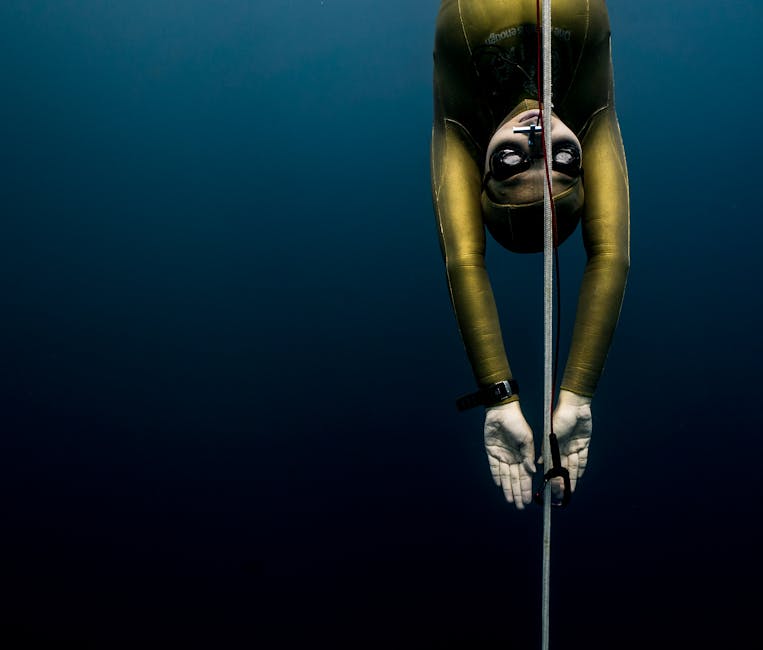
It happens after the breath-up — the preparation breathing on the surface — and the first few metres of descent, when the buoyancy of your lungs has been overcome by the increasing pressure of the water and you tip from positive buoyancy into negative. You stop kicking. You fold your arms. You let the water take you down, silently, without bubbles, without the mechanical noise of a regulator, your body compressing slowly as you go deeper. The water holds you. You’re falling upward, or downward, depending on how you think about it.
Freedivers call this the freefall phase. It begins somewhere between ten and twenty metres depending on your lung volume and how much weight you’re carrying. For the duration of the freefall, you are not doing anything. You’re just there. The reef comes up toward you in silence.
It is one of the most peaceful physical experiences I have had.
What Freediving Is
Freediving — also called apnea diving, breath-hold diving, or simply free diving — is the practice of diving underwater on a single breath, without breathing apparatus. It’s not a new activity: pearl divers in Japan and Korea (the ama), sponge divers in the Mediterranean, and fishing communities throughout the Pacific and Indian Ocean have been practising breath-hold diving for thousands of years. As a modern recreational and competitive sport, it has developed significantly over the past two decades.
Recreational freediving — which is what this article is primarily about — is done to depths of 20 to 40 metres by intermediate freedivers, and shallower than that by beginners. Competitive freediving extends much deeper: the current no-limit apnea record is 214 metres, achieved in a sled descent with inflation bag ascent. Recreational freediving has nothing to do with these extremes.
Freediving vs Scuba: Different Tools, Different Experiences
I do both. They are not in competition; they’re genuinely different ways of being underwater, suited to different purposes and different moods.
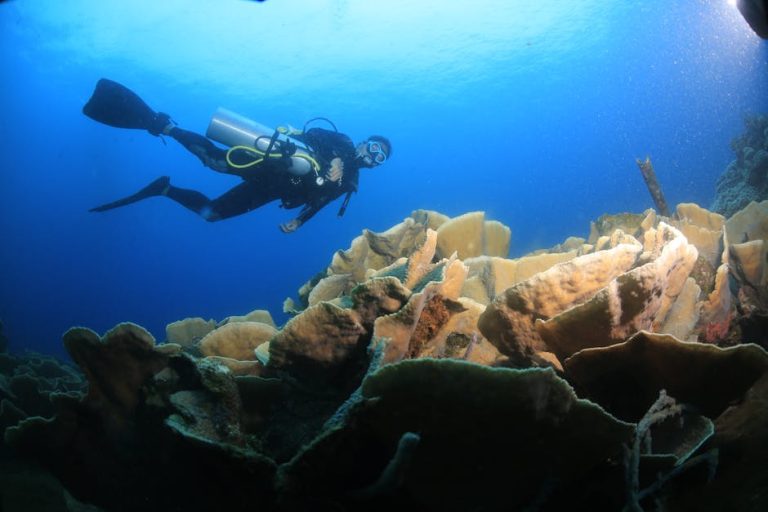
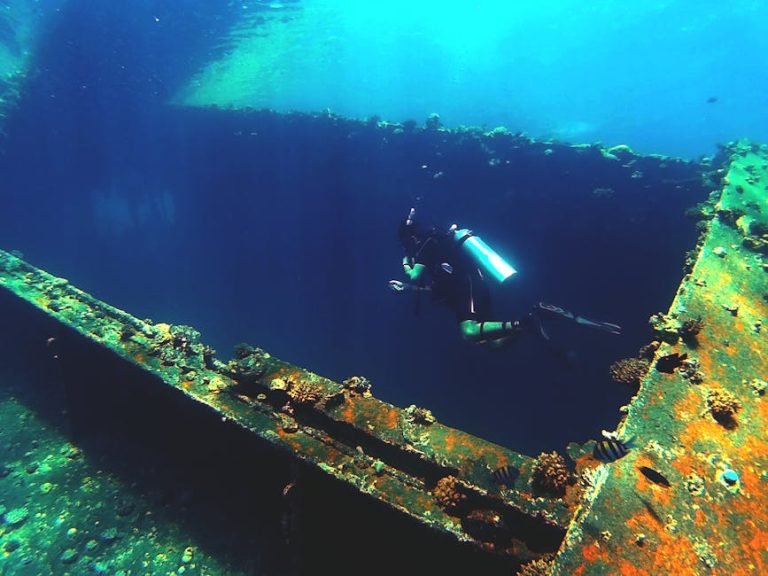
Scuba gives you time. An hour or more at depth, with the ability to move slowly along a reef, stop, examine animals closely, wait for behaviour. For photography, for careful observation, for deep reef exploration — scuba is the tool.
Freediving gives you silence and presence. The absence of equipment noise changes the behaviour of marine life around you in measurable ways: fish don’t startle at bubble bursts, pelagic animals don’t turn away from the sound of a regulator. Encounters with dolphins, whale sharks, and large pelagic fish are qualitatively different when approached by a freediver compared to a scuba diver. The animal treats you differently because you seem, sonically, more like part of the environment.
Freediving also produces a quality of attention that I find distinctive. Because you have a limited time underwater — a breath hold at recreational level is typically between one and three minutes — you are intensely present for the duration of it. There’s no ambient half-attention, no glancing at your computer, no monitoring your air pressure. There’s just the water and whatever is in it.
Learning to Freedive
The PADI Freediver, SSI Freediving Level 1, or AIDA 2 Star courses are standard entry points. A beginner course typically runs over two to three days and covers breathing technique, equalisation for freediving, safety protocols and buddy systems, and introduces the basic disciplines: static apnea (breath holds at the surface), dynamic apnea (horizontal distance underwater), and free immersion or constant weight descent (vertical diving to depth).
The breath hold times that new freedivers achieve surprise them. After a proper breath-up and relaxation technique, most people can comfortably hold their breath for 90 seconds to two minutes on their first day of training. With practice, three to four minutes is achievable for recreational purposes within a few months.
Equalisation is the most common technical obstacle. Scuba divers equalise by holding their nose and gently blowing (the Valsalva manoeuvre). Freedivers need to equalise on descent without using their hands — a technique called frenzel equalisation, which uses the tongue and throat to push air into the Eustachian tubes rather than pressure from the lungs. Frenzel requires practice but, once learned, is more efficient and comfortable than Valsalva at depth.
Safety: The Non-Negotiable Rules
Freediving safety is different in character from scuba safety. The primary risks are hypoxic blackout — loss of consciousness caused by low oxygen levels during a breath hold — and shallow water blackout, which occurs during ascent when oxygen levels drop rapidly as pressure decreases. Both can cause a diver to lose consciousness underwater and drown.
These are real risks, but they are almost entirely preventable through two rules that are absolute and non-negotiable:
Never freedive alone. Always dive with a trained buddy who is watching from the surface or accompanying you in the water, close enough to intervene immediately if you lose consciousness. Freediving alone is the single most common cause of freediving fatalities.
Never hyperventilate before a breath hold. Hyperventilation — rapid deep breathing before a dive — flushes carbon dioxide from your blood, which eliminates the sensation of needing to breathe (that sensation is driven by CO2 buildup, not oxygen depletion). This tricks your body into thinking you have more time than you do. Your oxygen levels can drop to the blackout threshold before you feel any urge to surface. Proper freediving breath-up is slow, controlled, and relaxed — not rapid.
Follow these rules, take a course, and dive with qualified instruction until you have the skills and experience to manage your own safety competently.
Why I Freedive
I started freediving because I wanted to see dolphins properly. Scuba encounters with dolphins had been brief and slightly frustrating — they came, they looked at the bubble-blowing creatures, they left. On my first freedive in the presence of dolphins, a pod of spinners off the coast of the Maldives, they stayed. They circled. One came to within an arm’s length and looked at me — really looked, in the way animals do when they’ve decided you’re interesting rather than alarming.
I understood then what freedivers mean when they talk about the ocean accepting you differently when you arrive without the machinery.
I still scuba dive. I still love it. But the freefall phase at fifteen metres, the silence, the animals that don’t turn away — that’s something I wouldn’t want to not have.