Reef slopes are among the most interesting places to observe marine life, yet many visitors only pass over them briefly. From the surface these areas appear as darker sections of water where the reef suddenly descends toward deeper ocean. Snorkelers often hesitate to move beyond shallow coral gardens, preferring areas where the bottom remains clearly visible.
But the reef slope is where many of the reef’s most dynamic interactions take place. The change in depth allows stronger currents to move along the coral wall, bringing nutrients and plankton that attract a wide range of marine species.
Floating quietly near the edge of this transition zone reveals how active the reef can become once the water deepens.
The Boundary Between Shallow and Deep Water
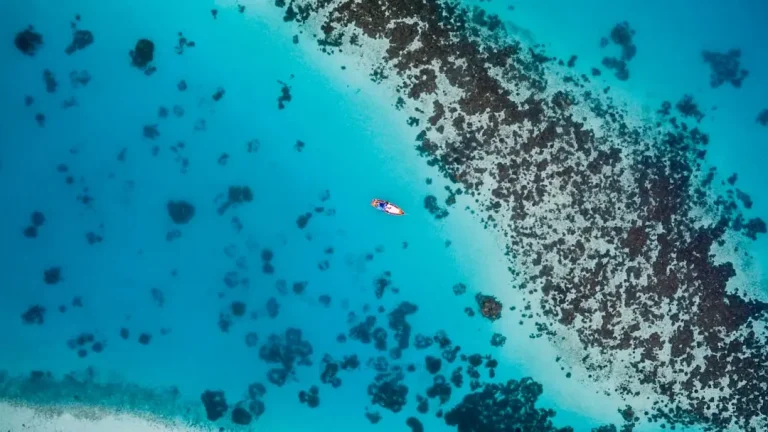
The first thing that becomes noticeable along a reef slope is the shift in color. Shallow coral flats often appear bright turquoise because sunlight reflects from sand and coral surfaces below. As the reef begins dropping toward deeper water, the color gradually darkens into deeper shades of blue.
This visual boundary marks the edge of the reef platform. Beneath it lies a descending coral wall that may extend tens of meters into the sea.
Fish frequently gather along this boundary because it acts as a meeting point between shallow reef habitats and deeper ocean environments. Species that prefer coral shelter remain near the upper edge of the slope, while others patrol the deeper water just beyond it.
Watching this interaction from the surface often feels like observing two ecosystems meeting along a single underwater ridge.
Currents Moving Along the Reef Wall
Currents play a significant role in shaping marine life behavior along reef slopes. Even when the lagoon above the reef appears calm, water may still move steadily along the outer edge of the reef.
These currents bring microscopic organisms from the open ocean, providing food for smaller fish and plankton-feeding species. Schools of fusiliers and other mid-water fish often gather along these moving water corridors.
From the surface their movement can appear almost synchronized. Entire schools shift direction at once, turning into the current before drifting slightly downward along the reef wall.
Occasionally larger fish pass through these areas, using the same currents to move efficiently along the reef edge.
The Role of Coral Structure
Reef slopes are rarely smooth surfaces. Instead they form complex layers of coral ledges, ridges, and overhangs that create shelter for marine life.
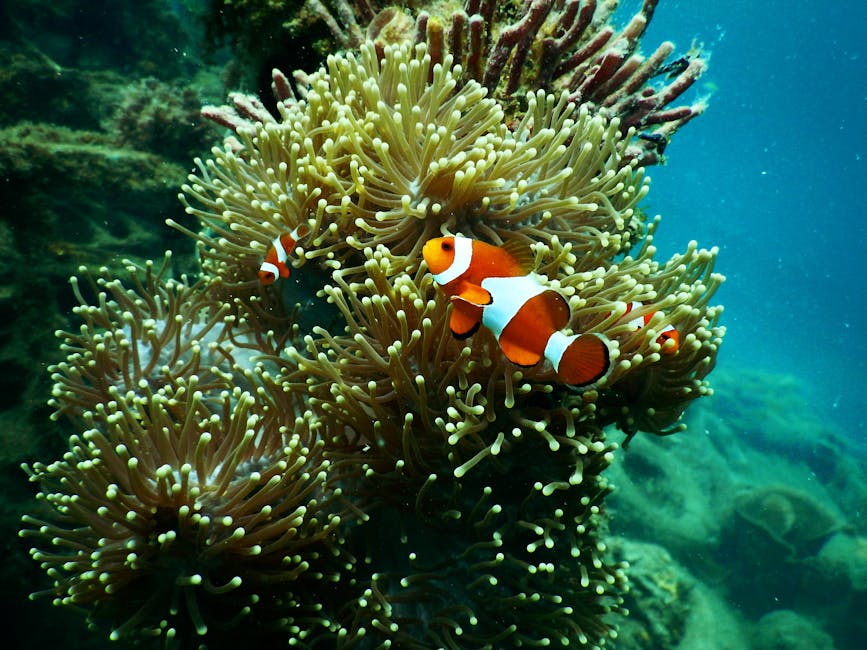
Some coral colonies grow outward from the reef wall like shelves, forming horizontal platforms where fish can gather. Others grow vertically, creating narrow passages where small species hide among branching coral.
This structural complexity allows a large number of species to share the same section of reef. Predatory fish may patrol along the outer edge while smaller fish remain protected within coral formations.
The reef slope becomes a three-dimensional environment rather than a simple wall.
Watching the Water Column
One of the interesting aspects of reef slopes is that marine life occupies not only the coral surface but also the water column above it. Some species swim close to the reef wall, while others move several meters away from the coral.
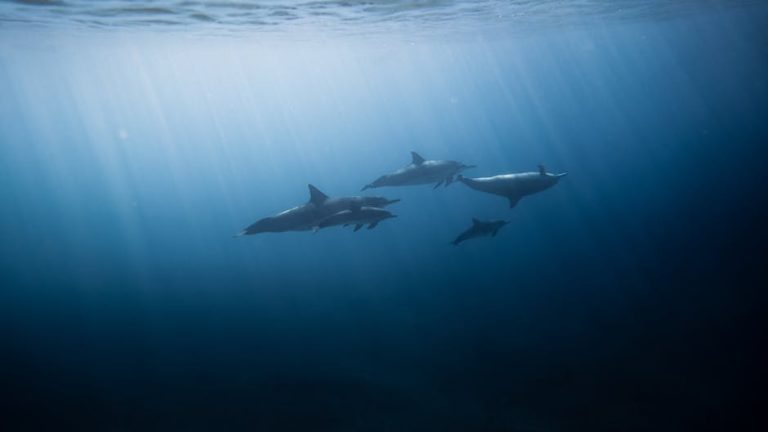
From above, this creates layers of activity at different depths. Small fish remain close to coral structures. Larger fish glide through the open water just beyond them. Occasionally shadows appear deeper below as larger species move through darker water.
These vertical layers make reef slopes particularly fascinating places to observe marine life.
The deeper sections often remain partially hidden, leaving the impression that more activity exists beyond what is immediately visible.
The Influence of Light and Depth
Light behaves differently along reef slopes compared with shallow coral gardens. Because the reef wall descends into deeper water, sunlight gradually fades as depth increases.
This creates shifting gradients of color along the reef face. Coral near the surface appears bright and colorful, while deeper formations become muted and darker.
Fish species often distribute themselves along these light gradients. Some remain near the brighter upper reef where algae and plankton remain abundant. Others prefer deeper zones where predators and prey move through dimmer water.
Watching how species arrange themselves along these depth zones reveals another layer of reef complexity.
Drifting Along the Reef Edge
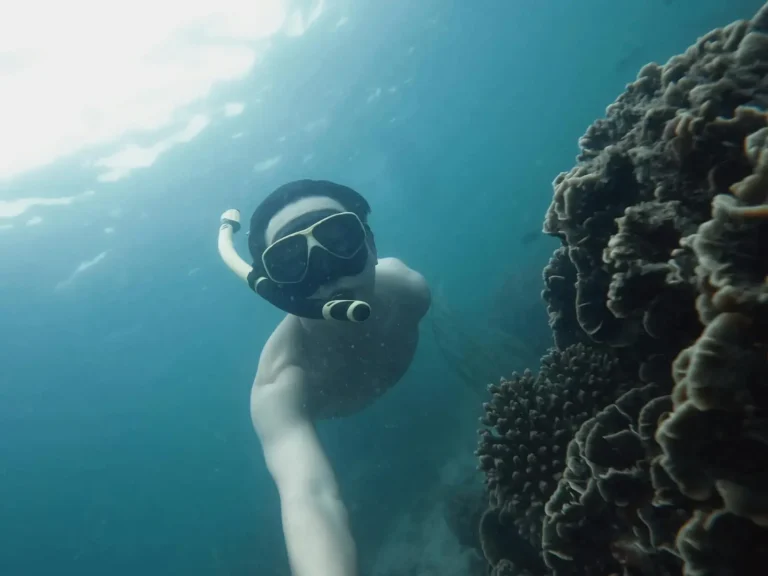
Many experienced snorkelers eventually learn that the best way to observe reef slopes is not by swimming actively but by drifting slowly along the reef edge. Allowing the current to carry you gently across the reef wall reduces disturbance and makes fish less likely to retreat.
Floating quietly also allows time to notice small details. A cluster of anthias might hover above a coral ledge. A solitary grouper may rest beneath a shaded overhang. Tiny cleaner fish sometimes gather around coral outcrops waiting for larger fish to approach.
These moments often appear only after several minutes of patient observation.
The reef slope rewards those who move slowly.
Occasional Encounters
Reef slopes sometimes produce brief encounters with larger marine animals. Turtles occasionally travel along the reef edge, moving between shallow feeding grounds and deeper resting areas.
On rare occasions reef sharks glide through the water column, following the contours of the reef wall before disappearing into deeper blue water.
These sightings rarely last long, but they add an element of unpredictability to the experience of observing reef slopes.
Even without such encounters, the constant movement of fish along the reef edge provides endless activity to watch.
The Edge of the Reef World
Reef slopes represent a boundary between the structured coral environment and the open ocean beyond. This transition zone concentrates marine life because it combines shelter with access to moving currents.
For observers floating quietly near the surface, the reef slope reveals the reef ecosystem at its most active. Fish gather along the edges, currents carry food through the water, and the deeper ocean looms just beyond the coral wall.
It is a place where the reef meets the wider sea.
Spending time here often changes how visitors understand coral reefs. Instead of imagining them as flat underwater gardens, they begin seeing them as layered environments shaped by depth, light, and constant movement.