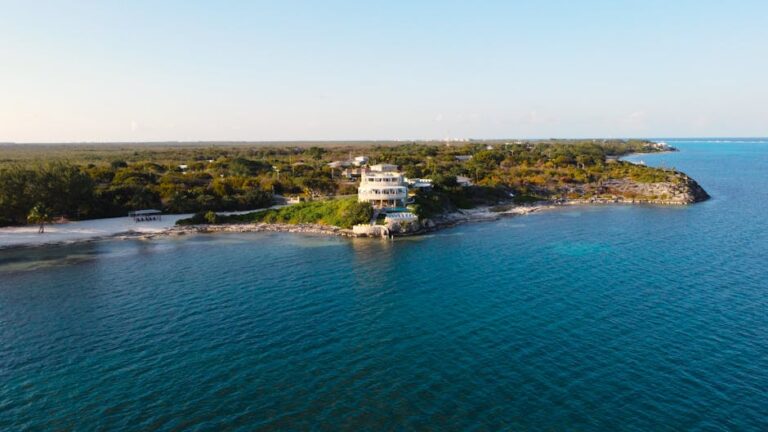
Evenings on small reef islands arrive almost unnoticed. The transition from afternoon to sunset happens gradually, often beginning with a subtle change in the light reflecting across the lagoon. During the middle of the day the sun stands high above the reef, flattening colors and brightening the water surface. By late afternoon the light becomes softer, and the entire reef environment begins to feel calmer.
Many travelers leave coral islands before this quiet period begins. Tour schedules usually return boats to the mainland well before sunset, especially when the journey across open water takes several hours. Those who remain on the island, however, experience a completely different atmosphere from the lively hours of the day.
The reef seems to slow down.
Standing near the shoreline in the evening, the first thing you often notice is how smooth the water becomes once the afternoon winds fade. The lagoon that looked textured and bright earlier in the day gradually settles into a wide, reflective surface.
The Changing Sound of the Reef
Sound behaves differently around coral islands once the day activity fades. During the morning and afternoon the noise of boat engines and distant waves usually fills the air. In the evening those sounds disappear, leaving only the quieter rhythm of water touching the reef.
Small waves continue breaking along the outer reef crest where the lagoon meets the open ocean. From the beach this distant line of surf creates a soft background sound that repeats steadily.
Closer to shore the water moves more gently. Waves slide across the coral rubble along the beach, creating a slow, irregular rhythm that can continue for hours.
Once you become aware of these subtle sounds, the reef begins to feel less like a place people visit and more like an environment following its own natural patterns.
Light Over the Lagoon
One of the most remarkable aspects of reef evenings is how the light reshapes the lagoon. As the sun lowers, the angle of the light begins revealing details that were less visible earlier in the day.
Coral heads cast longer shadows across the lagoon floor. Channels between coral formations appear darker, creating winding lines across the reef flat.
In calm conditions the water becomes clear enough that large sections of reef structure remain visible from the beach. You can sometimes watch fish moving slowly across the coral gardens without entering the water.
These quiet observations are part of what makes evenings on reef islands feel so different from daytime snorkeling.
Marine Life During the Evening Hours
Fish behavior often shifts slightly as the day approaches sunset. Some reef fish that spent the brighter hours hiding among coral branches begin moving more actively through the reef.
Small schools travel along the edges of coral patches, while solitary fish patrol the sand channels separating reef structures.
Parrotfish occasionally pass through shallow areas, grazing along coral surfaces before retreating toward deeper sections of the reef. Their slow movement across the lagoon sometimes becomes visible from the beach when the water remains calm.
Other species prepare for the coming night by finding shelter within coral formations.
The reef appears busy in small ways that are easy to miss unless you remain still long enough to watch carefully.
Walking the Edge of the Lagoon
Many reef islands are small enough that walking around their shoreline takes less than an hour. Evening often provides the most comfortable time for these slow walks along the beach.
The heat of the day fades, and the light reflecting across the water becomes softer. Coral rubble along the shoreline sometimes reveals shells, fragments of coral skeletons, and other small details washed ashore by the tide.
Looking out toward the lagoon from different angles also changes how the reef appears. In some places the water looks pale and shallow, while a few steps further along the beach the lagoon suddenly appears darker where deeper coral formations lie beneath the surface.
This shifting perspective makes the reef feel larger than the island itself.
The Role of the Tide
Tidal movement continues shaping the reef environment during the evening hours. On falling tides the lagoon gradually becomes shallower, exposing more coral formations beneath the surface.
In some areas the reef platform begins approaching the air closely enough that waves break softly across its surface. Sand channels drain slowly toward deeper water, creating faint currents that move through the lagoon.
During rising tides the opposite occurs. Water from the open ocean begins flowing back across the reef crest and into the lagoon, restoring depth to shallow coral gardens.
Watching these changes from the beach offers a reminder that the reef is constantly adjusting to the movements of the sea.
The Atmosphere After Sunset
Once the sun finally disappears below the horizon, the reef island enters another phase of quiet. The sky darkens gradually while the lagoon loses its bright turquoise color.
Coral structures that were visible beneath the waterline become darker shapes beneath the surface. The horizon remains faintly illuminated for a short time before the night fully settles across the ocean.
Even after darkness arrives, the reef continues producing subtle sounds. The distant surf along the outer reef crest remains audible, and small waves continue touching the shoreline.
Occasionally fish break the surface briefly, leaving small ripples across the lagoon.
Why These Moments Stay in Memory
Many people associate coral reefs with bright colors and underwater photography. Those elements certainly define the experience for many visitors.
Yet evenings on small reef islands reveal a quieter side of reef environments that often stays in memory longer. The combination of fading light, calm water, and gentle sounds creates a sense of balance rarely felt during the busy hours of the day.
It becomes easier to notice how the reef functions as a living landscape shaped by tides, wind, and light.
Long after leaving the island, these calm evening moments are often what travelers remember most clearly.