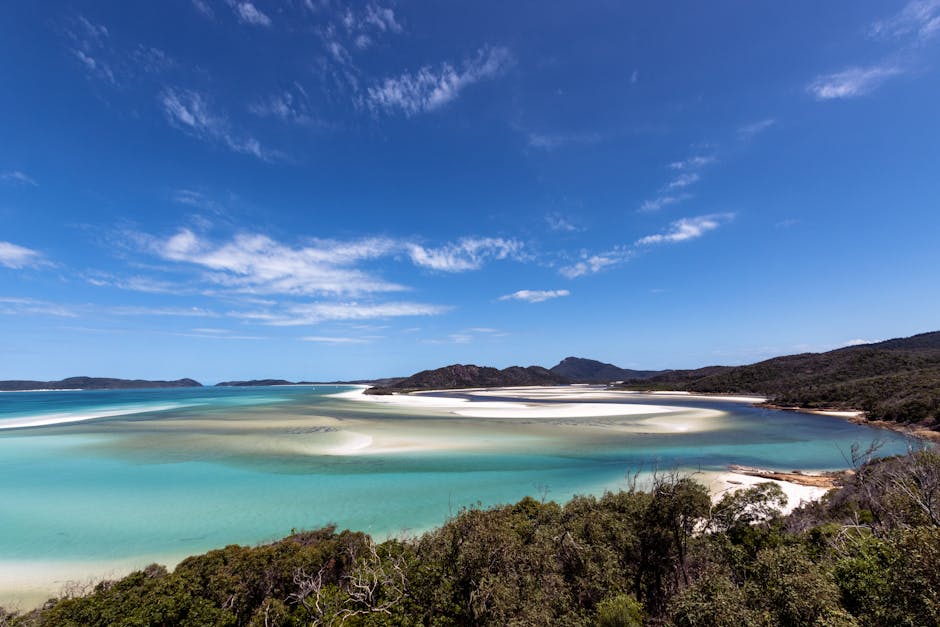
Most people who visit the Whitsundays are there for the sailing and the beaches – Whitehaven Beach, the Hill Inlet, the view from Tongue Point. The reef is an afterthought, something you do on a day trip to Hardy Reef or Bait Reef on the outer GBR. This is understandable, but it means most visitors miss the fringing reefs that surround many of the Whitsunday Islands themselves – accessible, diverse, and often excellent.
Fringing reefs develop directly adjacent to islands and coastlines, without the lagoon that separates barrier reefs from the shore. In the Whitsundays, they’re found on the sheltered sides of many of the 74 islands, growing in the relatively calm water between the islands and the mainland. They’re shallower and less dramatic than the outer reef, but they’re also more accessible – reachable by kayak from some island beaches, snorkeable without a boat.
Bait Reef and Hardy Reef
The outer reefs accessible from the Whitsundays – Bait Reef and Hardy Reef, both about 70 kilometres from Airlie Beach – are the standard day-trip destinations, and they deliver the outer GBR experience: clear water, coral gardens, reef fish, and the occasional reef shark or turtle. Hardy Reef is the site of Heart Reef, the naturally heart-shaped coral formation that has become one of the most photographed features of the GBR – visible from the air on scenic flights, less impressive underwater than the photographs suggest.
Bait Reef is the better diving destination of the two. The Stepping Stones – a series of coral bommies on the northern end of the reef – have excellent coral coverage and fish life, and the outer wall has the clarity and fish density characteristic of the outer GBR. It’s not Osprey Reef, but it’s a solid outer reef experience accessible on a day trip from Airlie Beach.
The Fringing Reefs
The fringing reefs of Hook Island, Hayman Island, and Border Island are the Whitsundays’ best-kept diving secret. Hook Island’s Manta Ray Bay – named for the manta rays that visit the cleaning stations on the fringing reef – is one of the most reliable manta ray sites in the southern GBR. The reef itself is in good condition, with coral coverage that has recovered well from the 2017 cyclone damage.
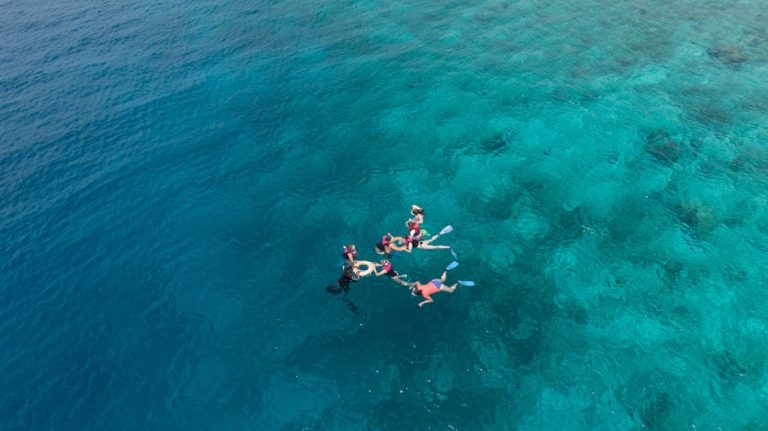
The accessibility of the fringing reefs is their defining advantage. Anchoring a sailing boat 50 metres from a reef and snorkelling directly from the boat, without a day trip or a liveaboard, is an experience that changes how you relate to the reef. It’s not a destination you travel to – it’s a neighbour, something you live alongside for a few days. That proximity produces a different kind of attention.