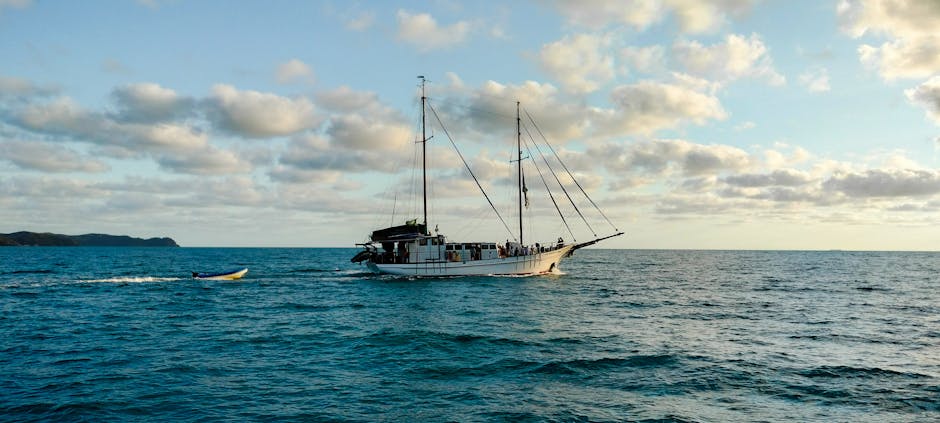
The Whitsunday Islands are not primarily a diving destination. I say this as someone who has dived them repeatedly and thinks the diving is, in places, genuinely good. But the Whitsundays are first and most essentially an island sailing destination — a collection of 74 continental islands scattered across a stretch of the Coral Sea between the Queensland mainland and the outer Great Barrier Reef, connected by channels that have been drawing sailors since the tall ship era.
The experience of arriving at Whitehaven Beach by boat, of anchoring in a sheltered bay with forested island hills on three sides and the reef glowing in the shallows, of watching the sun set from a deck over water so calm it reflects the sky — this is the Whitsundays’ primary offer. The diving is a supplement to that experience. A very good supplement, but a supplement.
The Landscape
The Whitsunday Islands are continental islands — they were part of the Australian mainland until rising sea levels at the end of the last ice age, around 10,000 years ago, isolated them from the coast. This geological origin gives them a character quite different from coral cays: hills covered in hoop pine and eucalyptus, granite headlands, freshwater creeks in the valleys, and the occasional wallaby visible on the shoreline.
Whitehaven Beach, on Whitsunday Island, is consistently rated among the finest beaches in the world — nine kilometres of pure silica sand so fine and white that it squeaks underfoot and feels like standing in powdered sugar. The sand is 98% silica, washed from interior Queensland rivers and deposited here over millennia. Its whiteness and the surrounding water’s colour — turquoise, teal, deep blue depending on depth and angle of light — create a visual combination that photographs absurdly well and looks even better in person.
Hill Inlet, at the northern end of Whitehaven Beach, is a tidal inlet where the sand and water mix at low tide into swirling patterns of white and turquoise visible in full from the hill lookout above. I’ve photographed it dozens of times. It still surprises me.
Diving the Whitsundays
The reef diving in the Whitsundays falls broadly into two categories: the fringing reefs around the islands themselves, and the outer GBR reef accessed on day trips from Airlie Beach or Hamilton Island.
The fringing reefs — growing against the rocky shores of the continental islands — are shallower, more affected by tidal turbidity, and reflect the central GBR’s mixed condition after recent bleaching events. Visibility is often 10 to 15 metres, occasionally lower after heavy rain. Bait Reef, a platform reef inside the GBRMP boundary north of the Whitsunday group, is the standout site for reef diving from within the island group — it has better visibility, good coral cover in its protected sections, and consistent marine life including manta ray encounters.
The outer reef — accessible on day trips from Airlie Beach to sites such as Hardy Reef and Hook Reef — has better visibility and more intact coral communities. These are popular day-trip destinations, and on peak-season days the sites can be busy. The early morning and late afternoon, when the day-trip boats have departed, produce markedly better diving conditions.
Sailing the Islands: The Best Way to Experience Them
The Whitsundays were made for sailing. The channel winds — predominantly from the southeast between April and October — are consistent and manageable, the anchorages are plentiful and sheltered, and the distances between islands are short enough that a novice sailor can cover significant ground without anxiety.
Bareboat charter — renting a fully equipped sailing yacht without a skipper — is the most popular way to explore the Whitsundays for visitors with sailing experience. Charter companies based in Airlie Beach provide boats ranging from 28-foot monohulls suitable for couples to 50-foot catamarans that can comfortably accommodate eight. No licence is required for most charter operations; companies typically assess your experience level and provide a practical briefing before departure.
For non-sailors, skippered charter (with a professional skipper) or live-aboard sailing trips allow you to experience the sailing without needing to know how to do it yourself. These range from budget overnight trips on smaller vessels to premium crewed charter on larger yachts.
The islands I find most worth anchoring at: Hook Island has the best snorkelling in the island group, at Blue Pearl Bay on its northeastern shore. Hayman Island, the most northerly of the main Whitsunday group, has the reef access and the resort infrastructure for those who want land-based comfort. Cid Harbour on Whitsunday Island is the most sheltered anchorage in the group and the departure point for the Whitehaven Beach dinghy landing.
Hamilton Island: Facilities Without Compromises
Hamilton Island is the only Whitsunday island with its own commercial airport — direct flights from Sydney, Melbourne, Brisbane, and Cairns — making it the most accessible of the island destinations for visitors not coming by boat.
The island has resort facilities, restaurants, and accommodation ranging from hotel rooms to private villa rentals on the hill above the main resort area. The marina is the hub of day-trip and charter activity for the central Whitsundays, and most operators running reef trips and sailing charters use it as a base.
Hamilton is busier than the other islands — it’s a resort destination rather than a wilderness destination — but as a base for exploring the broader Whitsunday group by day trip or short charter, its accessibility and facilities make it the practical choice for visitors on limited time.
The Season
The Whitsundays are diveable year-round, but the seasons are distinct in character. The dry season (April to October) brings the southeast trade winds — good sailing conditions, lower humidity, clear skies, and generally better water visibility on the reef. The wet season (November to March) brings warmer water (up to 28°C), higher humidity, and the possibility of tropical cyclones that can disrupt travel plans. The reef itself is at its most productive in the warmer months for coral spawning and associated marine activity.
For sailing, June through August is the peak season and the period when the channel winds are most reliable. For diving and reef trips, the same months produce the clearest conditions. Book accommodation and charters well in advance for this period — the Whitsundays receive over a million visitors per year and the best boats and accommodation sell out months ahead.
Come for the sailing. Stay for the beach. Dive the outer reef while you’re there. The Whitsundays will give you all three.